
Most travel planning survives a mistake. Miss a train in Europe and another one is along in twenty minutes; miss a flight and there is a later flight, expensively. The places in this article do not work that way. Churchill, Manitoba has no road connecting it to the rest of Canada — not a bad road, not a seasonal road, no road — and the train that gets you there runs twice a week. The Alaska Railroad's Hurricane Turn drops people at unmarked points in the bush, and between October and May it does it once a month.
That changes what a plan is. When there is one departure, the departure is the itinerary: the date you arrive, the number of nights you stay and the date you leave are all decided by the timetable before you choose a single thing to do. It is the opposite of the flexible trip, and it is why these places stay quiet.
Below are ten of them, in no particular order. Each entry gives the same three things: the one departure, what the train replaces, and the miss-it clock. Frequencies were checked in August 2026 against operator timetables where one is published and against rail-guide summaries otherwise. Every one of these can change with the season or the year, so treat the times here as the shape of the service and check the operator's own page for the minutes before you book anything.
The ten, and how long you wait
This is the article compressed. The last column is the one that matters: it is not how long the journey takes, it is how long the mistake costs.
| Town | The one departure | What the train replaces | If you miss it |
|---|---|---|---|
| ChurchillManitoba, Canada | Two trains a week each way | Nothing — no road reaches the town | Two to three days, or buy a flight |
| Hurricane GulchAlaska, USA | Five days a week in summer; once a month in winter | No road at all along the line | A day in summer. In winter, next month |
| CroydonQueensland, Australia | One train a week each way | A long unsealed-country drive | A week |
| The White River lineOntario, Canada | Three days a week each way | Nothing at the roadless stops | One to two days, camped where you got off |
| CorrourHighland, Scotland | A handful a day, plus the overnight sleeper | No public road within about ten miles | Hours — unless it was the last one |
| JokkmokkLapland, Sweden | One a day, roughly eight weeks a year | A long-distance bus, year-round | Exactly 24 hours, or the whole season |
| OotyTamil Nadu, India | One through train a day up the rack railway | A three-hour bus up the hairpins | Tomorrow morning — if a seat is left |
| González BastíasMaule, Chile | A daily railcar, plus a second run most days | The river, or a long walk | Up to 24 hours |
| SandersonTexas, USA | Three trains a week each way | No bus of any kind | About two days |
| Berney ArmsNorfolk, England | Two or three a day, on request | A boat, or a marsh walk | Hours — then walk out |
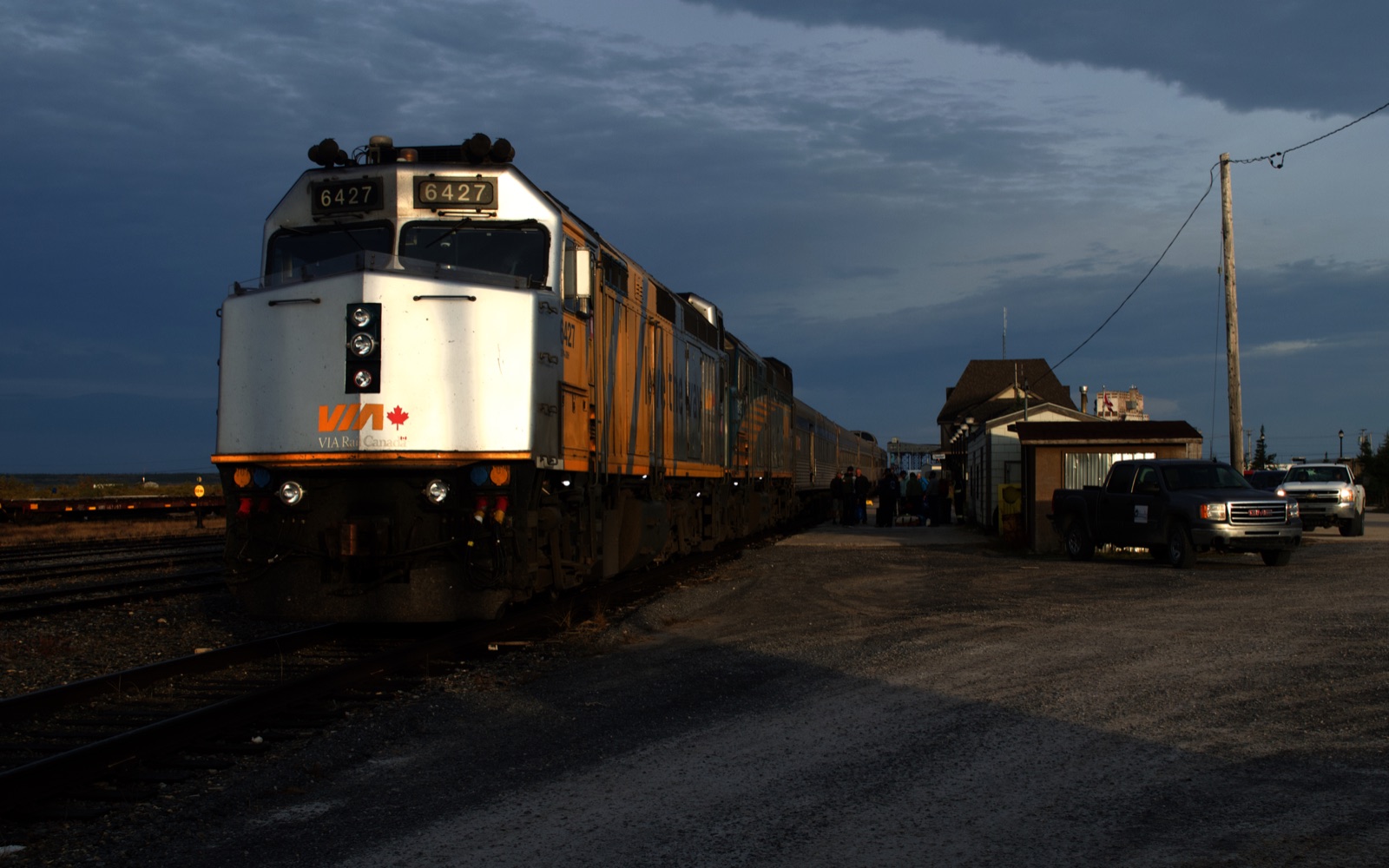
Churchill, Manitoba: the town with no road
Start with the extreme case, because it sets the scale for everything after it. Churchill sits on the western shore of Hudson Bay, about a thousand kilometers north of Winnipeg, and there is no highway to it. Not a gravel spur, not a winter ice road for cars — nothing. You arrive by rail, by air, or by sea. That makes VIA Rail's Winnipeg–Churchill service the only ground transport into a town of a few hundred people.
The one departure: two trains a week each way. Northbound leaves Winnipeg around midday on Tuesdays and Sundays and reaches Churchill two mornings later — a journey of roughly 45 hours. Southbound leaves Churchill on Thursday and Saturday evenings and gets into Winnipeg two afternoons later. Those days have been stable for years, but the running times on this line are famously elastic, so read the arrival time as a hope rather than a promise.
What the train replaces: the road that does not exist. The alternative is Calm Air from Winnipeg, which flies most days and costs several times the train fare. That is genuinely the entire list of options.
The miss-it clock: two to three days to the next train, or the price of a last-minute northern flight. Churchill does have real hotels, so an unplanned extra night is possible — but in polar bear season, from about October into November, beds in a town this small are spoken for months ahead, and "I will sort it out when I get there" is not a plan that works here.
Why go at all: polar bears in late autumn, beluga whales in the Hudson Bay estuary in July and August, northern lights through the deep winter, and a frontier town that feels like the end of the line because it is.
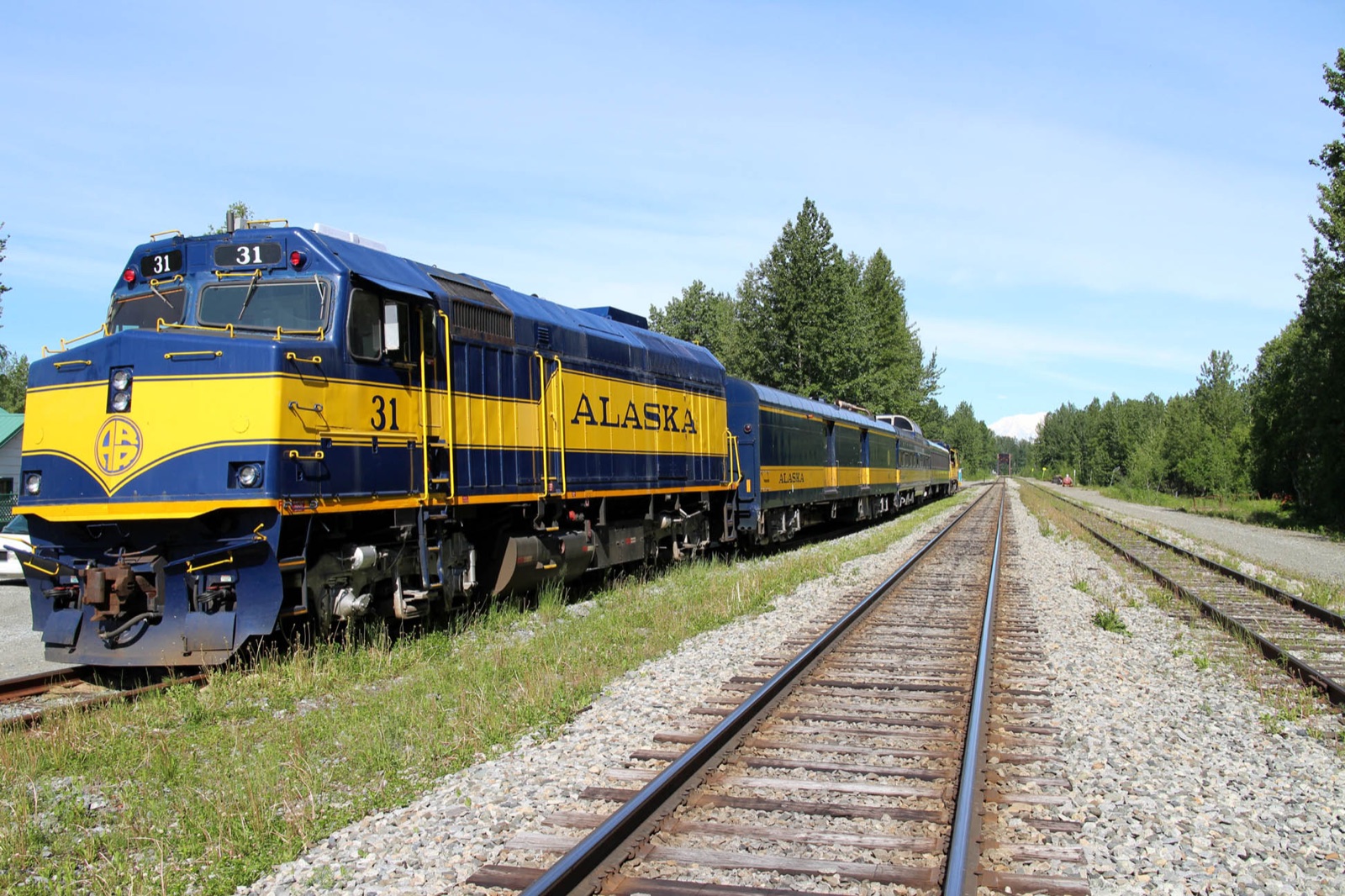
Hurricane Gulch, Alaska: the train that stops when you wave
The Alaska Railroad's Hurricane Turn is the last true flag-stop train in the United States. It runs north out of Talkeetna into country with no road in it, and people who live along the line — homesteaders, cabin owners, hunters — stand beside the track and wave it down. There are no platforms to speak of. You tell the crew roughly where you want to get off, and they stop there.
The one departure: in summer, from about mid-May to mid-September, one round trip a day on Thursday through Monday, which leaves a gap on Tuesdays and Wednesdays. In winter it runs once a month, on the first Thursday, from October through May. One train. A month.
What the train replaces: nothing whatsoever. The Susitna River corridor it serves has no road, and the homesteads along it are reachable on foot, by river, by small plane, or by this train.
The miss-it clock: in summer, a day, or three if you have hit the Tuesday–Wednesday gap. In winter, the next train is next month. That is the single most consequential missed connection on this page, and it is worth sitting with — a four-week wait is not an inconvenience, it is a different trip.
Practical notes: there is no dining car, so bring your food and water for the day. The run crosses Hurricane Gulch on a high trestle with Denali in view on a clear day, and the once-a-month winter service is, for a certain kind of traveler, the point rather than the problem.
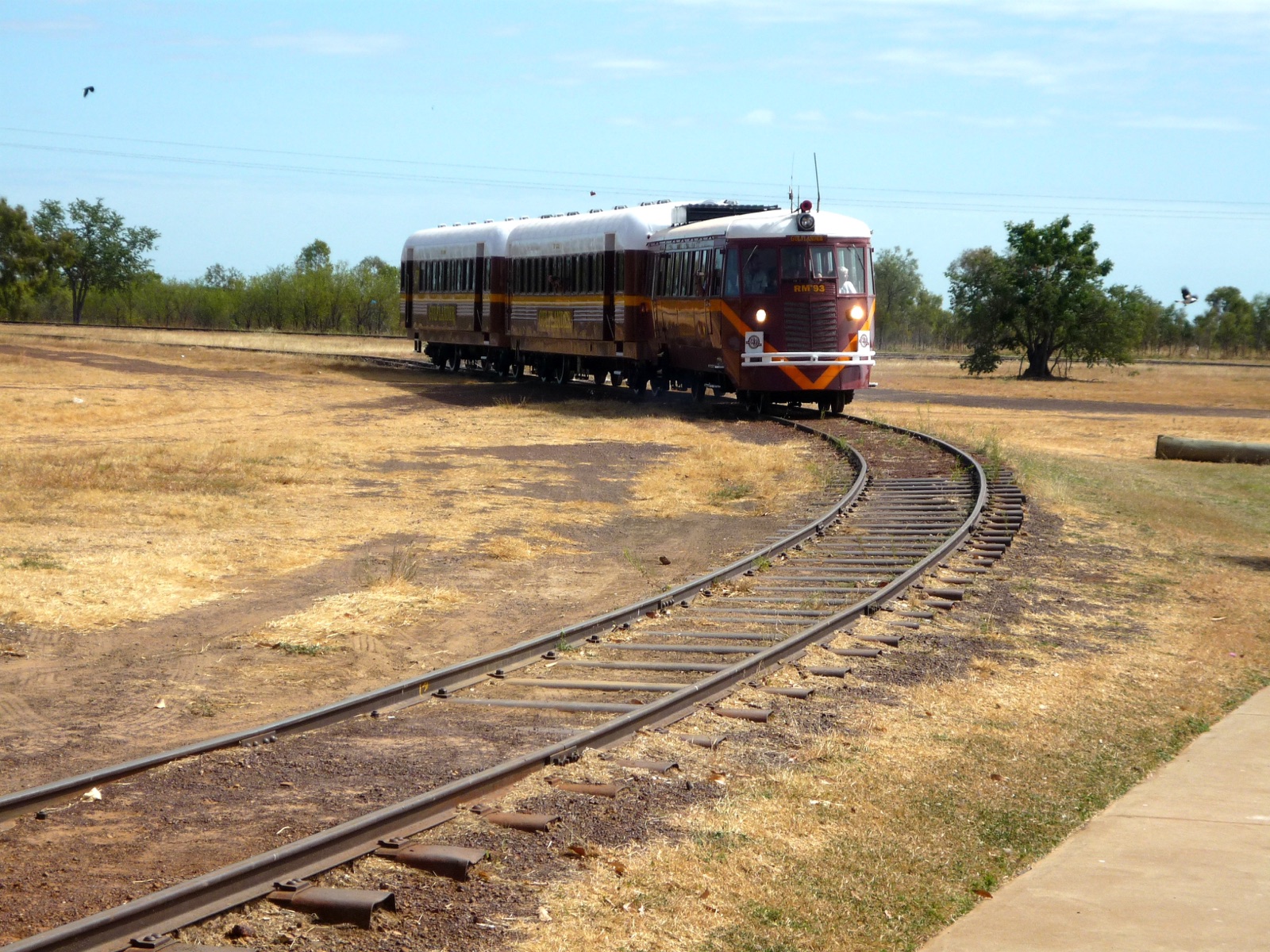
Croydon, Queensland: one train a week, and the return is the next morning
The Gulflander runs 152 kilometers across the Gulf Savannah between Normanton and Croydon in far north Queensland, on a line built for an 1891 gold rush that was never connected to any other railway in Australia. It has spent its whole life as an island of track. Locals describe the route as going from nowhere to nowhere, and the railmotor that works it is over a century old.
The one departure: one train a week each way. It leaves Normanton at 08:30 on Wednesday and arrives in Croydon at 13:30; it leaves Croydon at 08:30 on Thursday and is back in Normanton at 13:30. Those times are from the operator's published timetable, current to late October 2026 — a seasonal timetable, so check it again for your dates.
What the train replaces: a road does exist, the Savannah Way, so this is not isolation in the Churchill sense. What the train replaces is the ordinary way of seeing the country between the two towns — termite-mound savannah, floodplain, washaways the line has been patched around for 130 years.
The miss-it clock: the schedule builds the answer in. The return leaves the morning after you arrive, so a night in Croydon is not an option, it is the itinerary. Miss Thursday's departure and the next train is a week away; the practical fallback is the road, by bus or by car.
Season matters more than usual here: this is a dry-season trip, roughly May to September. The wet season can put the line out of service entirely.
If you want a second Australian version of the same idea, Queensland Rail's Westlander runs Brisbane–Charleville twice a week each way, an overnight of about 17 hours into outback dark-sky country, and the Inlander does the same twice a week between Townsville and Mount Isa. Both are real long-distance sleeper trains rather than heritage railmotors, and both have daily coaches as a fallback — so they are the softer entry point.
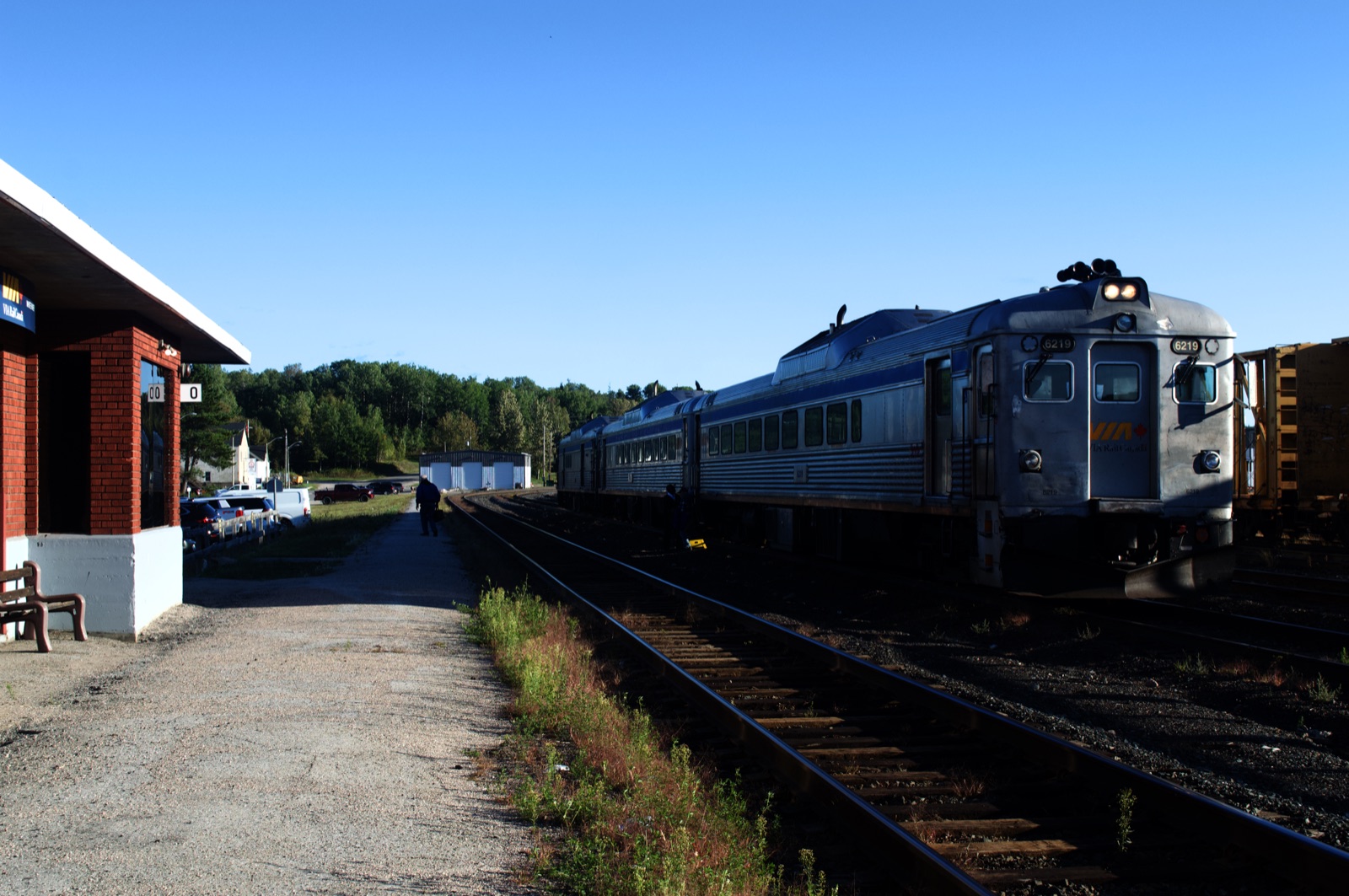
The White River line, Ontario: miss it and you camp
VIA Rail's Sudbury–White River train is a two-car Budd railcar working a line through northern Ontario lake country. White River itself sits on the Trans-Canada Highway and is perfectly reachable by road — but almost nothing between the two ends is. The line's intermediate stops are lodges, trailheads and lakes with no road to them, and canoeists flag the train down from the trackside, load the canoe into the baggage car, and get off again at a mile point they name themselves.
The one departure: three days a week in each direction, leaving early in the morning. The exact day pairing has shifted over the years, so confirm which days run in your direction on VIA's schedule page rather than assuming a pattern.
What the train replaces: for the roadless middle of the line, everything. There is no parallel road, no bus, and no way to walk out in an afternoon.
The miss-it clock: one to two days — and this is the entry where that number is most literal. If you are standing at an unmarked point in the bush and the train has gone, you are not catching a later one and you are not walking to a highway. You are camping until the next scheduled service. That is normal practice on this line rather than an emergency, but it only works if you brought the gear for it.
Why go: the flag-stop mechanic itself is the attraction — there are very few places left in the world where a scheduled passenger train will stop for you in the middle of nowhere because you asked. White River, at the end of the line, is also the town where the bear cub who became Winnie-the-Pooh was bought.
Corrour, Scotland: the gentle entry
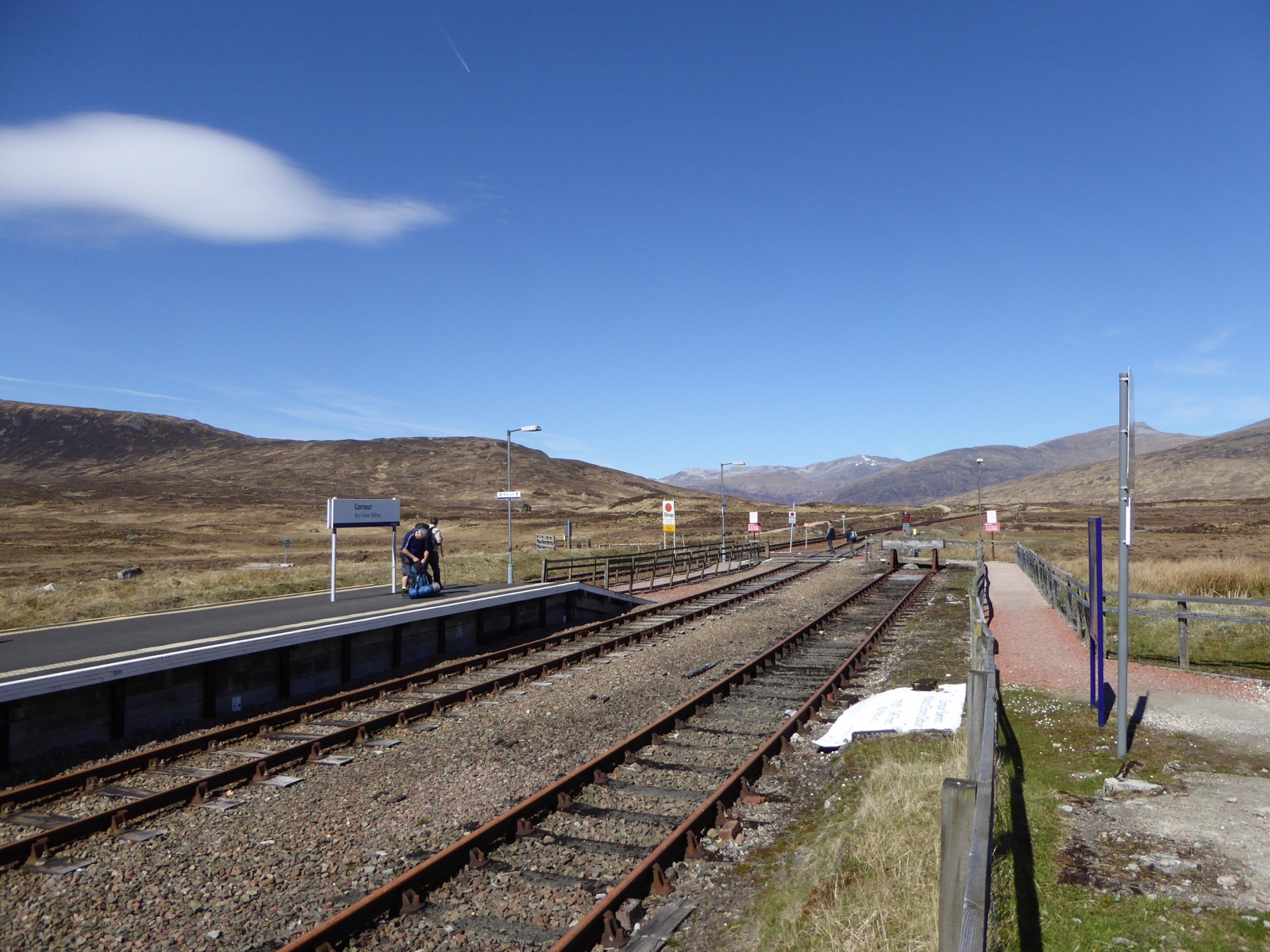
Corrour is the UK's highest and most remote mainline train station, sitting alone on Rannoch Moor with no public road to it. The nearest road is more than ten miles away. You arrive by train, on foot, or by bike, and there is nothing at the station except the station.
The one departure: this is the honest exception on the list — Corrour is not a one-train-a-day station. ScotRail runs roughly three or four trains a day each way on the West Highland Line between Glasgow and Fort William, and the Caledonian Sleeper adds a direct overnight service from London Euston that arrives just before nine in the morning. Getting off a sleeper from central London onto an empty moor is a strange and excellent way to start a trip.
What the train replaces: the road that is not there. The isolation is real even though the service is frequent by the standards of this article.
The miss-it clock: hours rather than days — but miss the last one and the arithmetic changes completely, because you are on a roadless moor at dusk. The station house on the platform runs as a restaurant with a small number of rooms; beyond that it is a bothy or a tent. Book the room before you need it, not after.
Why go: Rannoch Moor is one of the emptiest landscapes in Britain, there are Munros walkable from the platform, and the station had a moment of fame as a filming location for Trainspotting. Late spring and September are the best windows — midges peak in July and August.
Jokkmokk, Sweden: a train that exists eight weeks a year
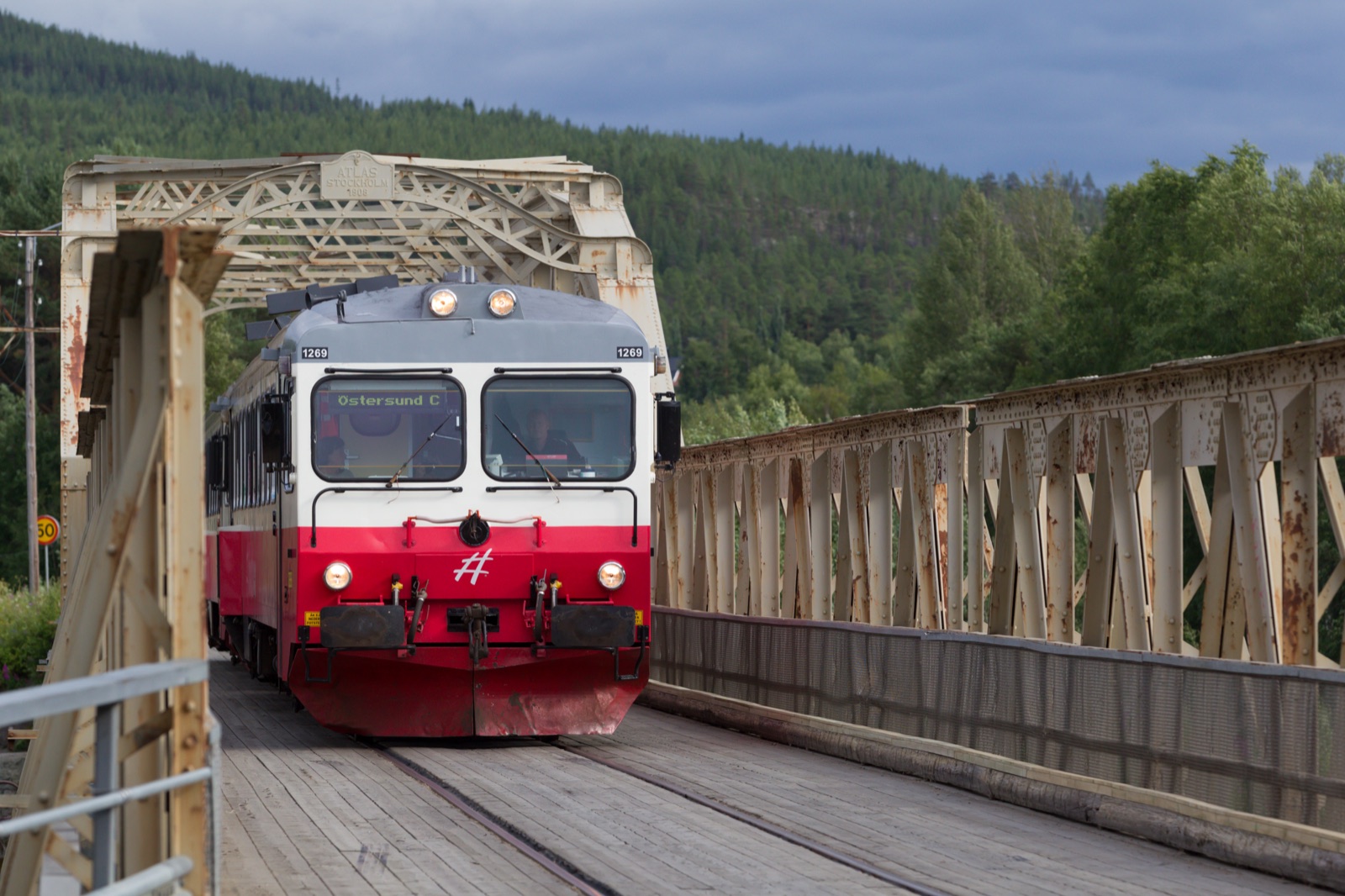
The Inlandsbanan runs 1,300 kilometers up the spine of northern Sweden from Östersund to Gällivare, through forest and bog and across the Arctic Circle, where the train makes a ceremonial stop. Jokkmokk and Sorsele are the kind of towns it serves: small, northern, Sámi cultural centers with a museum and a market and a lot of quiet.
The one departure: one train a day — during a season of roughly eight weeks. The 2026 season ran from mid-June to mid-August. Outside those dates the passenger service simply does not exist. The operator publishes the timetable each season and the departure times move between years, so take the times from Inlandsbanan's own booking site rather than from anywhere else.
What the train replaces: the regional bus network, which does run year-round and is the sensible way to reach these towns for eleven months of the year. The train is not the only access; it is the only way to make the journey itself the trip.
The miss-it clock: exactly 24 hours in season — and outside the season, there is no next train at all. That is the entry's hook and it is worth being blunt about it: if your dates fall in September, this journey is not available to you, at any price.
Why go: the Arctic Circle crossing, the wilderness halts where the train pauses for a meal, and Jokkmokk's Ájtte museum, which is the serious place to understand Sámi culture before you travel through it. In midsummer, north of the Circle, the sun does not set.
Ooty, India: one departure a day, sold out weeks ahead
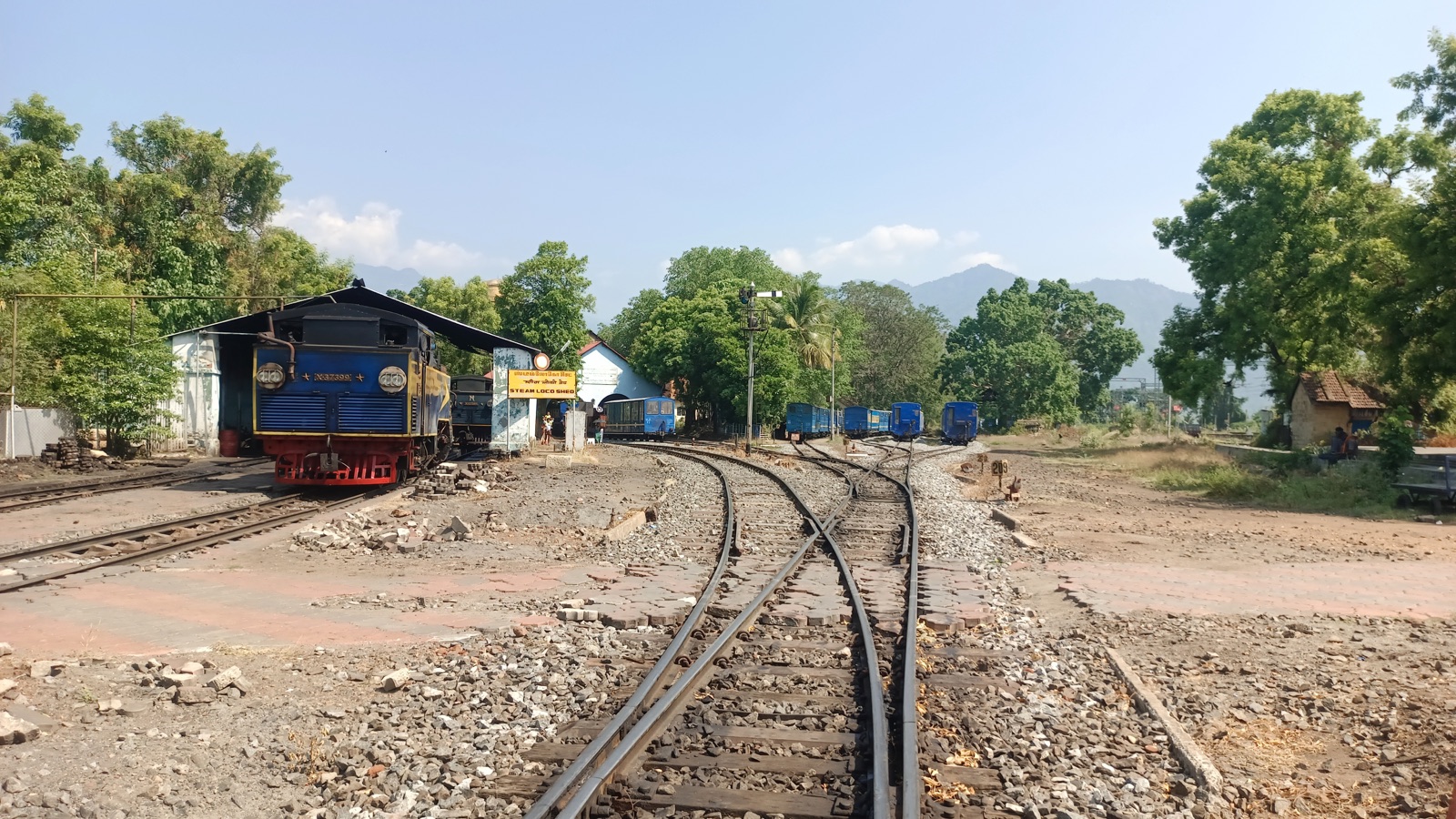
The Nilgiri Mountain Railway climbs from Mettupalayam on the plains to Udhagamandalam — Ooty — in the Nilgiri Hills, using a rack-and-pinion system to get up gradients an ordinary train cannot manage. It is a UNESCO World Heritage listing and it is still, straightforwardly, public transport.
The one departure: one through train a day on the rack section, leaving Mettupalayam early in the morning and taking most of the morning to climb; the return leaves Ooty in the early afternoon. Extra services run some peak summers. Check the current times against Indian Railways' own listing before you plan around them — the departure is stable in shape but the minutes are not something to take on trust from an article.
What the train replaces: honestly, not much. Ooty is reachable by road, and a bus up the hairpin bends takes about three hours against the train's five. This is the one entry where the missable thing is the experience rather than the town.
The miss-it clock: tomorrow morning — assuming there is a seat, which there often is not. A single daily departure on a famous heritage line means bookings go weeks in advance, particularly in the summer hill-station season. Mettupalayam has hotels, so an overnight to catch the next one is workable.
Best window: October through June. The southwest monsoon can wash out sections of the line, so July to September carries real cancellation risk.
González Bastías, Chile: hamlets with no road, and a resident’s seat card
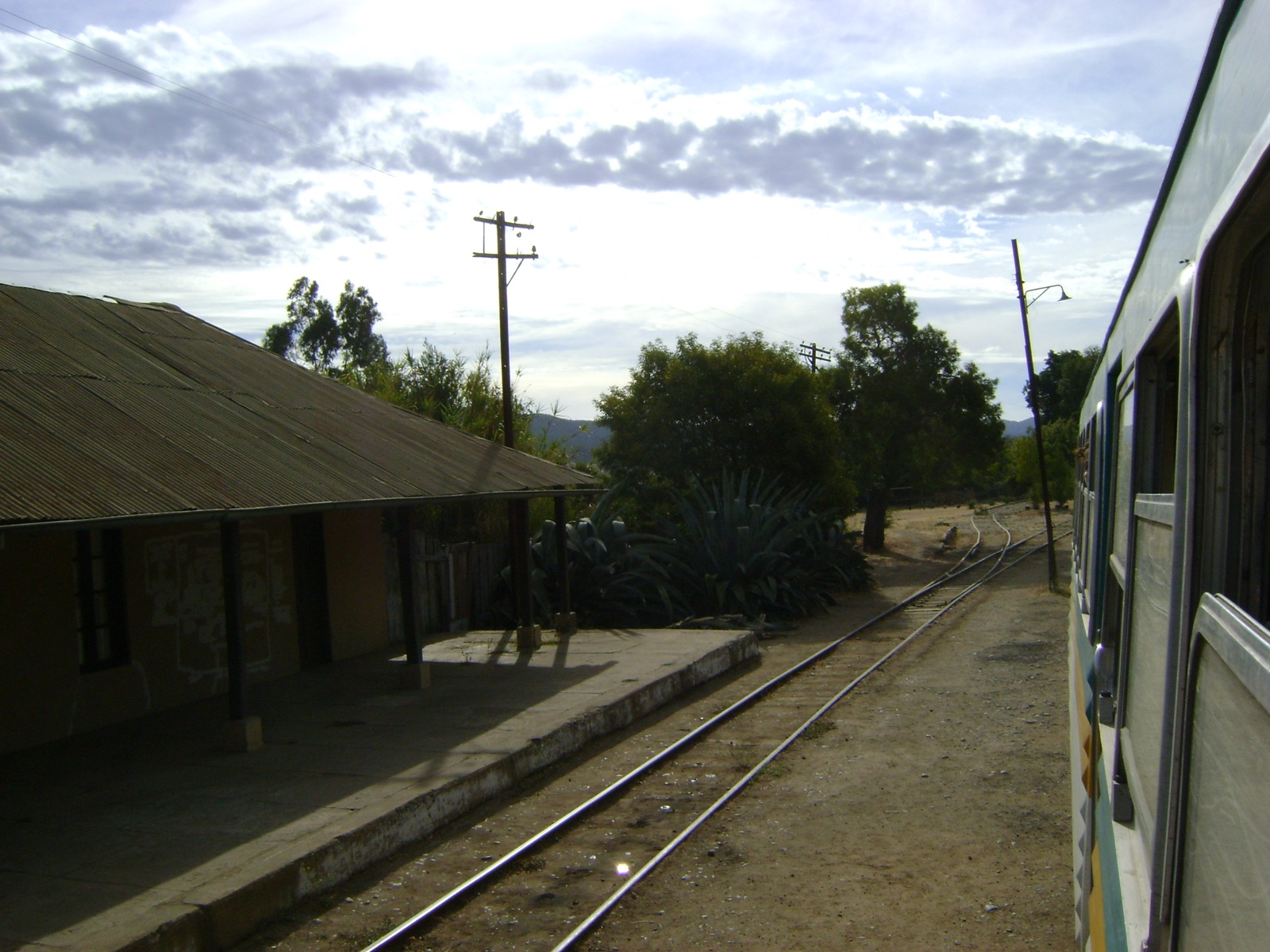
The Ramal Talca–Constitución is the last rural branch-line passenger service in Chile: an 88-kilometer run from Talca down the Maule River gorge to the Pacific coast at Constitución, worked by a small diesel railcar. Several of the riverside hamlets it calls at — Toconey, González Bastías — have no road access at all. Residents carry cards that give them priority for seats, which tells you everything about what this train is for.
The one departure: a daily morning railcar from Talca, with a second afternoon working most days, and a corresponding early return from Constitución. The timetable was revised in February 2026, so check the operator's current listing rather than an older guide.
What the train replaces: for the roadless hamlets, the river or a long walk. For the two end towns, nothing — Talca and Constitución both have full bus service.
The miss-it clock: up to 24 hours at the hamlets, which is a serious wait somewhere with no hotel and no shop. At either end of the line it costs you nothing but a bus fare.
Why go: the gorge itself, the way the train runs at walking pace past houses with no other connection to the world, and Constitución's Pacific coastline at the end of it. Southern summer and autumn, November to April, are the comfortable months.
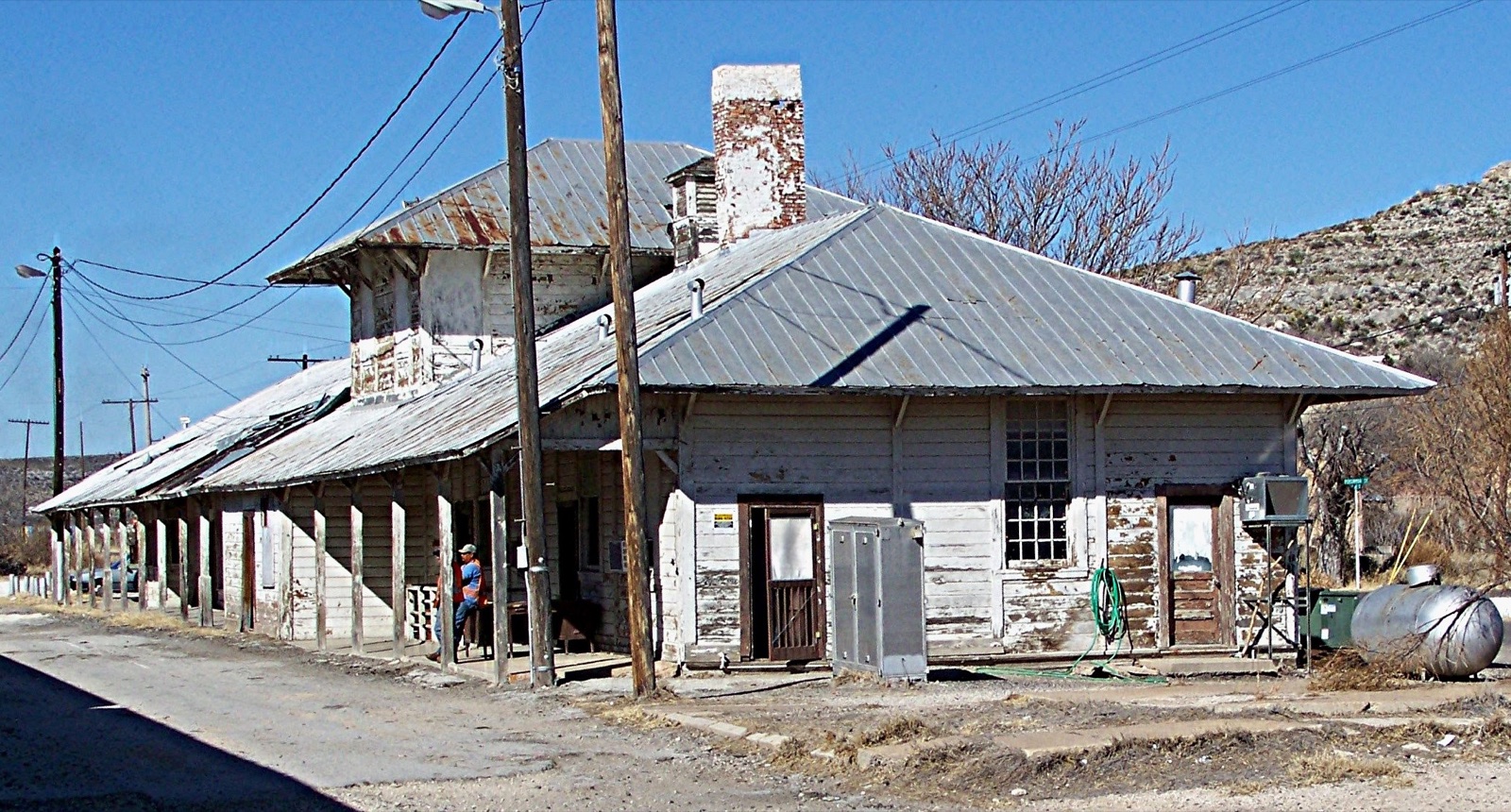
Sanderson, Texas: two days to the next train
Sanderson is a town of around six hundred people in the Chihuahuan Desert of west Texas, which calls itself the Cactus Capital of Texas and sits in genuinely spectacular canyon country on the approach to Big Bend. Amtrak's Sunset Limited stops there.
The one departure: three trains a week each way. Westbound calls in the morning on Tuesday, Thursday and Sunday; eastbound calls late at night on Monday, Thursday and Saturday. Long-distance American trains run late often enough that the scheduled time is a starting point rather than a fact — check the status before you go to the platform, especially for the night call.
What the train replaces: no bus serves Sanderson. US 90 runs through the town, so the road exists, but without a car the train is the public transport in its entirety and the nearest interstate is over sixty miles away.
The miss-it clock: about two days. There are a couple of small motels in town, which is fortunate, because a missed train here with no car leaves you genuinely stuck.
Best window: October through April. Summer heat in this part of Texas is severe and not something to underestimate on a trip built around outdoor country.
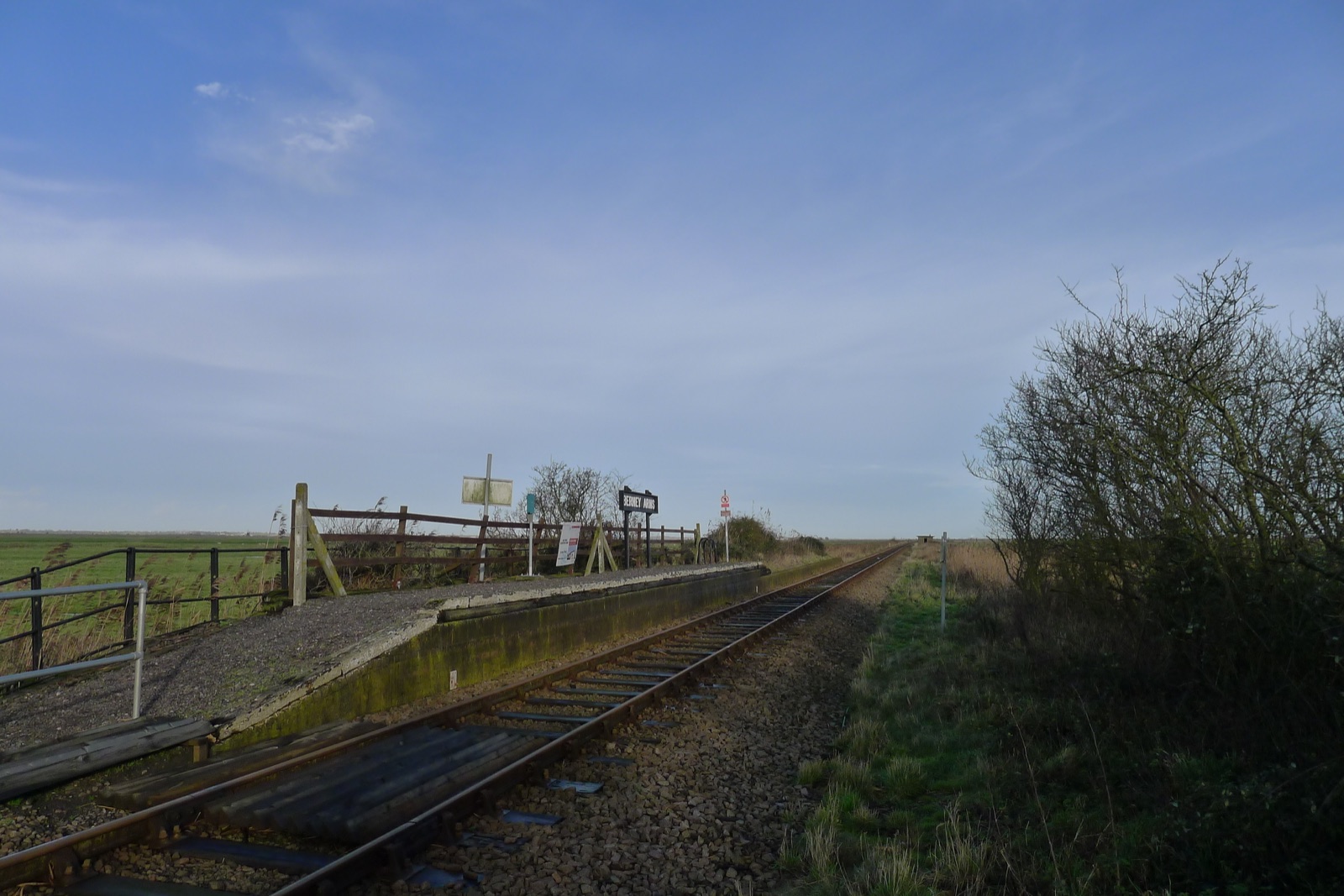
Berney Arms, England: no road, no services, walk out
Berney Arms is a request stop in the middle of the Halvergate Marshes in Norfolk, and it is routinely called England's loneliest station. There is no road to it. There is also nothing at it — the inn that gave the station its name closed years ago, and no services of any kind remain on site. Bring water.
The one departure: two trains a day each way on the Wherry Lines, rising to about three in summer — and it is a request stop, so you tell the conductor you want it and you signal clearly from the platform when you want to be picked up. A train that is not asked to stop does not stop.
What the train replaces: a boat, or a walk. The nearest lane is about three and a half miles across the marsh.
The miss-it clock: hours, on paper. In practice the reliable fallback is your own legs — it is roughly five miles along the Wherryman's Way into Great Yarmouth, which is a pleasant walk in daylight and good weather and much less pleasant in neither.
Why go: the drainage windmill, enormous marshland skies, and the birdlife of the Halvergate levels. April to October is the sensible window.
The sidebar: a train that runs once a week so the line cannot be closed
Not every one-train-a-week service is about isolation. Reddish South and Denton, on the edge of Manchester, sit in dense suburbia with buses passing constantly — and each is served by a single train a week, one Saturday-morning working. Nobody needs it. It exists because formally closing a railway line in Britain is a slow and expensive legal process, and running a token service is cheaper than going through it.
These are known as parliamentary trains, or, less formally, ghost trains, and enthusiasts travel a long way to ride them. The miss-it clock is a week — or a four-minute wait at the bus stop, which is the joke that makes the whole thing work.
One caveat worth knowing before you plan a Saturday around it: tram-train proposals for the corridor were filed in 2026 and could end the service. Check that it is still running before you travel for it.
For the record: Choum, Mauritania
One place belongs in an article with this title and does not belong in a recommendation, so it gets its own heading. The SNIM iron ore train runs 704 kilometers across the Sahara between Nouadhibou on the Atlantic coast and the mines at Zouérat, and it is one of the longest trains on earth at well over two kilometers. Choum is a junction on that line and the way through to the Adrar oases.
There is roughly one passenger opportunity a day in each direction, and there is no published timetable. The train runs on mining time and departures move by hours from one day to the next. There is one official passenger carriage; riding on the ore itself is not authorised by the operator, whatever the photographs suggest.
The miss-it clock is the reason it is filed here rather than in the list above: you wait in the desert for tomorrow's, and nobody can tell you when tomorrow's is. The conditions are severe — sand for the entire journey, genuinely cold nights, no facilities of any kind — and this is a trip to research properly through current first-hand accounts, not to add to an itinerary because it sounded good in an article.
How to plan a trip with one departure
There is a method to these trips, and it inverts the usual order. Normally you choose a place, then some dates, then the transport. Here the transport chooses the dates and the dates choose everything else. The Gulflander is the clearest case: there is exactly one Wednesday train in and one Thursday train out, so the trip is a Wednesday and a Thursday and a bed in Croydon on the Wednesday night, and no amount of planning changes any of that.
Three rules cover most of it. First, book the bed for the night the timetable dictates before you book anything else — in Churchill in bear season or at Corrour in summer, the room is scarcer than the seat. Second, build in a buffer day at the far end rather than at the near end; connections into these services are where trips break, and a spare day before the once-a-week train is worth more than a spare day after it. Third, check the operator's own timetable page in the month you travel. Every service in this article is seasonal, revisable, or both, and two of them were removed from this piece during research because they had quietly stopped being true.
The other thing worth saying plainly: arrival time matters far more than usual. A train that gets in at 22:30, as the eastbound Sunset Limited does at Sanderson, means arranging where you sleep before you leave home. In a town of six hundred people there is no late-night desk to talk your way past.
What PoppaTrip does with this
The timetables on this page are editorial: researched once, written down, and dated. PoppaTrip does not hold live rail schedules and it would be dishonest to suggest otherwise — the operator's own page is the source of truth for every departure named here.
What the wizard does do is build a plan around the constraints these trips create. Setting the pace to slow, the vibe to off the beaten path and transport to public transport produces days that assume you are not driving between things and that a single arrival can eat a morning — which is the actual shape of a trip built around one departure.
What these places have in common is not remoteness exactly. Ooty has a road; Croydon has a road; Reddish South has a bus every few minutes. What they share is that the timetable is not a convenience laid over the trip — it is the trip's skeleton, and everything else hangs off it.
Which is, in the end, a pleasant way to travel. When there is one train, there is one decision, and once you have made it the rest of the trip is just the days you were given.