
On this page12 sections
- The rides, at a glance
- The 65-cent crossing that beats the $29.49 cruise
- The ding ding: $0.42, any distance
- The ride that costs nothing and changes direction
- Up Victoria Peak for about $1.67
- An hour at sea for about $2.14
- The $2.62 bus that replaces the $37.82 cable car
- Getting in from the airport without the express
- The card that pays for every one of them
- Two things we could not price
- Stringing them into one very cheap day
- Questions about getting around Hong Kong cheaply
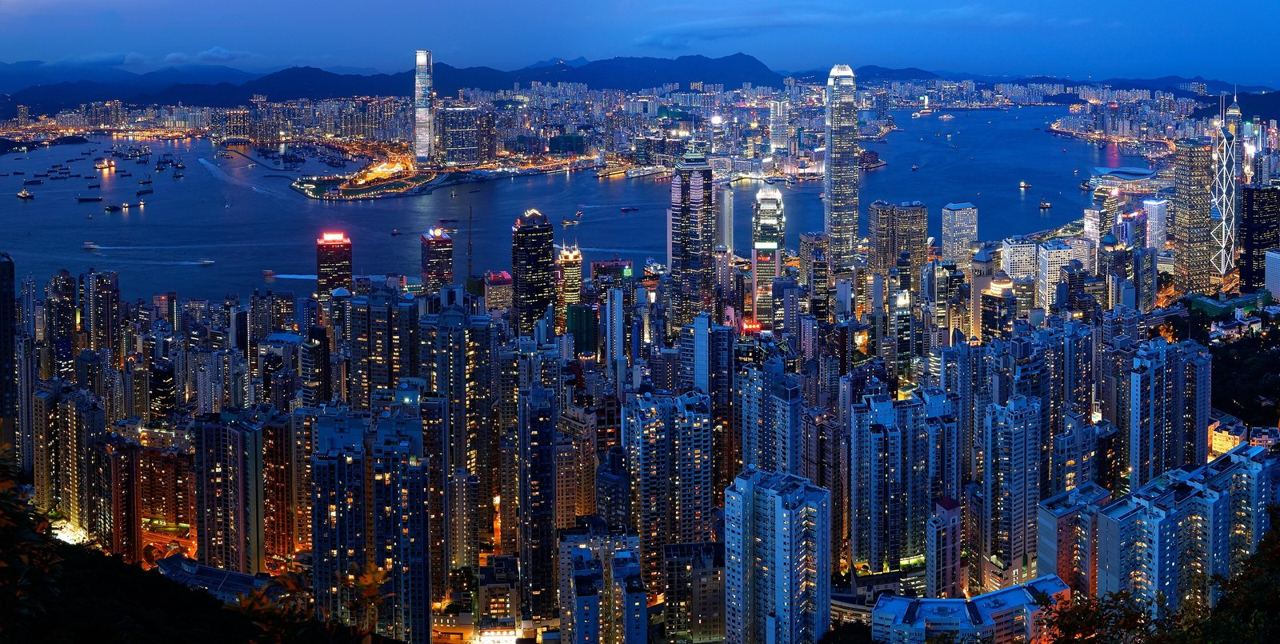
Hong Kong is a Special Administrative Region of China, and one of the few places on earth where the cheapest thing you can do is also the best. A ticket on the Star Ferry across Victoria Harbour costs about $0.64. The same company will sell you a harbor cruise on the same water for about $29.49. The cruise is longer. It is not better.
That pattern repeats across the whole city. A double-deck tram runs the length of the north shore of Hong Kong Island for a flat fare of about $0.42. A public bus climbs to the top of Victoria Peak for about $1.67. A government escalator carries you up the hillside through the middle of Central for nothing at all. None of these is a tourist product, a pass, or a discount — they are how the city gets to work, and visitors are simply allowed on.
Everything below was read off the operator’s own page, or the Hong Kong Government’s own published data, in September 2026, and the test for getting a number on this page was strict: an official source or no figure. Fares are given in US dollars first with the Hong Kong dollar in parentheses, at HK$7.8 = $1 — the rate is stated once here and used throughout. Where an operator’s own site would not serve us its prices — the Peak Tram among them — this article prints no number and says so near the bottom.
The rides, at a glance
Scroll the table sideways on a phone.
| Ride | What it is | Price | The ride to take | What it replaces |
|---|---|---|---|---|
| Star Ferry | Tsim Sha Tsui to Central across Victoria Harbour, 9 minutes | about $0.64 (HK$5) weekday upper deck | Board 20 minutes before sunset, upper deck, sit on the open bow side | The same company’s Water Tour, about $29.49 (HK$230) |
| The “ding ding” tram | Double-deck tram along the north shore of Hong Kong Island | about $0.42 (HK$3.30), any distance | Front seat upstairs, Shau Kei Wan to Kennedy Town — 86 minutes end to end | Any city sightseeing bus, at a fraction of the fare |
| Central–Mid-Levels Escalator | Covered walkways, 16 reversible one-way escalators and 3 reversible one-way travelators | Free | Uphill after 10am, stepping off at Hollywood Road and Elgin Street | A taxi up a hill you cannot comfortably walk |
| Citybus 15 | Central Ferry Piers to the top of Victoria Peak, about 47 minutes | about $1.67 (HK$13) | Upstairs, front row, in daylight — the road is the attraction | The Peak Tram (whose own site would not give us a price) |
| Citybus 15C | Central to the Lower Peak Tram Terminus on Garden Road | about $0.78 (HK$6.10) | Only if you do want the tram — this is the ride to its door | A taxi to the tram queue |
| Sun Ferry to Cheung Chau | Central Pier 5 to a car-free fishing island, 55–60 minutes | about $2.14 (HK$16.70) weekday, ordinary ferry | Weekday, ordinary ferry, ordinary class, sitting outside at the stern | A guided island day trip |
| Ferry to Lamma Island | Central to Yung Shue Wan, about 27 minutes | about $3.19 (HK$24.90) weekday | Out to Yung Shue Wan, walk across the island, back from Sok Kwu Wan | A boat tour of the outlying islands |
| New Lantao Bus 23 | Tung Chung to Ngong Ping and the Big Buddha, about 50 minutes | about $2.62 (HK$20.40) weekday; about $4.74 (HK$37) Sundays and holidays | Upstairs on the way up, for the coast road and the reservoir | The Ngong Ping 360 cable car, about $37.82 (HK$295) round trip |
| Citybus E11 | Hong Kong International Airport to Tin Hau, about 106 minutes | about $2.78 (HK$21.70) | Upstairs at the front, arriving over the bridges in daylight | Nothing — the Airport Express is faster; this is the cheap way |
| Octopus card | The stored-value card every one of the above accepts | HK$50 deposit plus HK$150 of value, about $25.64 up front | Buy it at an MTR Customer Service Center on arrival | Hunting for coins on a tram with no change given |
The 65-cent crossing that beats the $29.49 cruise
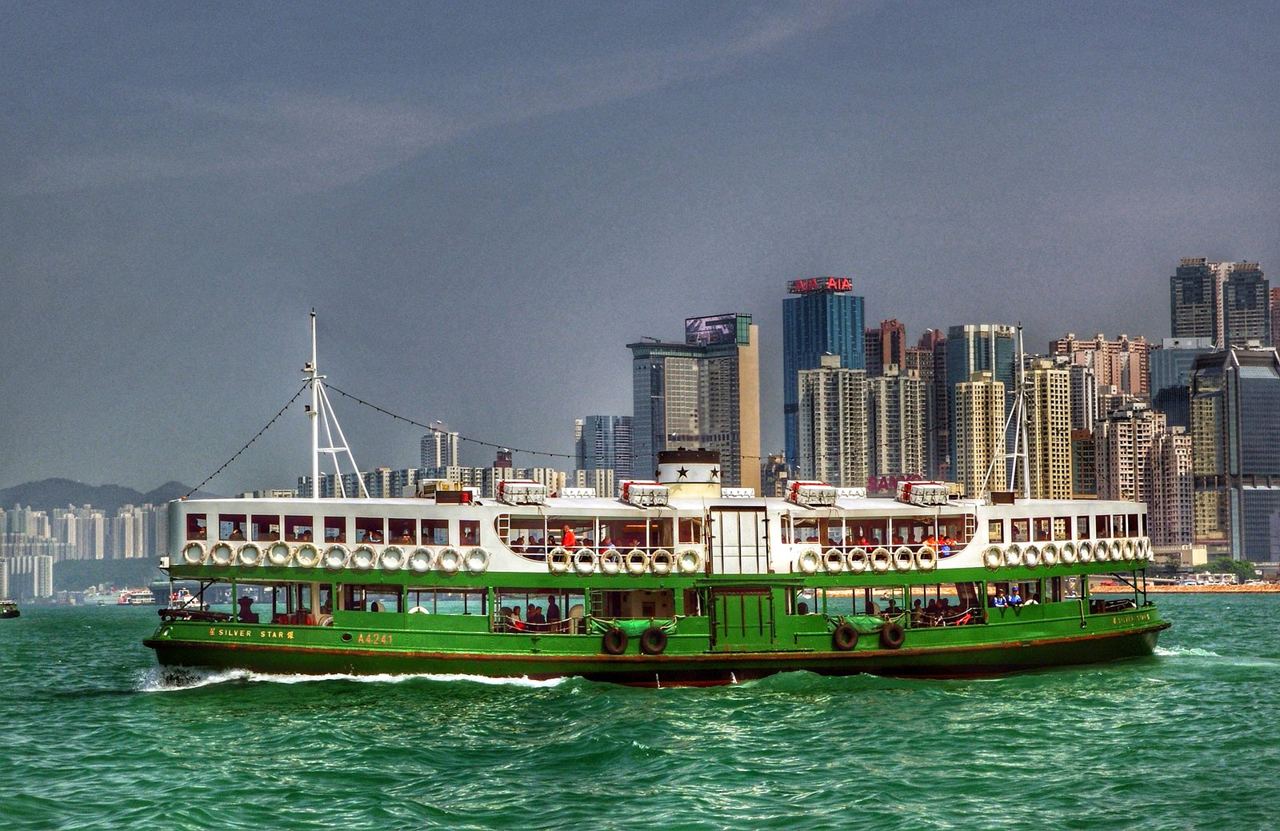
The Star Ferry, Tsim Sha Tsui to Central. The green-and-white boats have crossed Victoria Harbour since the nineteenth century and they still run as scheduled public transportation, from 6:30am to 11:30pm on the Central route. The adult fare is about $0.64 (HK$5) on the upper deck on a weekday and about $0.51 (HK$4) on the lower deck; on a weekend it is about $0.83 (HK$6.50) upstairs and about $0.72 (HK$5.60) downstairs. Children aged three to eleven and passengers 65 and over pay about $0.37 (HK$2.90) upstairs and about $0.36 (HK$2.80) downstairs on a weekday — a discount, but nearer 70 percent of the adult fare than half. Those are the fares the Transport Department also lists, with an effective date of 3 April 2023, and its route data puts the crossing at nine minutes.
Now the comparison that makes this article worth writing. The Star Ferry company also sells a sightseeing product on the same harbor, and it publishes those prices too: the Afternoon Sunshine Tour and the Romantic Sunset Tour are about $29.49 (HK$230) for an adult, and the Dazzling Night Tour is about $35.90 (HK$280), each running roughly 55 to 65 minutes. You are buying more minutes on the water. You are not buying a better view of the skyline, because the skyline is the same skyline, and the nine-minute crossing goes straight through the middle of it.
The exact ride: board at Tsim Sha Tsui about twenty minutes before sunset, pay the extra $0.13 for the upper deck, and sit on the open side facing Hong Kong Island. You get the towers going gold, then the lights coming on, then the whole thing again in the other direction if you immediately buy a second ticket — which, at $0.64, you should. The Wan Chai route is the quieter one and costs the same.
The ding ding: $0.42, any distance
Hong Kong Tramways, Hong Kong Island. The narrow double-deck trams — everyone calls them ding dings, after the bell — run along the north shore of Hong Kong Island, and the fare is flat: about $0.42 (HK$3.30) for an adult, about $0.21 (HK$1.60) for a child under twelve, about $0.19 (HK$1.50) for a passenger 65 or over. Flat means flat. One stop and the entire line cost the same, which is the single most useful fact in this article.
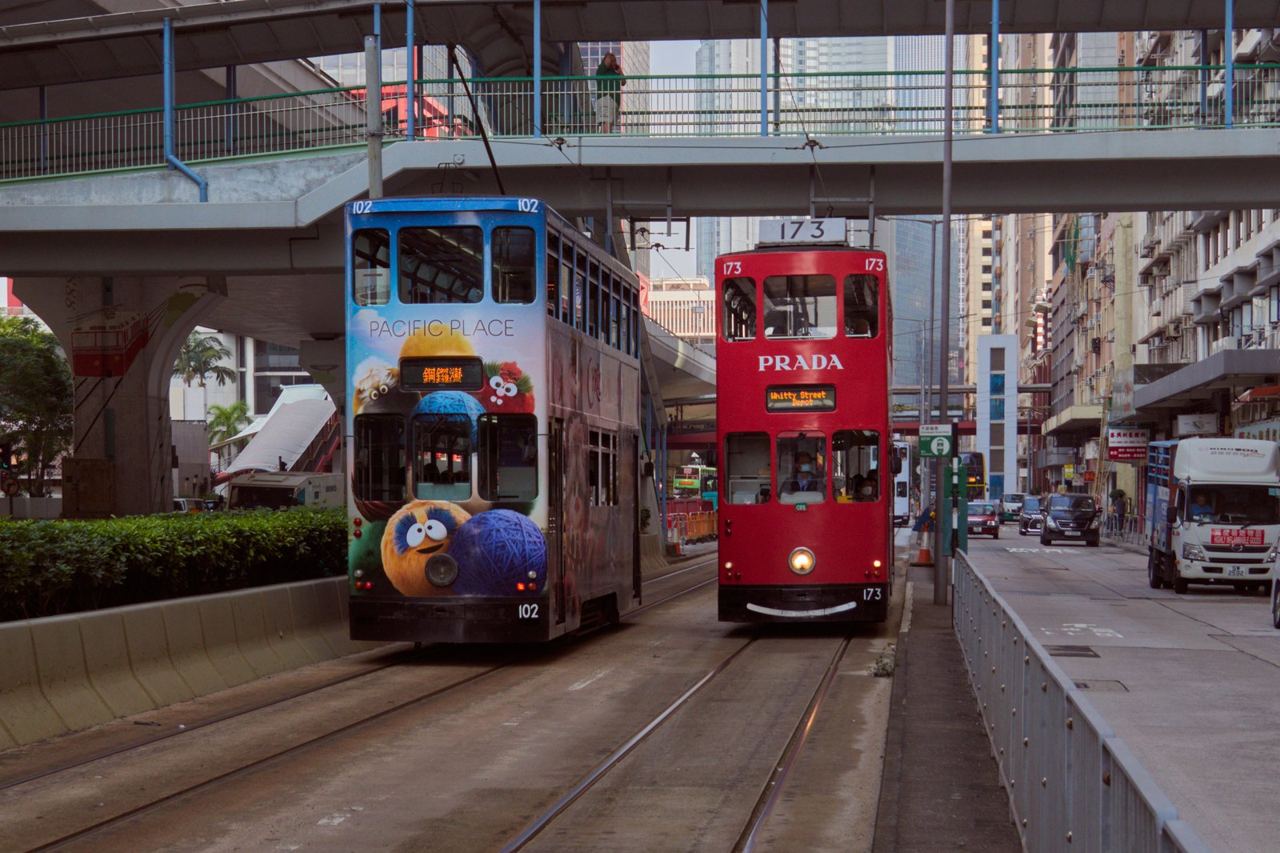
So take the entire line. The Transport Department’s route data gives the end-to-end running time for Shau Kei Wan to Kennedy Town as 86 minutes; Shau Kei Wan to Western Market is 68 minutes, and Shek Tong Tsui to Causeway Bay is 40 minutes if you want a shorter version. Sit at the front of the upper deck, where the window is at the level of the shop signs and the tram noses through wet markets, bank towers and old Wan Chai at a speed that lets you read them.
The mechanics catch people out. You board at the back and pay on the way out at the front, into the box beside the driver. There is no change given for cash, which is the argument for the Octopus card below. Octopus, credit cards, Apple Pay, Google Pay, Samsung Pay and QR payment through Alipay, WeChat Pay and UnionPay are all accepted. Hong Kong Tramways does not publish when the current fare took effect, so this page does not claim a date for it.
The ride that costs nothing and changes direction
The Central–Mid-Levels Escalator and Walkway System. In the Transport Department’s own words, the system “consists of covered walkways, 16 reversible one-way escalators and 3 reversible one-way travelators.” It climbs the hillside from Queen’s Road Central to Conduit Road, through some of the steepest and most crowded streets in the city. The Transport Department, which runs it, records about 99,000 pedestrian trips on it daily in late 2024. There is no fare, no ticket and no turnstile; the Government files it under pedestrian facilities, not public transportation.
The one thing you must know is that it only goes one way at a time, and the direction flips. In the department’s own words: “Everyday, it runs one-way downhill from 6:00 a.m. to 10:00 a.m. and then uphill from 10:00 a.m. to midnight.” Turn up at 9:30am meaning to go up and you will be walking. Turn up at 10:30am and the hill does the work.
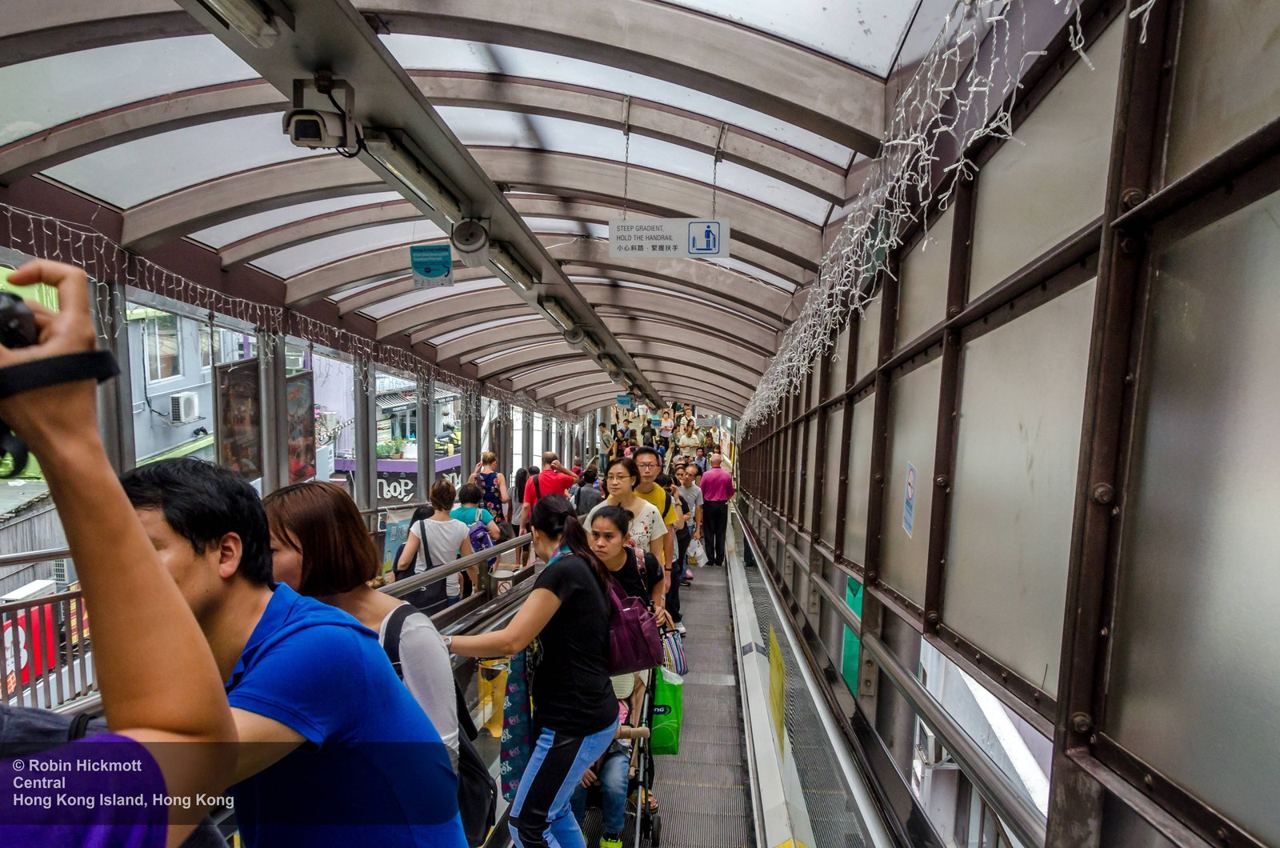
The exact ride: get on at Queen’s Road Central after 10am and step off twice — at Hollywood Road for the antique shops and Man Mo Temple, and again around Elgin and Staunton Streets, where the restaurant blocks of SoHo sit on either side of the machine. Riding it end to end and back is not the point; the point is that the escalator makes a neighborhood built on a cliff walkable, and it does it for free. The official page does not state the system’s length, so this one does not either.
Up Victoria Peak for about $1.67
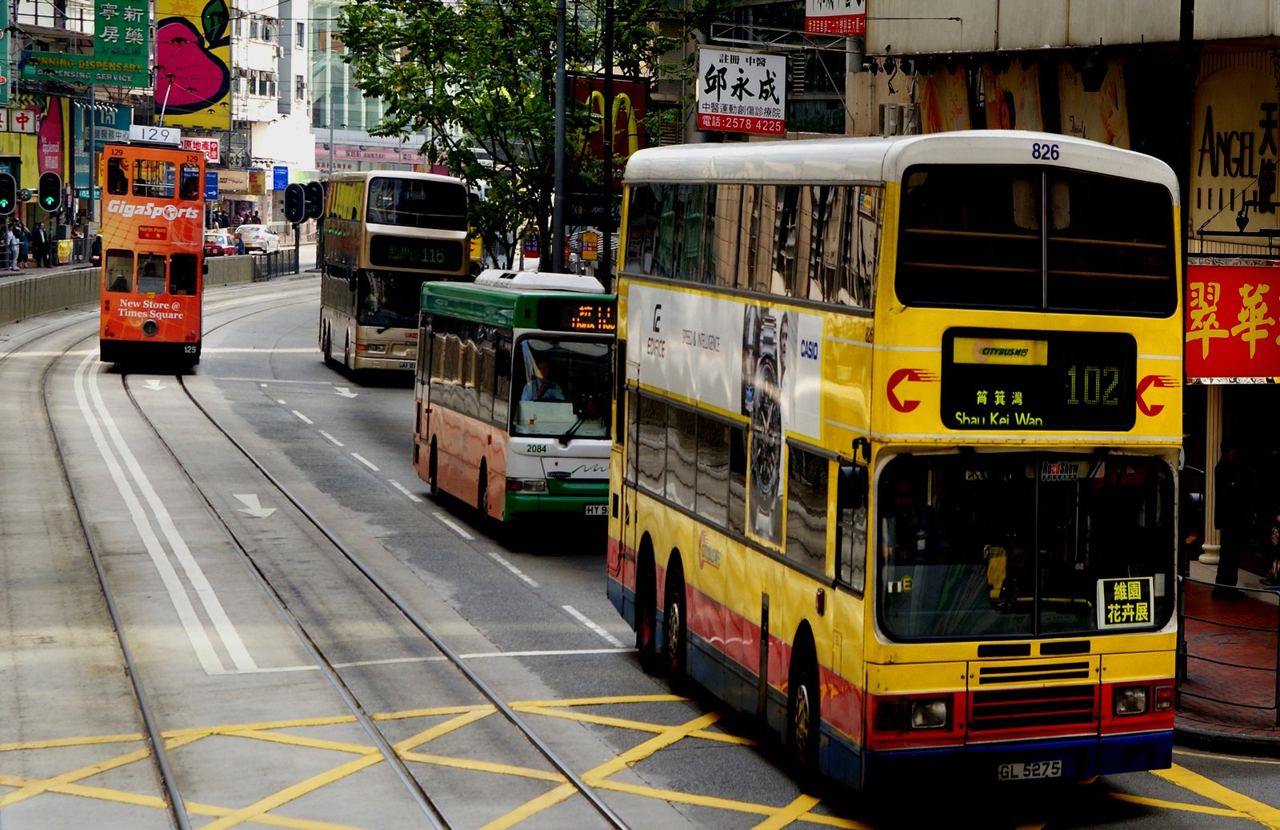
Citybus route 15, Central Ferry Piers to The Peak. The famous way up is the Peak Tram. The cheap way up is a normal double-deck city bus that has been climbing the same hill since 1960, and it is better, because a bus has windows on four sides and a funicular has a view out of the back. The Hong Kong Government’s Routes and Fares dataset, published by the Transport Department and generated on 11 September 2026, gives route 15 from Central Ferry Piers to The Peak a full fare of about $1.67 (HK$13) and a scheduled running time of 47 minutes. Shorter hops up the hill cost about $0.63, $0.95 and $1.26 (HK$4.90, HK$7.40 and HK$9.80). The express X15 from Central Ferry Pier No. 6 runs it in 30 minutes for about $2.15 (HK$16.80).
The exact ride: upstairs, front row, in daylight, going up. Route 15 climbs the hairpins of Stubbs Road with the whole harbor swinging in and out of the windscreen, which is a better piece of theater than the summit itself. Then walk the Peak Circle Walk along Lugard Road — it is flat, it is free, and it is the view every photograph of Hong Kong is taken from. Coming down after dark, take the bus again rather than queueing.
If you do want the Peak Tram, the cheap ride to its door is Citybus 15C, about $0.78 (HK$6.10) from Central to the Lower Peak Tram Terminus on Garden Road. We are not printing a Peak Tram price: its own ticket pages refused to serve us their content when we checked, and a number from somewhere else is not a number we will publish. See the bottom of this article.
An hour at sea for about $2.14
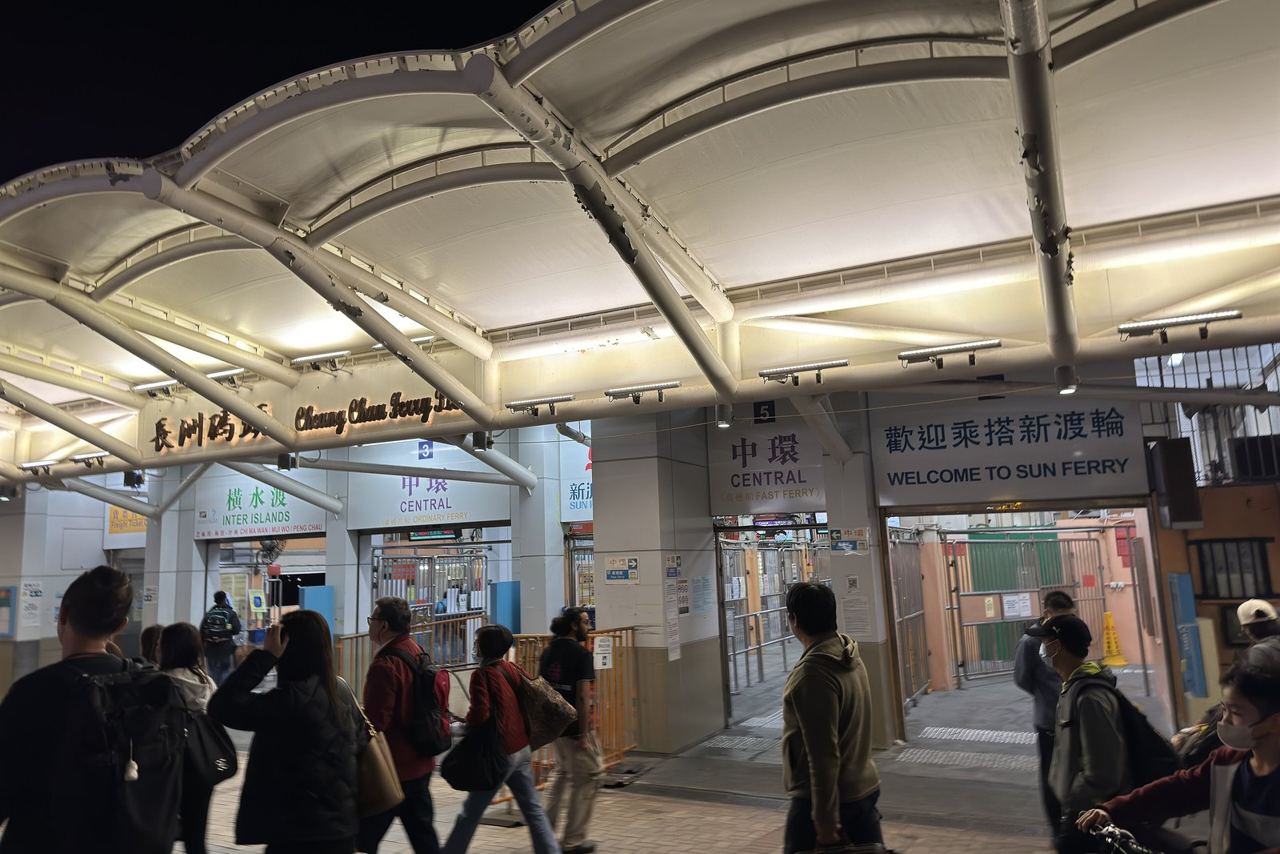
Sun Ferry, Central Pier 5 to Cheung Chau. Cheung Chau is a car-free fishing island with a harbor full of junks and a beach on the far side, and the ferry out to it is one of the great cheap boat rides anywhere. Sun Ferry’s published fare table gives an adult single on the ordinary ferry, ordinary class, as about $2.14 (HK$16.70) Monday to Saturday and about $3.18 (HK$24.80) on Sundays and public holidays. The fast ferry is about $4.22 (HK$32.90) and about $6.10 (HK$47.60). Children three to eleven and passengers 65 and over pay about $1.06 (HK$8.30) on a weekday in ordinary class; a child under three traveling with an adult goes free.
Here the cheap option is also the good option, which does not happen often. The ordinary ferry takes “about 55 – 60 minutes” by the operator’s own timetable and the fast ferry “about 35 – 40 minutes.” The slow boat has open deck space at the stern; the fast boat is a sealed cabin. You are paying half as much for twice as long outside in the middle of Victoria Harbour and the South China Sea. Take the slow one, both ways, on a weekday.
Lamma Island is the other one worth the trip: Central to Yung Shue Wan, about 27 minutes, at about $3.19 (HK$24.90) on a weekday and about $4.45 (HK$34.70) on Sundays and public holidays. Those two figures are the Transport Department’s, not the ferry operator’s — HKKF’s own website would not load for us at all this week, so we are attributing them honestly. The classic Lamma day is to sail to Yung Shue Wan, walk the paved path across the island in about an hour and a half, and sail home from Sok Kwu Wan. Mui Wo, on Lantau, is about $4.29 (HK$33.50) by fast ferry on a weekday and about $6.22 (HK$48.50) on a Sunday.
The $2.62 bus that replaces the $37.82 cable car
New Lantao Bus route 23, Tung Chung to Ngong Ping. Almost everyone reaches the Tian Tan Buddha — the Big Buddha — on the Ngong Ping 360 cable car, and the cable car publishes its prices plainly: a Standard Cabin round trip is about $37.82 (HK$295) for an adult and a single is about $26.28 (HK$205), with the Crystal Cabin at about $46.79 (HK$365) round trip. The ride is about 25 minutes each way. Note the small print on the concessions — the child fare covers ages three to eleven, and the senior fare requires a Hong Kong JoyYou Card or Hong Kong Senior Citizen Card, so a visiting 70-year-old pays the adult price.
The bus does the same climb on the road underneath. New Lantao Bus route 23 runs from the Tung Chung Tat Tung Road terminus to Ngong Ping in about 50 minutes by the operator’s own page, for about $2.62 (HK$20.40) on a weekday and about $4.74 (HK$37) on Sundays and public holidays. That is roughly one fourteenth of the cable car’s round-trip fare on a weekday, and the road climbs past the reservoir and along the coast with views the cable car does not have.
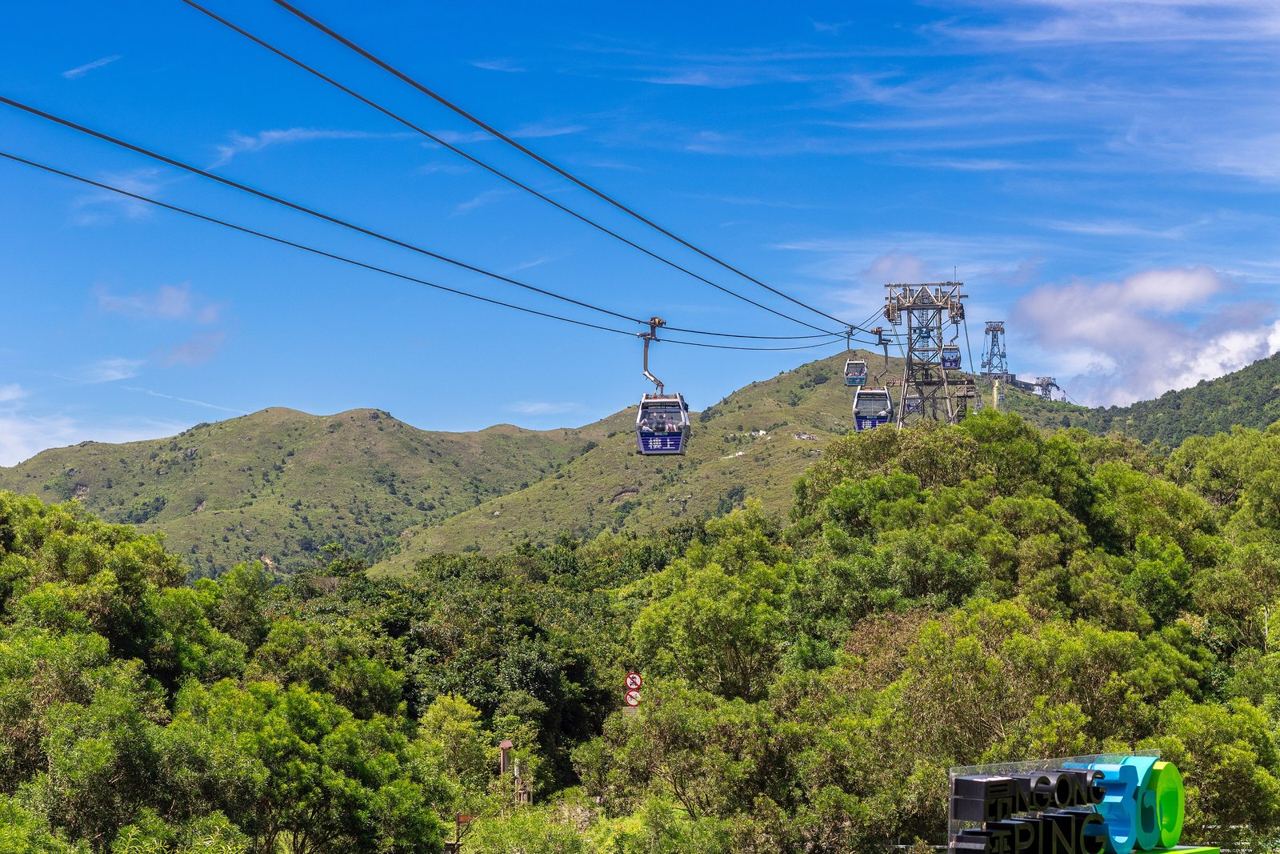
The honest version of the trade: the cable car is genuinely spectacular, and if you are going to spend money on one ticketed ride in Hong Kong, it is a defensible one. The cheap play is to take the bus up and the cable car down for about $26.28, which gets you both, in the order that puts the best view at the end. The expensive mistake is buying a round trip and never seeing the road.
Getting in from the airport without the express
The airport sits on Lantau, a long way west of the city, and the fast way in is the MTR Airport Express. With an Octopus, an adult pays about $15.38 (HK$120) to Hong Kong Station in Central, about $13.46 (HK$105) to Kowloon and about $9.36 (HK$73) to Tsing Yi, and a child aged three to eleven pays exactly half of each. A round trip is about $27.56 (HK$215), about $25.00 (HK$195) and about $16.67 (HK$130). It is the quickest way in and nobody sensible calls it bad value.
It is also five to eight times the price of a bus that goes to the same city. That is the trade this article is about, and it is the one case here where we would tell you to pay: if you land late, or tired, or with luggage you cannot carry up a bus stair, buy the ticket.
The buses, from the Transport Department’s September 2026 dataset. Citybus E11 runs between the airport and Tin Hau on Hong Kong Island for about $2.78 (HK$21.70), scheduled at 106 minutes. The faster A11 from the airport to North Point Ferry Pier is about $5.37 (HK$41.90) in 94 minutes, and A21 to Hung Hom Station in Kowloon is about $4.44 (HK$34.60) in 84 minutes. E21 to Tai Kok Tsui is about $1.86 (HK$14.50).
The E-routes are the cheap ones and the A-routes are the quick ones, and both are double-deck buses with luggage racks downstairs. Sit upstairs at the front and the ride in becomes the first sightseeing of the trip: the Tsing Ma Bridge, the container port, and then the wall of towers. Arriving in daylight, this is not a compromise.
The card that pays for every one of them
The Octopus card. One stored-value card covers the ferries, the trams, the buses, the escalator’s neighborhood convenience stores and the MTR, and it removes the single most annoying thing about paying cash in Hong Kong: the tram and the buses give no change. An adult Standard On-Loan Octopus takes a refundable deposit of HK$50 and comes with HK$150 of stored value — about $25.64 handed over at the counter, of which about $19.23 is money you will spend on rides.
Buy it at an MTR Customer Service Center. Octopus lists those at all stations with a handful of exceptions, and Airport Station is one of the exceptions — so plan to buy it at your first city station rather than on arrival. Getting the deposit back is easy at any MTR Customer Service Center, with one catch worth knowing before you buy: a handling fee of “HK$11 or 1% of any remaining value, whichever is higher” applies if you return the card within 90 days of buying it, or have used it for five or fewer payment transactions. For a week-long trip that fee is about $1.41, which is roughly two tram rides. Pay it and move on.
Two things we could not price
These are real, and travelers will want them. They are without figures here because the operator’s own pages would not serve us their content when we checked in September 2026, and a fare repeated from a blog is not a fare we will print. A third gap closed while we were writing: the MTR’s fare pages were down for most of our checks and came back before we finished, so the Airport Express fares above are the MTR’s own, read on 21 September 2026.
The Peak Tram and Sky Terrace 428. The funicular up Victoria Peak is the most famous ride in the city and the most obvious comparison for the bus above. Every ticket page at thepeak.com.hk returned a block to us — the ticket-and-booking page, the fare-adjustment press release and the web store alike — so this article carries no Peak Tram price, no Sky Terrace price and no combination price. Check thepeak.com.hk directly, and note that the tram has had scheduled multi-day maintenance closures, so confirm it is running on your dates.
HKKF, the Lamma Island operator. Hong Kong and Kowloon Ferry’s own website timed out on every attempt. The Lamma fares above come from the Transport Department’s published route and fare data instead, and are labeled that way where they appear.
Stringing them into one very cheap day
A full day of this costs under seven dollars, and it is a better day than most paid itineraries. Start on the Central–Mid-Levels Escalator after 10am, when it has turned uphill, and come down through SoHo and Hollywood Road on foot. Walk to the Central Ferry Piers and take route 15 up Victoria Peak for about $1.67, upstairs at the front, then walk the Lugard Road circle. Bus back down. Ride the tram east for about $0.42 until you are bored — the fare is the same however far you go. Then time the Star Ferry for twenty minutes before sunset and cross to Tsim Sha Tsui for about $0.64, and cross back for another $0.64 after dark.
Give a second day to the water: the slow ferry to Cheung Chau on a weekday, about $2.14 each way, with the middle of the day on the island. Give a third to Lantau, with bus 23 up to the Big Buddha and the cable car down if you want one splurge. The fixed points to plan around are the escalator’s 10am reversal, the Sunday and public-holiday fares on every ferry and on bus 23, and sunset — which is the only reservation the Star Ferry keeps.
If you would rather have those rides slotted into a finished route, our three-day Hong Kong itinerary groups the city by MTR line and adds an optional day on Lantau. If you are working out what a trip to Hong Kong costs overall, this is the line item that turns out not to matter, and our real daily budget guide puts it in proportion against food and a bed. For the same idea applied to concert halls and opera houses instead of ferries, see the cheapest great seat in the world.
The thread running through all of this is that Hong Kong never built a sightseeing layer on top of its transportation — it just kept the transportation, and the transportation happens to be beautiful. The trams are not heritage vehicles brought back for tourists; they are the cheapest way for someone in Sai Wan Ho to get to work. The Star Ferry is not a cruise; it is the boat people take when the MTR is crowded. Nobody is doing visitors a favor, which is exactly why the fares are this low and this stable.
So the practical version is short. Buy an Octopus card at your first MTR station, take the slow option every time it is offered, avoid Sundays and public holidays if the ferry fare matters to you, and confirm the figures on the operator’s own page in the week before you travel — prices move, and this page is a snapshot of September 2026.