The cheapest ride here is also the best one. Three days covers the island, Kowloon and the temples with room to breathe; a fourth buys you Lantau, the Big Buddha and a stilt village that has nothing to do with the skyline.
19 places we would actually send someone to, across 6 categories. Photos are in the written guide below, and every photo is of that specific place.
scenic
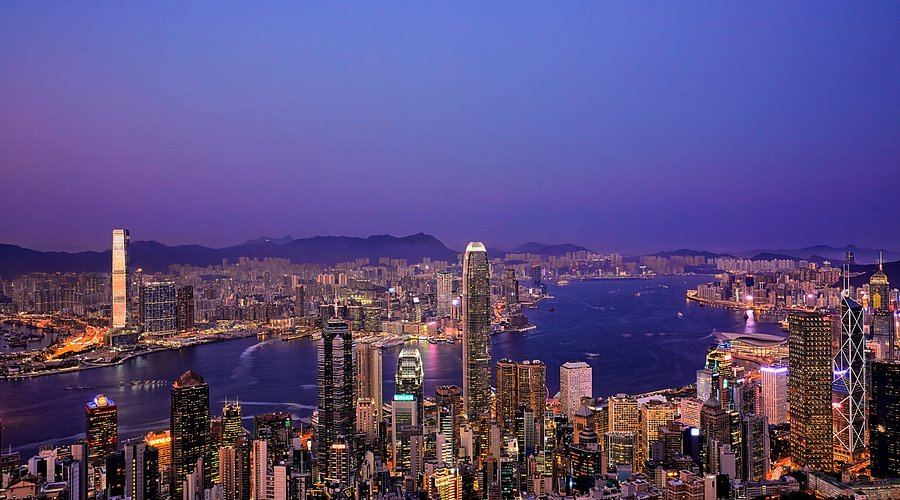
Victoria Peak
The high ground above Central, reached by the Peak Tram funicular that has been climbing the hill since 1888. The view is of the towers, the harbor and the hills of Kowloon behind them, and it is a different picture by day, at dusk and after dark.
scenic
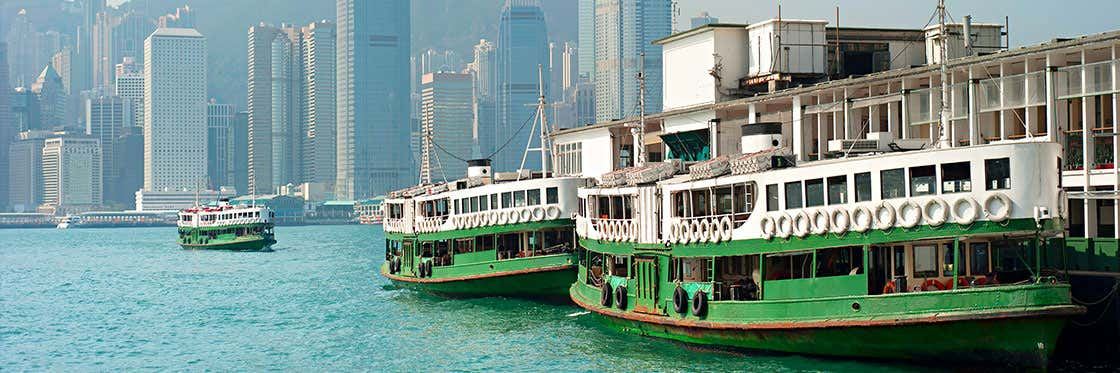
Star Ferry
A green-and-white double-decked ferry across Victoria Harbour between Tsim Sha Tsui and Central, running since 1888. It is ordinary public transit that happens to be one of the best cheap sights in Asia, and the crossing takes under ten minutes.
scenic
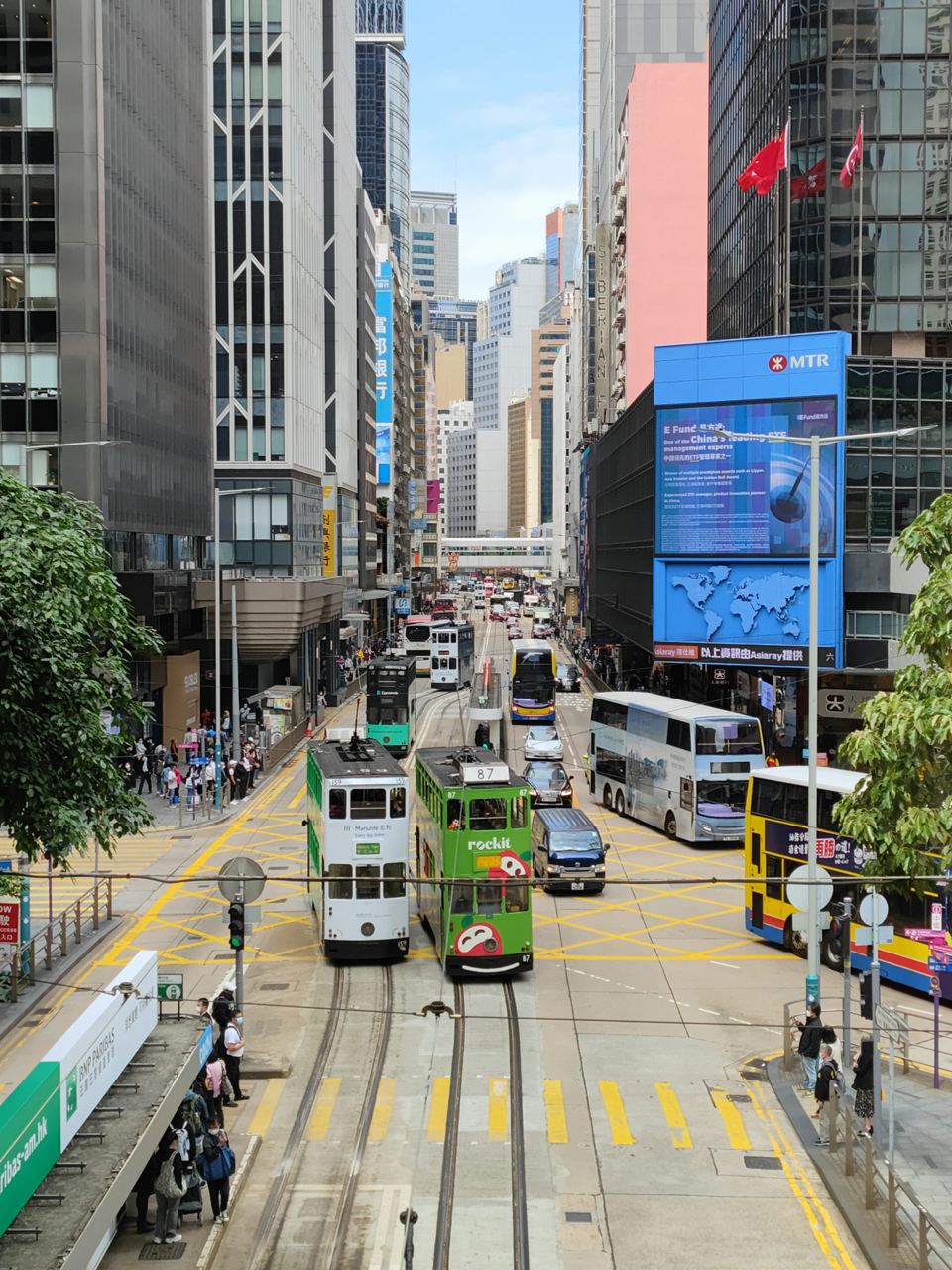
Hong Kong Tramways
The double-decker trams locals call the ding ding have run along the north shore of Hong Kong Island since 1904, on one long line from Kennedy Town to Shau Kei Wan. The front seat upstairs is the best slow tour of the island's street life there is.
scenic
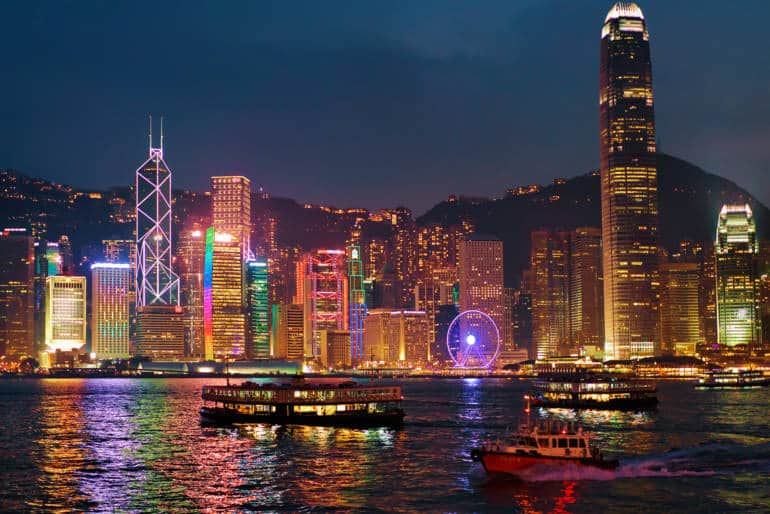
Tsim Sha Tsui Promenade
The waterfront walk along the Kowloon side, facing the full length of the Hong Kong Island skyline across the water. The Avenue of Stars runs along part of it, and the nightly light show is watched from here.
cultural
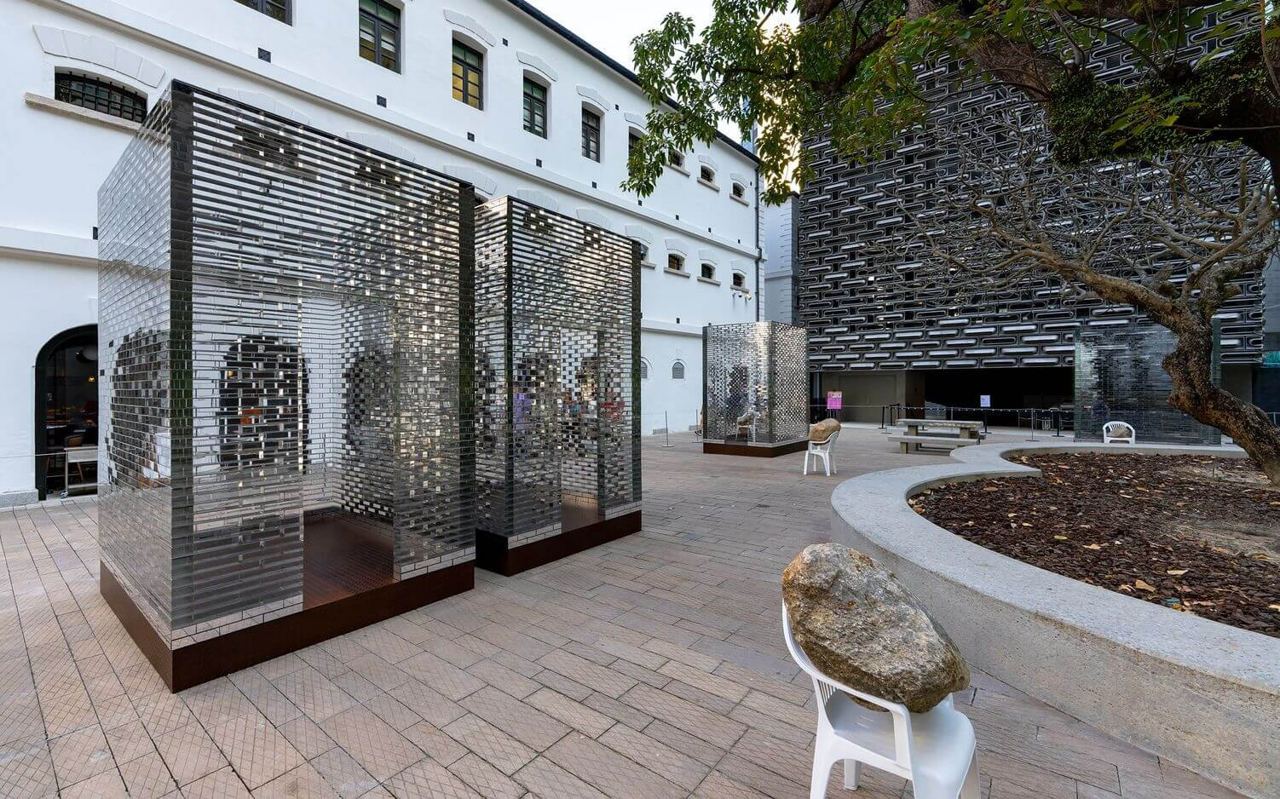
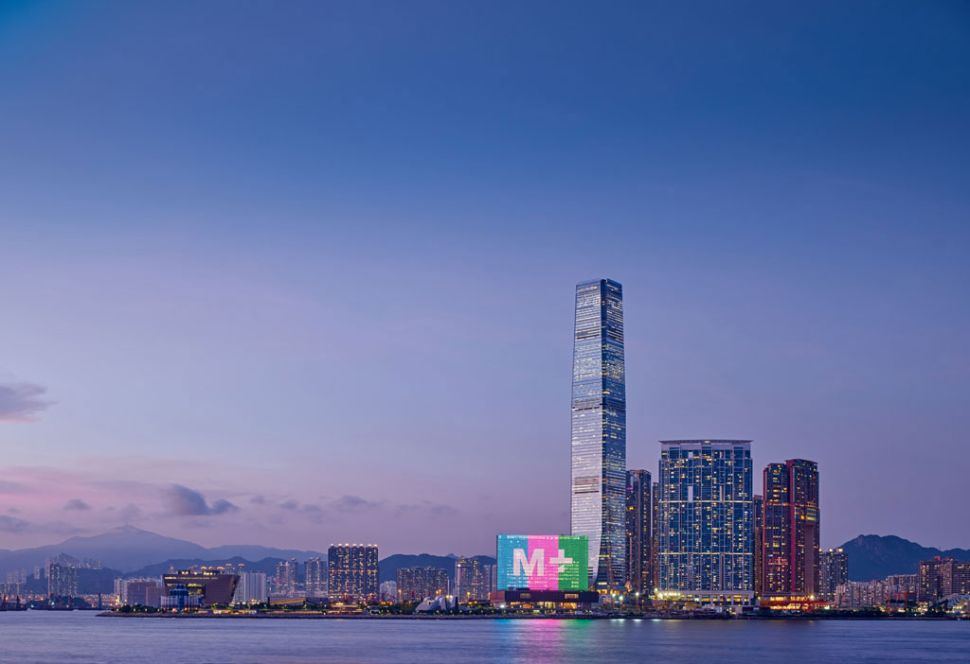
M+
The visual-culture museum in the West Kowloon Cultural District, opened in 2021 in a Herzog and de Meuron building with a screen across its harbor-facing face. It collects twentieth and twenty-first century design, architecture, moving image and contemporary art from this region.
cultural
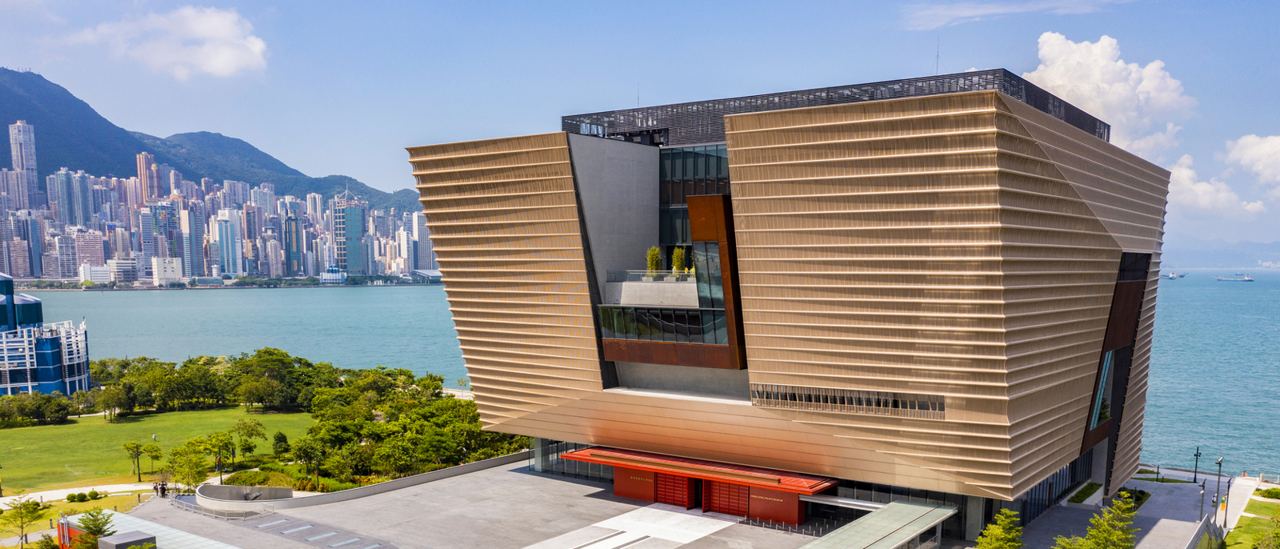
Hong Kong Palace Museum
A museum of Palace Museum collections from Beijing, opened in 2022 at the western tip of the West Kowloon district in a building shaped like an inverted vessel. Nine galleries of imperial objects, with special exhibitions borrowed from museums abroad.
cultural
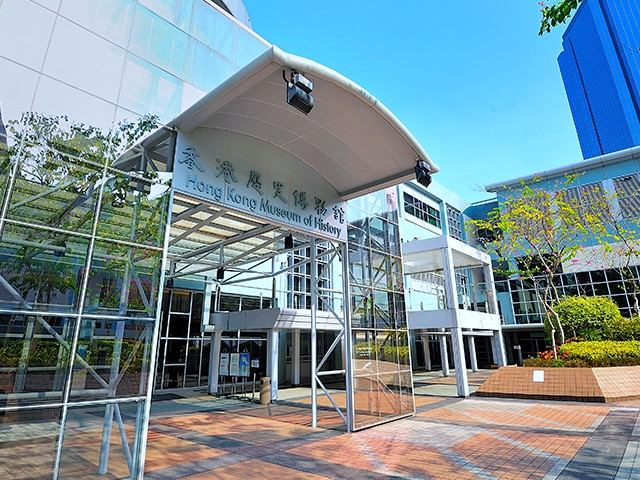
Hong Kong Museum of History
The city's own story told in one building in Tsim Sha Tsui, from the geology of the region through the fishing villages, the colonial century, the occupation and the handover. Admission is free.
cultural
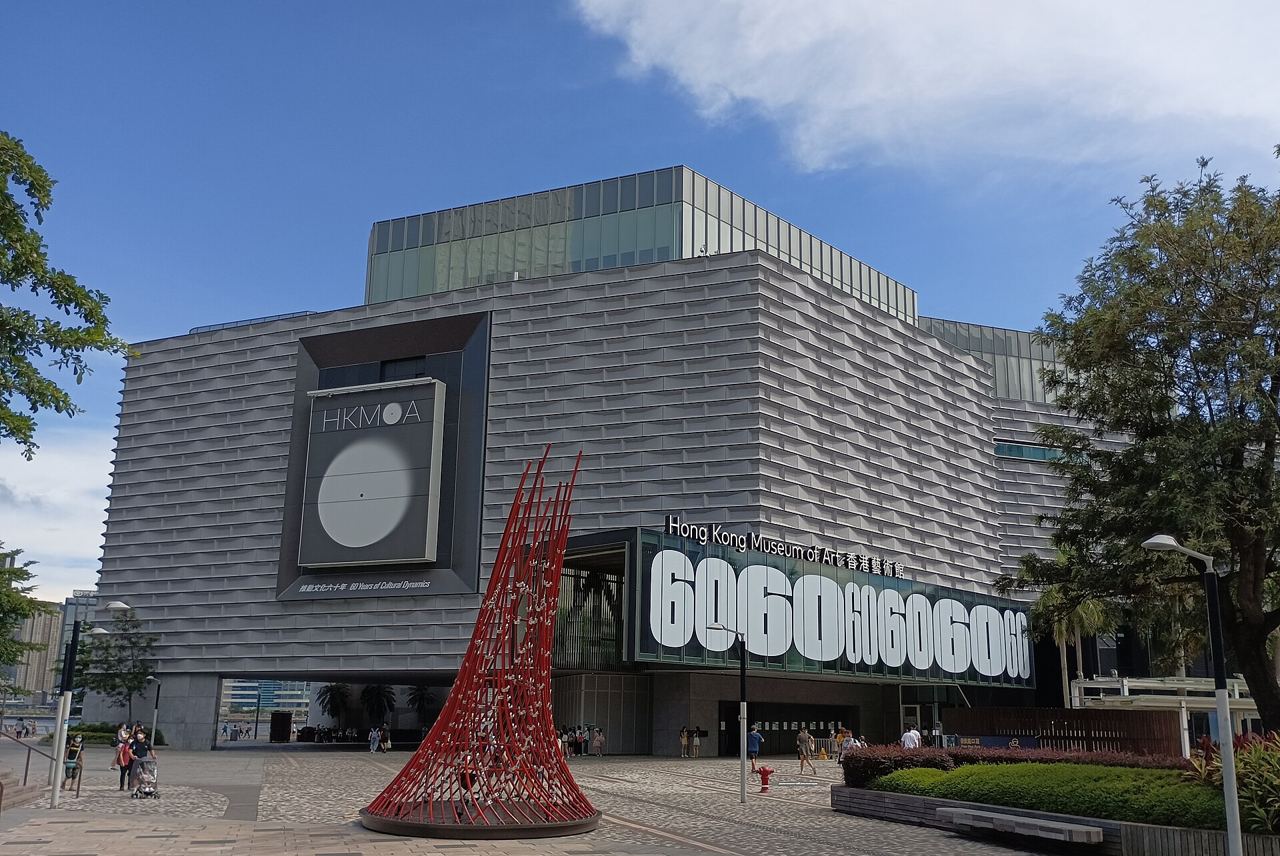
Hong Kong Museum of Art
The art museum on the Tsim Sha Tsui waterfront, rebuilt and reopened in 2019, holding Chinese antiquities, ink painting, historical pictures of the China trade, and contemporary Hong Kong work. Free for the regular exhibitions.
historic
Tai Kwun
The former Central Police Station compound on Hollywood Road, with the old magistracy and Victoria Prison, restored and reopened in 2018 as a heritage and arts site. You can walk the parade ground and the cell blocks for nothing.
historic
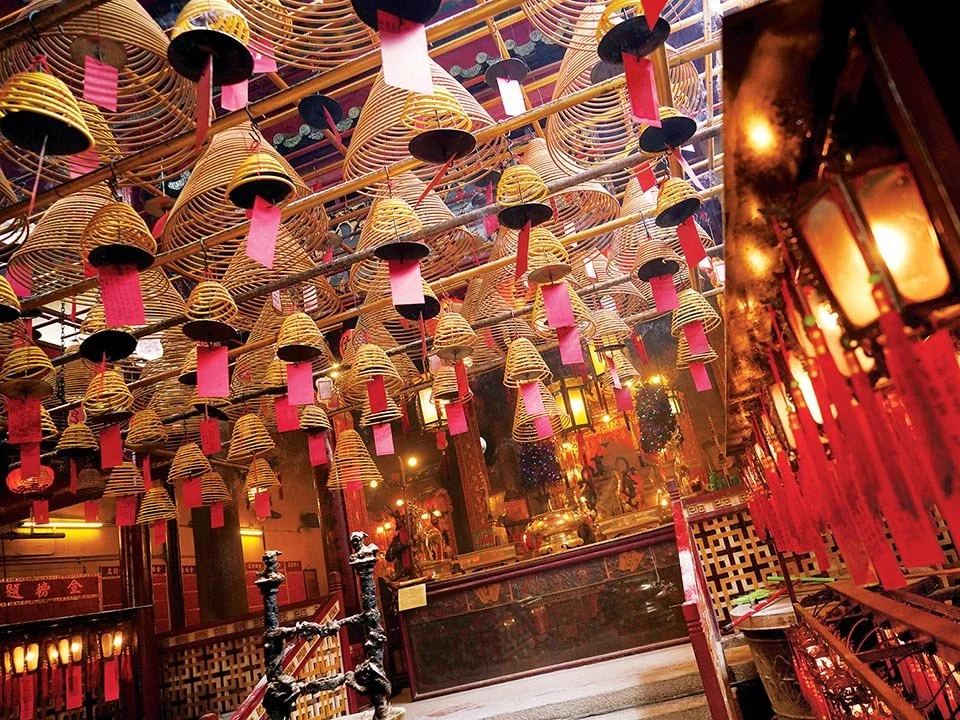
Man Mo Temple
A temple to the god of literature and the god of war, built in the 1840s on Hollywood Road in Sheung Wan and thick with hanging incense coils. It is a declared monument and still a working temple rather than a museum.
cultural
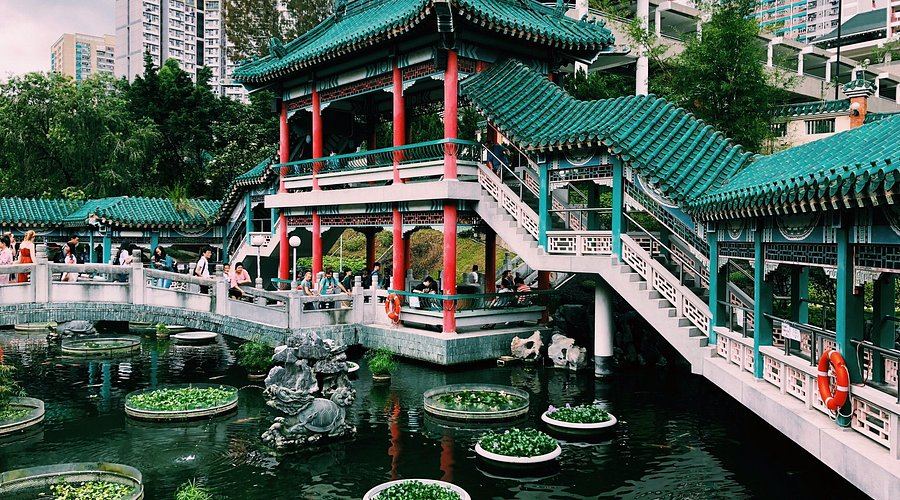
Wong Tai Sin Temple
The busiest Taoist temple in the city, run by Sik Sik Yuen since 1921, where worshippers shake numbered bamboo sticks for a fortune and carry the number to a reader. Bright red pillars, gold roof tiles, and crowds at every festival.
cultural
Chi Lin Nunnery and Nan Lian Garden
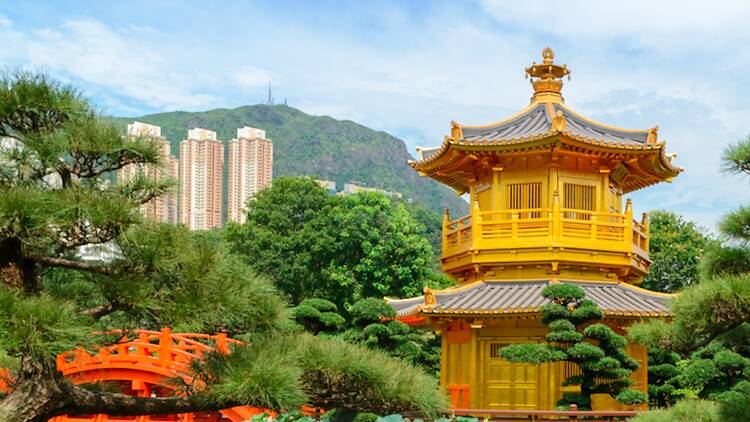
A Tang-style wooden temple complex at Diamond Hill, rebuilt in the 1990s with interlocking joinery and no nails, joined by a footbridge to a landscaped garden of rockeries, pines and a gold pavilion. The quietest half hour in Kowloon.
shopping
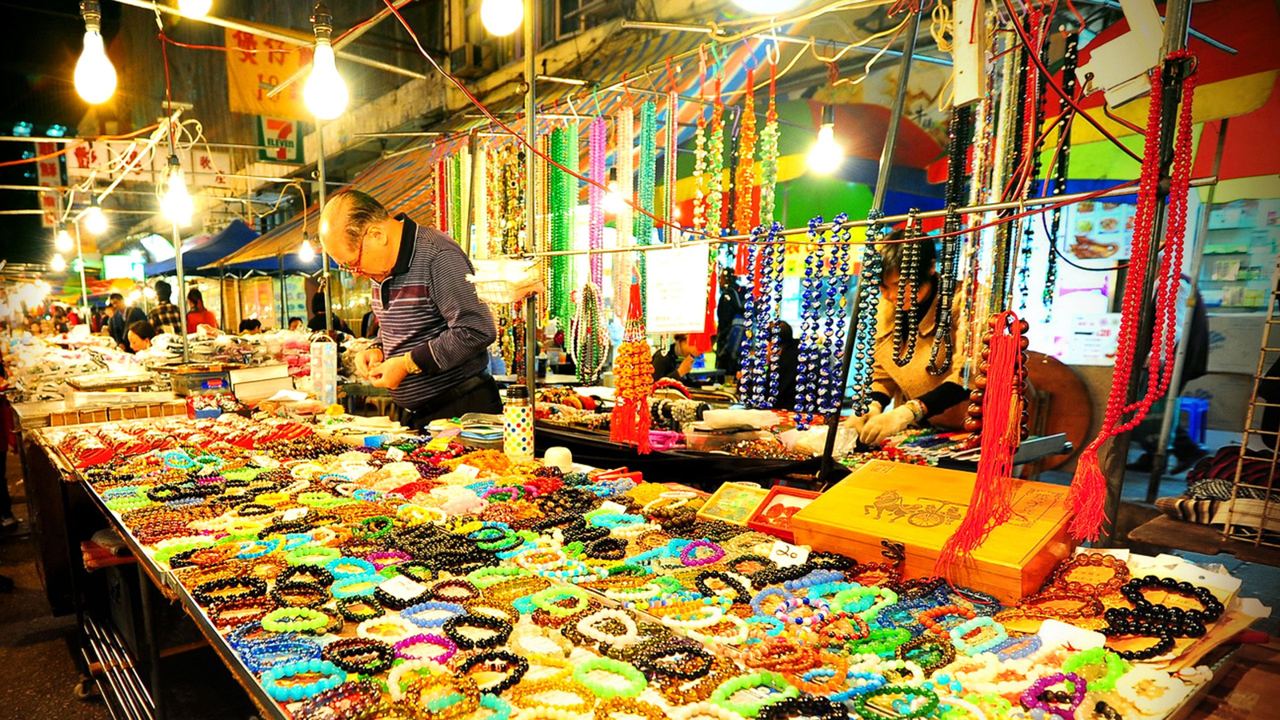
Temple Street Night Market
The night market in Yau Ma Tei, stalls of clothes, gadgets and trinkets under strung bulbs with open-air food stalls at the Jordan end and fortune tellers near the temple. It is touristy and it is also genuinely the shape of a Hong Kong evening.
food
Sham Shui Po
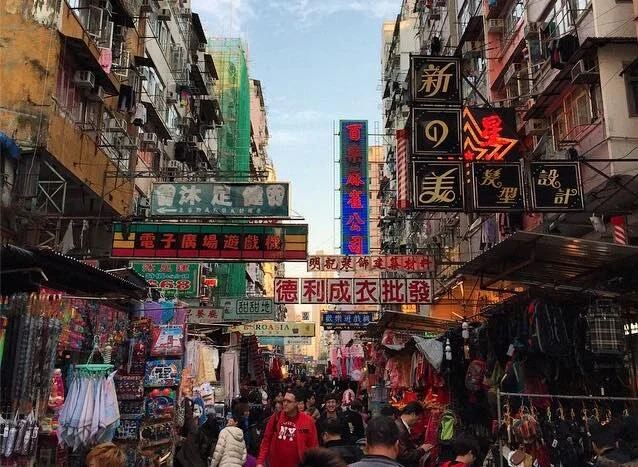
A working Kowloon neighborhood of street markets, fabric and electronics stalls, and some of the most respected cheap eating in the city, from tofu pudding to hand-cut noodles. Nothing here is styled for visitors.
historic
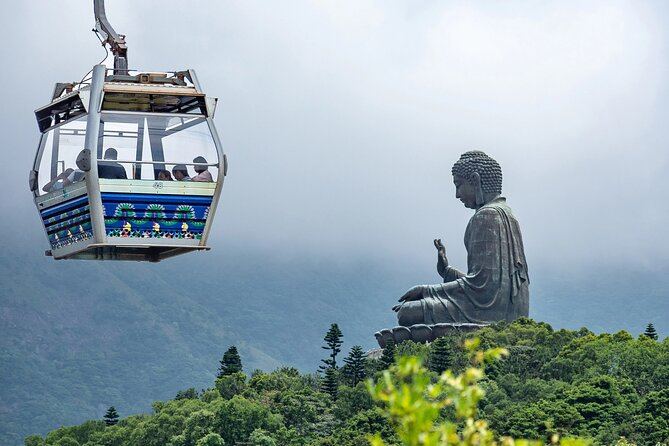
Tian Tan Buddha
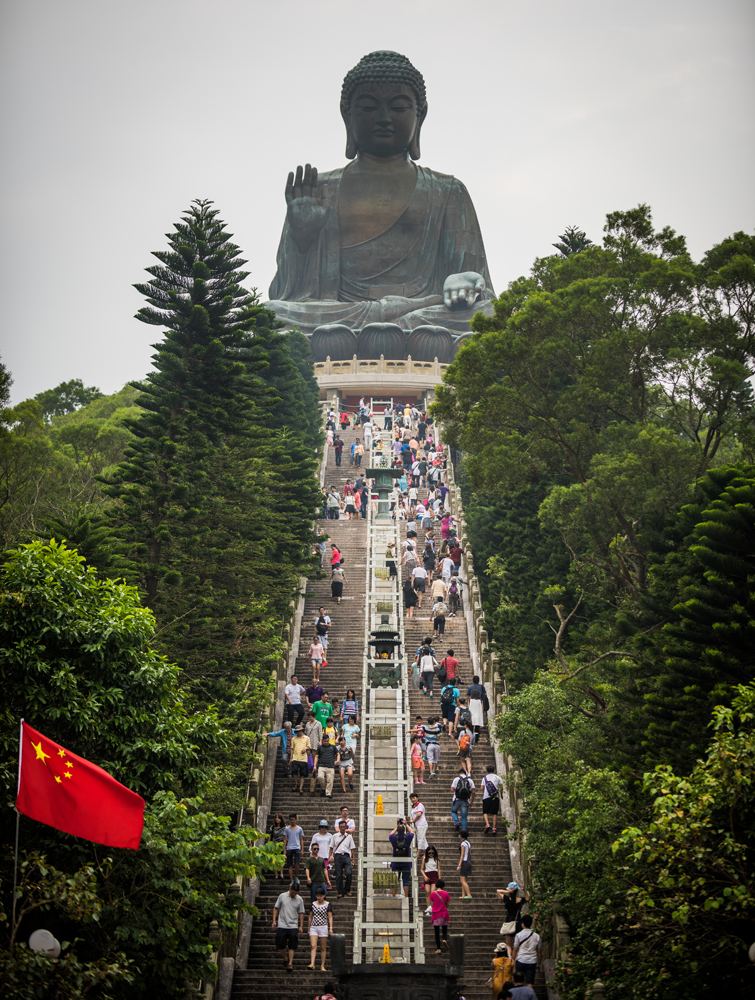
The seated bronze Buddha on a hilltop at Ngong Ping on Lantau Island, 112 feet tall including its base, completed in 1993 and reached by 268 steps. Po Lin Monastery, founded in 1906, sits below it and runs a vegetarian kitchen.
scenic
Ngong Ping 360
The cable car from Tung Chung up over the water and the ridges of Lantau to Ngong Ping, about twenty-five minutes each way, with glass-floored cabins as an upgrade. The ride is the attraction as much as what is at the top.
scenic
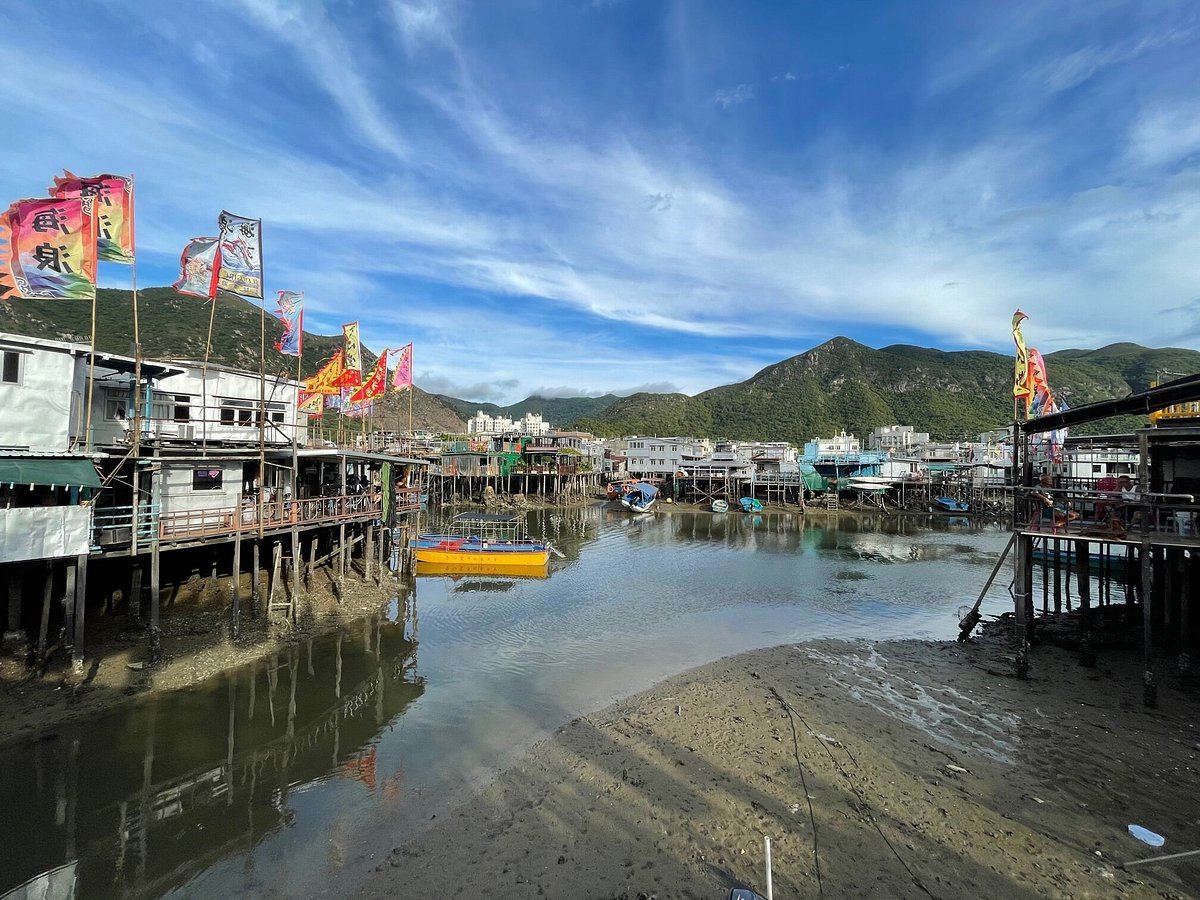
Tai O
A fishing village on the western edge of Lantau where Tanka families built houses on stilts over the tidal creeks. Salted fish and shrimp paste dry in the open, and small boats run out to look for pink dolphins.
nature
Dragon's Back
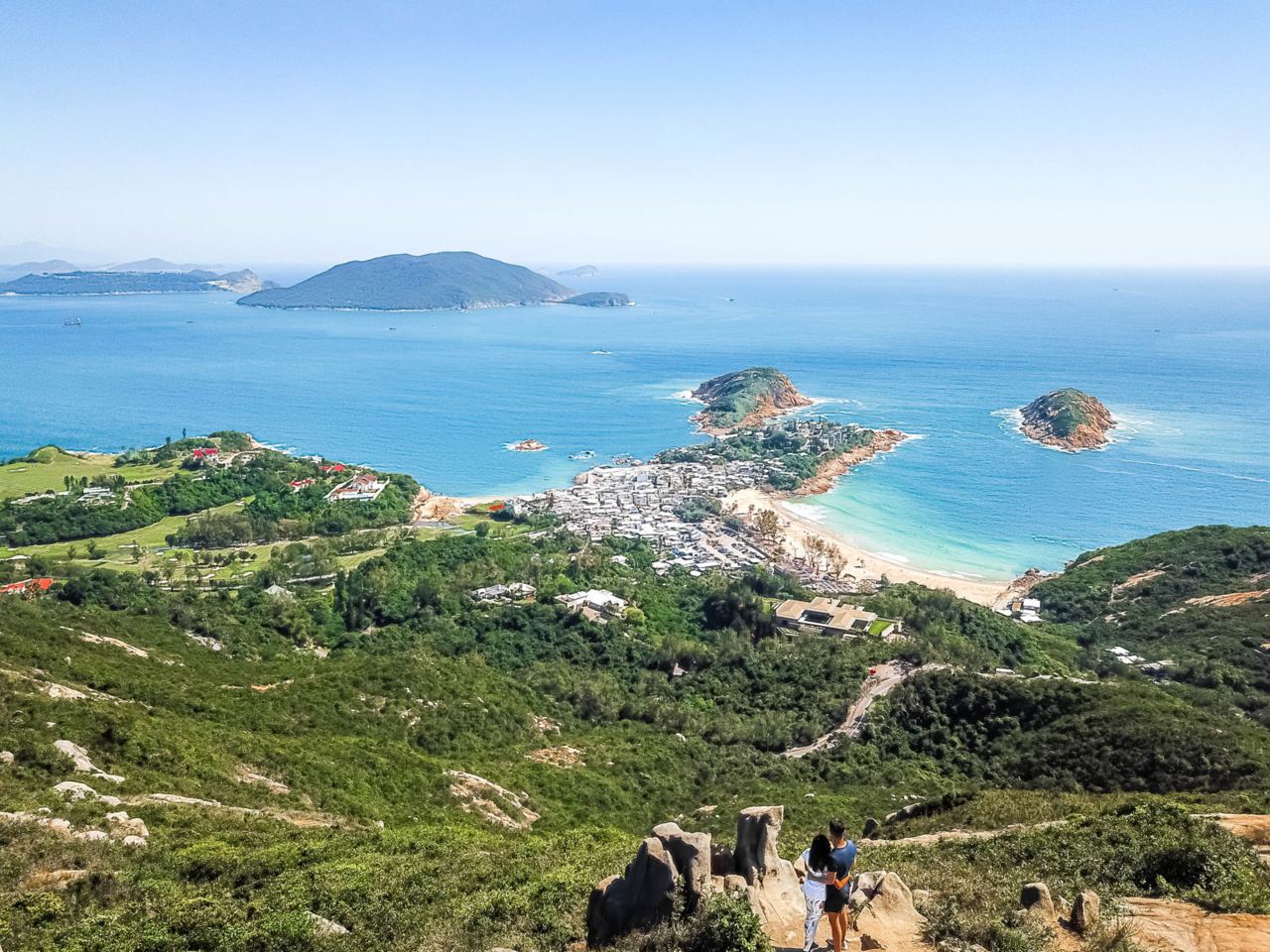
A ridge trail on the southeast corner of Hong Kong Island, running above Shek O and Big Wave Bay with the sea on both sides. Section 8 of the Hong Kong Trail, 5.3 miles and about two and a half hours, on a marked path reached by bus from Shau Kei Wan.
nature
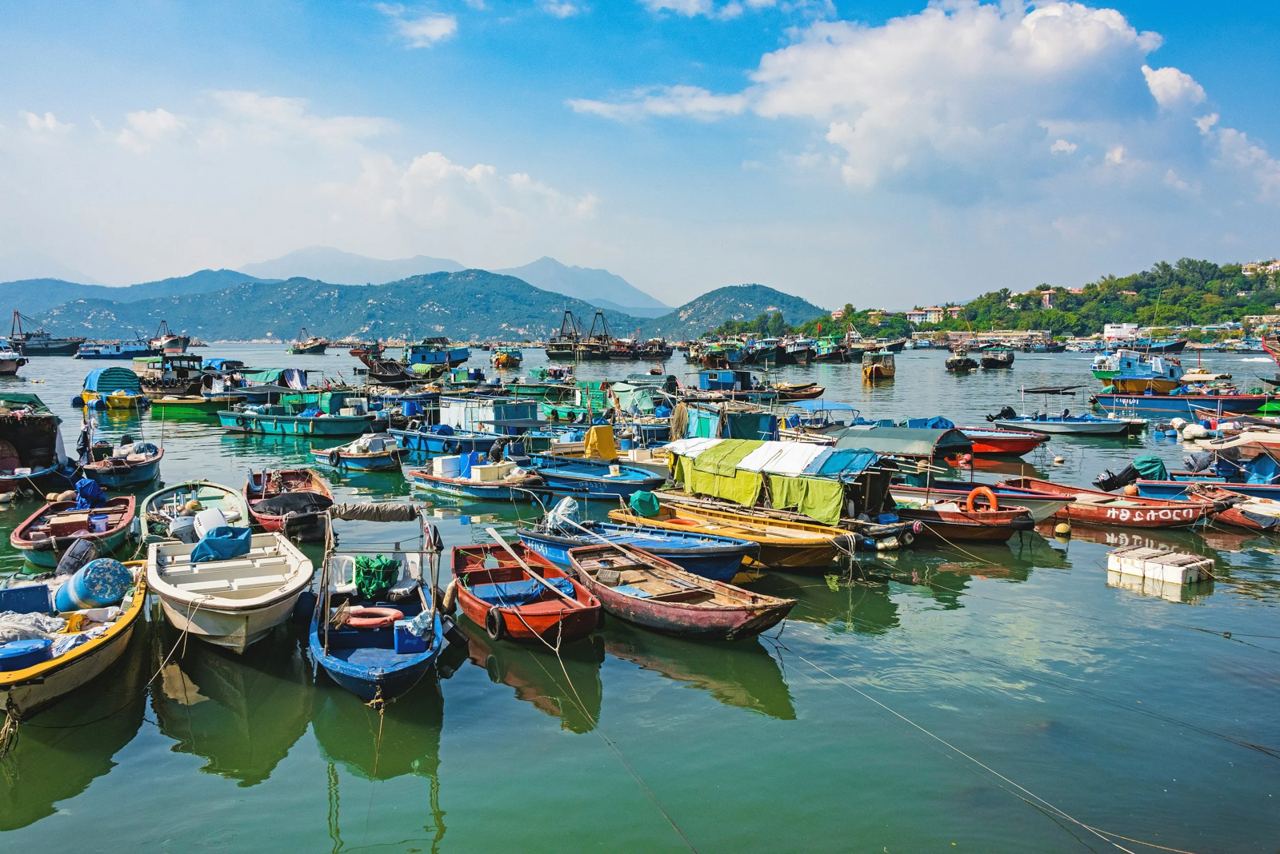
Cheung Chau
A small dumbbell-shaped island an hour by ordinary ferry from Central, with no cars, a beach, a seafood praya and a pirate cave at the far end. Bicycles are the local transport and the island fills on Sundays.
The guide
Hong Kong in Three Days: The Ferry, the Ridge, and the Day You Leave the City
· 13 min read · Researched and edited by PoppaTrip
A Special Administrative Region of China, and what that means on the ground
Hong Kong is the Hong Kong Special Administrative Region of the People’s Republic of China. It is not a country and it is not a city you enter on a Chinese visa either, and both halves of that sentence matter when you are booking. Under the arrangement that governs it, the region keeps several systems of its own, and three of them shape a visitor’s week.
It has its own money. The Hong Kong dollar is pegged to the US dollar, and every figure in this guide uses that peg at HK$7.8 to $1, with the local price in parentheses so you can match it to a sign. Mainland yuan are not generally accepted, and neither is the reverse.
It has its own immigration control, separate from the mainland’s. At the time of writing the Immigration Department lists visa-free visits of 90 days for holders of US passports other than diplomatic ones — checked September 2026, and worth re-reading on immd.gov.hk before you fly, because these lists change. The practical consequence is the one people trip over: crossing from Hong Kong into Shenzhen or Guangzhou is a border crossing, with its own entry requirements for the mainland, even though you never leave China.
And it is joined to the mainland by high-speed rail from a station downtown. Hong Kong West Kowloon is about thirty minutes from Futian in Shenzhen and about forty-eight minutes from Guangzhou on the operator’s published times, with mainland immigration handled inside the West Kowloon building itself. Fares are re-set monthly against the exchange rate, so check the current fare rather than a number you read somewhere.
What all of this adds up to for a trip: a compact place with excellent public transit, signs and announcements in English as well as Chinese, and a rail link that makes a two-city trip genuinely easy if you do the mainland entry paperwork first.
The whole city, grouped by MTR line — which is how to plan the days
Hong Kong is small and vertical, and the fastest way to make sense of it is to stop thinking in neighborhoods and start thinking in lines. Four of them carry almost everything a first trip wants, and each of the days below stays on one line or crosses at a single interchange. Station names and lines here are from the MTR system map; exits are given only where the venue’s own page states one, and where it does not, we say so rather than invent a letter. All checked September 2026.
The Island Line is the north shore of Hong Kong Island — Kennedy Town, HKU, Sai Ying Pun, Sheung Wan, Central, Admiralty, Wan Chai, Causeway Bay, and on east to Shau Kei Wan and Chai Wan. That is Day 1. Man Mo Temple is at 124–126 Hollywood Road in Sheung Wan; Tai Kwun is at 10 Hollywood Road above Central, and its own page routes you from Central station Exit D1 along Queen’s Road Central, or from Hong Kong station Exit E across the elevated walkway — either way you finish on the Central to Mid-Levels Escalator, which does the hill for you. The tram runs along this same corridor at street level, so anywhere on the Island Line you can swap the train for the slow version. At the eastern end, Shau Kei Wan is where Citybus route 9 and the green minibuses leave for Shek O Road and the Dragon’s Back trailhead.
The Tsuen Wan Line is the Kowloon spine — Tsim Sha Tsui, Jordan, Yau Ma Tei, Mong Kok, Prince Edward, Sham Shui Po and on northwest. This is the eating-and-markets line, and it carries Day 2’s evening and Day 3’s afternoon. The Hong Kong Museum of Art at 10 Salisbury Road lists Tsim Sha Tsui station Exit E, and Exit J at East Tsim Sha Tsui on the Tuen Ma Line. The Hong Kong Museum of History is around the corner at 100 Chatham Road South in the same Tsim Sha Tsui block, though its own page gives an address and no exit letter. Temple Street is Jordan station Exit A, and the Tourism Board’s directions from there are right onto Jordan Road, then right again onto Temple Street. Sham Shui Po has its own station on this line, and the market spills out of it.
The Tung Chung Line is the harbor tunnel and Lantau — Hong Kong, Kowloon, Olympic, Nam Cheong, Lai King, Tsing Yi, Sunny Bay and Tung Chung, with the Disneyland Resort shuttle branching off at Sunny Bay on a line of its own. Day 4 is this line and nothing else: Tung Chung station Exit B is a five-minute walk to the cable car terminal by the operator’s own account, and the run from Hong Kong station takes about thirty minutes. The same line’s Kowloon station is the one for the West Kowloon museums — M+ publishes Exit C1 or D1 through the mall to the Artist Square Bridge, or Exit E4 or E5 along Nga Cheung Road, each about ten to fifteen minutes on foot, and the Palace Museum publishes the same two routes and calls the Austin station walk fifteen to twenty. Hong Kong station is also the one the Star Ferry’s pier page names for the Central piers, and Pier No. 5 there is where the Cheung Chau boats leave from.
The Kwun Tong and Tuen Ma lines are the temples. Day 3’s morning is two stops on one line: Wong Tai Sin and Diamond Hill are both on the Kwun Tong Line, and Diamond Hill is also on the Tuen Ma Line, which is the one that carries you back to East Tsim Sha Tsui without a change. Sik Sik Yuen’s own pages put Wong Tai Sin Temple immediately outside the station and name no exit letter; Nan Lian Garden publishes Diamond Hill station Exit C2, and the footbridge from the garden takes you across to Chi Lin Nunnery.
Two things on this list sit on no line at all, and that is rather the point of them. The Peak Tram is a funicular from Garden Road rather than a metro station, and the Star Ferry is the crossing the tunnels were built to replace. Plan those two around a walk, not a transfer.
Day 1, the Island Line — tram, Tai Kwun, Man Mo, then the ridge at dusk
Start on the tram, because it sets the scale of the place better than anything else. The double-deckers have run along the north shore of Hong Kong Island since 1904 and they are still a flat fare no matter how far you ride — about $0.42 (HK$3.30) for an adult, about $0.21 (HK$1.60) for a child aged 3 to 11 and about $0.19 (HK$1.50) for a rider 65 or over, checked on the operator’s fare page in September 2026. You pay when you get off, at the front. Take the stairs to the upper deck and sit at the very front window; ride from Western Market east to Causeway Bay and you have seen wet markets, banks, tenements and malls at eye level in half an hour for the price of nothing.
Get off in Central and walk up to Tai Kwun on Hollywood Road. This is the former Central Police Station compound — station, magistracy and Victoria Prison in one block of colonial brick — restored and reopened in 2018. The grounds are open 8am to 11pm and walking them costs nothing; the visitor desk keeps 10am to 8pm hours and the contemporary art galleries run 11am to 7pm, Tuesday to Sunday, with individual exhibitions sometimes ticketed. Checked September 2026. You can stand in the exercise yard between the cell blocks, which is not a thing most cities let you do.
Five minutes west along the same road is Man Mo Temple, built in the 1840s for the god of literature and the god of war, open 8am to 6pm daily and from 7am on the first and fifteenth of the lunar month and at four Chinese festivals. It is dark, it is full of hanging incense coils that burn for days, and it is a working temple: people are there to pray, not to be photographed. Go quietly, keep the camera down near the altars, and give it ten minutes.
Finish the day on the ridge. The Peak Tram funicular has climbed the hill from Garden Road since 1888 and drops you at the top for the view that every picture of this city is taken from: the towers, the harbor, and the Kowloon hills behind. Go late in the afternoon so you get the city in daylight, at dusk and lit. We are not quoting a fare here — the operator’s ticket pages could not be read directly when this guide was checked in September 2026, so look up the current price and the combined Sky Terrace ticket on thepeak.com.hk before you go. If the line at the lower terminus is long, bus 15 from Central goes up the same hill for a normal bus fare, and the walk down the Old Peak Road afterward is easy and mostly shaded.
Victoria Peak — The high ground above Central, reached by the Peak Tram funicular that has been climbing the hill since 1888. The view is of the towers, the harbor and the hills of Kowloon behind them, and it is a different picture by day, at dusk and after dark.
Hong Kong Tramways — The double-decker trams locals call the ding ding have run along the north shore of Hong Kong Island since 1904, on one long line from Kennedy Town to Shau Kei Wan. The front seat upstairs is the best slow tour of the island's street life there is.
Tai Kwun — The former Central Police Station compound on Hollywood Road, with the old magistracy and Victoria Prison, restored and reopened in 2018 as a heritage and arts site. You can walk the parade ground and the cell blocks for nothing.
Man Mo Temple — A temple to the god of literature and the god of war, built in the 1840s on Hollywood Road in Sheung Wan and thick with hanging incense coils. It is a declared monument and still a working temple rather than a museum.
Day 2, the ferry and the Tung Chung Line — two new museums, then the light show
Cross on the Star Ferry, and cross on the lower deck at least once. The green-and-white boats have been going between Central and Tsim Sha Tsui since 1888, the trip takes under ten minutes, and the fare is the best value in the region: about $0.51 (HK$4.00) on the lower deck on a weekday, about $0.64 (HK$5.00) upstairs, rising to about $0.72 and $0.83 (HK$5.60 and HK$6.50) on weekends and public holidays. Children and riders 65 and over pay about $0.36 (HK$2.80) on a weekday. Boats run roughly 6:30am to 11:30pm every six to twelve minutes. All checked on the company’s own fare table in September 2026. Do it once in daylight and once after dark; they are two different rides.
The far side puts you at the bottom of Tsim Sha Tsui, and the morning belongs to West Kowloon, a twenty-minute walk along the water, or one stop on the Tuen Ma Line from East Tsim Sha Tsui to Austin and the signposted walk in from there. Two museums opened there within a year of each other and they are not alike. M+ is the visual-culture museum — design, architecture, moving image, contemporary art, mostly from this part of the world — in a Herzog and de Meuron building with an LED screen facing the water. Standard admission is about $24.36 (HK$190), concessions about $12.82 (HK$100), children 6 and under free; open 10am to 6pm Tuesday to Thursday and on weekends, 10am to 10pm on Fridays, closed Mondays, last entry half an hour before closing. Useful detail from their own visitor page: the Mediatheque, the Grand Stair, the B1 and B2 levels, the Found Space and the Roof Garden are free to walk into without a ticket.
The Hong Kong Palace Museum is five minutes further west, an inverted-vessel shape in beige concrete holding objects from the Palace Museum collections in Beijing across nine galleries. General admission runs about $8.97 (HK$70) for a dated ticket or about $11.54 (HK$90) for the flexible one, concessions about $4.49 and about $5.77 (HK$35 and HK$45), with the borrowed special exhibitions ticketed separately at about $19.23 (HK$150) and up. It is open 10am to 6pm Monday, Wednesday, Thursday and Sunday, 10am to 8pm Friday, Saturday and public holidays, closed Tuesdays and the first two days of Lunar New Year. Checked September 2026. If you only have the appetite for one of the two, pick by subject rather than by fame: M+ is the twentieth century, the Palace Museum is the imperial one.
The afternoon is the Tsim Sha Tsui promenade, which faces the whole island skyline across the water and is free, flat and about a mile end to end. If it is a museum day rather than a walking one, the Hong Kong Museum of Art sits right on it at 10 Salisbury Road — free for the regular exhibitions, open 10am to 6pm Monday to Wednesday and Friday, 10am to 9pm on weekends and public holidays, closed Thursdays — and the Hong Kong Museum of History is ten minutes inland, also free, closed Tuesdays, open to 6pm on weekdays and 7pm on weekends. The history museum is the better one if you want to understand what you have been looking at all day.
Stay out for eight o’clock. A Symphony of Lights runs nightly at 8pm for about ten minutes across both sides of the harbor and costs nothing; the Tourism Commission names the waterfront outside the cultural complex, the Avenue of Stars and Golden Bauhinia Square in Wan Chai as the places the music is played. It is a modest show and a wonderful excuse to be standing on that promenade at that hour. Afterward, Temple Street in Yau Ma Tei is one stop north to Jordan on the Tsuen Wan Line — stalls, strung bulbs, open-air food at the Jordan end, and fortune tellers near the temple.
Star Ferry — A green-and-white double-decked ferry across Victoria Harbour between Tsim Sha Tsui and Central, running since 1888. It is ordinary public transit that happens to be one of the best cheap sights in Asia, and the crossing takes under ten minutes.
Tsim Sha Tsui Promenade — The waterfront walk along the Kowloon side, facing the full length of the Hong Kong Island skyline across the water. The Avenue of Stars runs along part of it, and the nightly light show is watched from here.
M+ — The visual-culture museum in the West Kowloon Cultural District, opened in 2021 in a Herzog and de Meuron building with a screen across its harbor-facing face. It collects twentieth and twenty-first century design, architecture, moving image and contemporary art from this region.
Hong Kong Palace Museum — A museum of Palace Museum collections from Beijing, opened in 2022 at the western tip of the West Kowloon district in a building shaped like an inverted vessel. Nine galleries of imperial objects, with special exhibitions borrowed from museums abroad.
Hong Kong Museum of History — The city's own story told in one building in Tsim Sha Tsui, from the geology of the region through the fishing villages, the colonial century, the occupation and the handover. Admission is free.
Hong Kong Museum of Art — The art museum on the Tsim Sha Tsui waterfront, rebuilt and reopened in 2019, holding Chinese antiquities, ink painting, historical pictures of the China trade, and contemporary Hong Kong work. Free for the regular exhibitions.
Photo: Fong Man Hong, CC BY-SA 4.0, via Wikimedia CommonsTemple Street Night Market — The night market in Yau Ma Tei, stalls of clothes, gadgets and trinkets under strung bulbs with open-air food stalls at the Jordan end and fortune tellers near the temple. It is touristy and it is also genuinely the shape of a Hong Kong evening.
Day 3, the Kwun Tong Line then the Tsuen Wan Line — temples, then a neighborhood that feeds people
Two temples sit one stop apart on the Kwun Tong Line in east Kowloon and they are opposites, which is why you do them in one morning. Wong Tai Sin is the loud one: Sik Sik Yuen has run it since 1921, it is open 7:30am to 4:30pm and free, and the courtyard is full of people shaking a bamboo cylinder until a numbered stick falls out, then carrying the number to one of the readers in the arcade. The Taisui hall and the Good Wish Garden keep 8am to 4:30pm hours. Checked September 2026.
Chi Lin Nunnery at Diamond Hill is the quiet one — a Tang-style timber complex rebuilt in the 1990s with interlocking joinery and no nails, open 9am to 4:30pm, joined by a footbridge to Nan Lian Garden, which is open 7am to 9pm daily. The garden is a laid-out landscape of rock, water, pine and a small gold pavilion, and it is the calmest half hour in Kowloon. Neither official page lists an admission charge; we are not going to claim a price we could not verify, so treat both as free and be pleasantly surprised either way.
Then eat in Sham Shui Po. It is not next door: from Diamond Hill it is five stops west on the Kwun Tong Line to Prince Edward, then a change to the Tsuen Wan Line and one stop more. This is a working neighborhood of fabric stalls, electronics and street markets, and it has as good a concentration of cheap, serious cooking as anywhere in the city — tofu pudding, hand-cut noodles, claypot rice, the kind of shops with a queue of local people and four things on the wall. It is not styled for visitors and it is better for it. Go hungry, order small at several places rather than a meal at one.
If you would rather trade the afternoon for air, the Dragon’s Back is on the southeast corner of Hong Kong Island: a marked ridge path above Shek O and Big Wave Bay with the sea on both sides. It is Section 8 of the Hong Kong Trail, which the government’s hiking service gives as 5.3 miles (8.5 km) and about two and a half hours end to end. You reach it from the Island Line: Citybus route 9 or a green minibus from Shau Kei Wan, off at the To Tei Wan stop on Shek O Road, then uphill at the trail sign. It is an easy trail by hiking standards and a genuinely beautiful one, and it is the cheapest way to see that this place is mostly hills and water rather than towers. Do not attempt it in the middle of a July afternoon — see the weather section below.
Wong Tai Sin Temple — The busiest Taoist temple in the city, run by Sik Sik Yuen since 1921, where worshippers shake numbered bamboo sticks for a fortune and carry the number to a reader. Bright red pillars, gold roof tiles, and crowds at every festival.
Chi Lin Nunnery and Nan Lian Garden — A Tang-style wooden temple complex at Diamond Hill, rebuilt in the 1990s with interlocking joinery and no nails, joined by a footbridge to a landscaped garden of rockeries, pines and a gold pavilion. The quietest half hour in Kowloon.
Sham Shui Po — A working Kowloon neighborhood of street markets, fabric and electronics stalls, and some of the most respected cheap eating in the city, from tofu pudding to hand-cut noodles. Nothing here is styled for visitors.
Dragon's Back — A ridge trail on the southeast corner of Hong Kong Island, running above Shek O and Big Wave Bay with the sea on both sides. Section 8 of the Hong Kong Trail, 5.3 miles and about two and a half hours, on a marked path reached by bus from Shau Kei Wan.
Day 4, optional, the Tung Chung Line — the cable car, the Big Buddha, and Tai O
The fourth day is the one that stops the trip being a city break. Take the Tung Chung Line to its last stop — about thirty minutes from Hong Kong station — and walk the five minutes from Exit B to the Ngong Ping 360 cable car, which runs about twenty-five minutes each way over the water and then up the ridges of Lantau. Round trips checked on the operator’s page in September 2026: Standard Cabin about $37.82 for an adult, about $19.23 for a child aged 3 to 11 (HK$295 and HK$150); the glass-floored Crystal Cabin about $46.79 (HK$365); infants under 3 free. Book online for a time slot in high season — the line at Tung Chung on a clear weekend is the worst queue on this itinerary. The cable car closes for maintenance for a stretch most years, so check the calendar before you build a day around it.
At the top is Ngong Ping and the Tian Tan Buddha, a seated bronze figure 112 feet tall including its base, finished in 1993, reached by 268 steps. Po Lin Monastery below it was founded by monks in 1906 and runs a vegetarian kitchen that is worth lunch. We could not verify the Buddha’s opening hours or whether the exhibition hall beneath it charges, so check those on the day; the plaza and the steps themselves are outdoors and open. Take the steps slowly if it is hot, and remember this is a monastery before it is a viewpoint.
From Ngong Ping, bus 21 carries on to Tai O, and this is the part people skip and should not. Tai O is a fishing village on the western tip of Lantau where Tanka families built houses on stilts over tidal creeks; salted fish and shrimp paste dry on racks in the open, small boats run out into the channel looking for pink dolphins, and the whole place smells of the sea and the drying. An hour or two there, then the bus to Tung Chung and the MTR home, closes the day properly.
The alternative fourth day, if islands appeal more than monuments: Cheung Chau, an hour from Central Pier No. 5 by ordinary ferry. Adult fares checked in September 2026 are about $2.14 on a weekday and about $3.18 on Sundays and public holidays (HK$16.70 and HK$24.80), or about $4.22 (HK$32.90) on the fast ferry, which takes thirty-five to forty minutes. There are no cars on the island. There is a beach, a waterfront of seafood restaurants, bicycles for rent and a pirate cave at the far end, and it fills up on Sunday afternoons, so go on a weekday if you can choose.
Tian Tan Buddha — The seated bronze Buddha on a hilltop at Ngong Ping on Lantau Island, 112 feet tall including its base, completed in 1993 and reached by 268 steps. Po Lin Monastery, founded in 1906, sits below it and runs a vegetarian kitchen.
Ngong Ping 360 — The cable car from Tung Chung up over the water and the ridges of Lantau to Ngong Ping, about twenty-five minutes each way, with glass-floored cabins as an upgrade. The ride is the attraction as much as what is at the top.
Tai O — A fishing village on the western edge of Lantau where Tanka families built houses on stilts over the tidal creeks. Salted fish and shrimp paste dry in the open, and small boats run out to look for pink dolphins.
Cheung Chau — A small dumbbell-shaped island an hour by ordinary ferry from Central, with no cars, a beach, a seafood praya and a pirate cave at the far end. Bicycles are the local transport and the island fills on Sundays.
Getting around: one card, and the fares that actually matter
Buy an Octopus card at the airport or any MTR station and stop thinking about fares. It works on the MTR, buses, trams, the Star Ferry, the outlying-island ferries and in convenience stores, you tap on and off, and it is the single thing that makes this city feel easy. Contactless bank cards and QR tickets work on much of the network now too, but the card is still the fewest decisions.
From the airport, the Airport Express is the fast option: about $15.38 (HK$120) to Hong Kong Station on the island, about $13.46 (HK$105) to Kowloon, about $9.36 (HK$73) to Tsing Yi, paying by Octopus or QR code, with round trips at about $27.56, $25.00 and $16.67 (HK$215, HK$195 and HK$130) valid for thirty days. There are free shuttle buses from the station to the main hotel clusters; the operator’s page gives the fares but no journey time, so check the current timetable. Checked September 2026. The airport buses are a good deal slower and considerably cheaper, and they are the better choice if your hotel is not near an Airport Express stop.
In the city, ordinary MTR fares are small enough that most visitors never need a pass. If you plan a heavy day of hopping, the MTR Tourist Day Pass is about $9.62 for an adult and about $4.49 for a child (HK$75 and HK$35), good for twenty-four consecutive hours from your first tap, and it does not cover the Airport Express, East Rail first class or travel to Lo Wu or Lok Ma Chau. Do the arithmetic before you buy it — a normal sightseeing day rarely reaches that.
Two slower things are worth using deliberately rather than efficiently. The tram is a flat fare for any distance and it is the best cheap tour on the island. The Star Ferry is public transit priced at pocket change and it is one of the great short journeys anywhere. Neither is the fastest way to get where you are going, and that is the point of them.
Taxis are metered, plentiful and color-coded by area — red for the urban core, green for the New Territories, blue for Lantau — and a driver will not always cross the harbor without a cross-harbor supplement. Have your destination written in Chinese if you can; not every driver reads English addresses.
Eating: dim sum in the morning, cha chaan teng for everything else
Dim sum is a breakfast-to-lunch meal here, not a dinner, and the good rooms are loudest and best between about 10am and 1pm. In an old-style hall you point at what comes past on a cart or mark a paper slip; tea arrives first and gets topped up all meal. Tapping two fingers on the table beside your cup is how people say thank you for a refill without breaking the conversation. Order in rounds rather than all at once, and do not skip the plain things — a good cheung fun or a proper char siu bao tells you more about a kitchen than anything fancy.
The cha chaan teng is the other institution, and it is where you will eat most meals: a tea house with a laminated menu, milk tea strained through a cloth sock, macaroni soup for breakfast, pineapple buns that contain no pineapple, and sets that arrive in four minutes. It is cheap, fast, open all day, and it is the most Hong Kong thing on this list — a Cantonese kitchen that absorbed British cafe food in the 1950s and made something else out of it.
Beyond that: roast meats hanging in a window, a bowl of wonton noodle soup at a counter, claypot rice in winter, and egg tarts from a bakery that only does them well in the morning. Sham Shui Po is the neighborhood to walk hungry. Temple Street has open-air tables at the Jordan end and is fine for a late plate. Tap water in Hong Kong is treated to drinking standard and locals often boil it anyway; bottled water is everywhere and cheap.
One practical note for a hot-weather trip: eat your big meal indoors in the middle of the day. Between May and September the sensible shape of a day is outdoors early, a long air-conditioned lunch, museums or markets through the worst of the afternoon, and back outside when the sun is off the streets.
When to go: typhoons, the heat, and the two weeks everyone else is here
The best months are late October through early December, and then again March. The Observatory’s 1991–2020 normals put the mean daily high at 83°F (28.1°C) in October, 76°F (24.5°C) in November and 69°F (20.4°C) in December, with November and December among the driest months of the year at about 1.5 and 1.1 inches of rain. January and February are the coolest — daily highs around 66°F and 67°F (18.7°C and 19.4°C) — and can be genuinely chilly and gray in a damp way that a light jacket does not quite answer.
Summer is hot, wet and humid in combination, which is harder than any one of the three. July and August average daily highs of 89°F and 88°F (31.6°C and 31.3°C) at close to 80 percent humidity, and the rain is not drizzle: June averages about 19 inches, August about 18, and roughly 80 percent of the year’s 96 inches falls between May and September. Hiking the Dragon’s Back or climbing 268 steps at midday in that is a bad idea rather than a tough one.
Then there is the typhoon season, and this is the part to plan around rather than hope through. The Observatory gives the tropical cyclone season as May through November, with July to September the months most likely to bring one over Hong Kong. The city runs a numbered warning system — Signal 1, then 3, then 8, with 9 and 10 above it. At Signal No. 8, gale or storm force wind of about 39 to 73 mph (63 to 117 km/h) is blowing or expected near sea level, with gusts that can exceed 112 mph (180 km/h), and Hong Kong essentially closes: offices and schools shut, most transit stops, the ferries stop first and the airport backs up for a day or more afterward. It is handled calmly and competently here, and it is still a day or two of your trip gone. If you travel in those months, build in slack, keep your flights changeable, and check hko.gov.hk every morning rather than a weather app.
Two crowd warnings. Lunar New Year, in late January or February, is the biggest holiday of the year: the flower markets and the temples are extraordinary, and many small restaurants and family shops close for several days while the museums shut for the first two days of the holiday. Golden Week in the first week of October fills hotels and attractions with visitors from the mainland; rooms cost more and the cable car line at Tung Chung gets long. Neither is a reason to stay away, but both are reasons to book early and to check whether the specific place you care about is open.
Last practical things. Hours and prices here were read off each operator’s or museum’s own page in September 2026 and they do move — confirm anything your day depends on. The plugs are the British three-pin type. English is widely used on signs, tickets and announcements. And the museums mostly close on a weekday rather than a weekend: Tuesday for the Palace Museum and the Museum of History, Thursday for the Museum of Art, Monday for M+. Check the day before you cross the harbor for one.
The short answers
Is Hong Kong part of China?
Yes. Hong Kong is the Hong Kong Special Administrative Region of the People’s Republic of China. Under that arrangement it keeps systems of its own that matter to a visitor: its own currency, the Hong Kong dollar, pegged at HK$7.8 to $1; its own immigration control, separate from the mainland’s, so crossing to Shenzhen or Guangzhou is a border crossing with its own entry requirements; and high-speed rail from Hong Kong West Kowloon that reaches Futian in about thirty minutes and Guangzhou in about forty-eight.
How many days do you need in Hong Kong?
Three for the city and a fourth if you want to leave it. Day one is Hong Kong Island — the tram, Tai Kwun, Man Mo Temple and the ridge at dusk. Day two is the Star Ferry and Kowloon, with the West Kowloon museums and the 8pm light show. Day three is the temples at Wong Tai Sin and Diamond Hill, eating in Sham Shui Po, and a ridge walk if you want air. A fourth day buys Lantau: the cable car, the Big Buddha and the stilt village at Tai O.
How much is the Star Ferry?
About $0.51 (HK$4.00) on the lower deck on a weekday between Central and Tsim Sha Tsui, about $0.64 (HK$5.00) upstairs, and about $0.72 and $0.83 (HK$5.60 and HK$6.50) on weekends and public holidays. Children and riders 65 and over pay about $0.36 (HK$2.80) on a weekday. Boats run roughly 6:30am to 11:30pm and the crossing takes under ten minutes. Fares checked on the company’s own table in September 2026.
Do you need an Octopus card?
It is the easiest thing you will do all trip. One stored-value card covers the MTR, buses, trams, the Star Ferry, the outlying-island ferries and convenience stores, and you tap on and off without thinking about fares. Contactless bank cards and QR tickets now work on much of the network, but the card still means fewer decisions. The MTR Tourist Day Pass, about $9.62 for an adult (HK$75) for twenty-four consecutive hours, only pays off on a heavy hopping day and does not cover the Airport Express.
Which Hong Kong museums are free?
The Hong Kong Museum of History in Tsim Sha Tsui and the Hong Kong Museum of Art on the waterfront are both free for their regular exhibitions, and Tai Kwun’s grounds and heritage galleries cost nothing to walk. M+ charges about $24.36 (HK$190) standard, though its Mediatheque, Grand Stair, lower levels and Roof Garden are free to enter. The Hong Kong Palace Museum is about $8.97 (HK$70) for general admission. Checked September 2026.
What is the best time of year to visit Hong Kong?
Late October to early December, then March. October averages a daily high of 83°F (28.1°C) and November 76°F (24.5°C), both dry. Avoid July and August if you can: daily highs of 89°F and 88°F at close to 80 percent humidity, about 18 to 19 inches of rain a month, and the peak of the typhoon season. Figures from the Hong Kong Observatory’s 1991–2020 normals.
What happens during a typhoon in Hong Kong?
The Observatory runs a numbered warning system — Signal 1, then 3, then 8, with 9 and 10 above it. At Signal No. 8 the wind near sea level is about 39 to 73 mph (63 to 117 km/h) with gusts that can exceed 112 mph, and the city closes: offices and schools shut, most transit stops, the ferries go first, and flights back up for a day or more afterward. The season runs May to November and peaks July to September. If you travel then, keep your flights changeable and read hko.gov.hk each morning.
Is the Big Buddha worth the trip to Lantau?
Yes, and the ride out is half of why. The Ngong Ping 360 cable car from Tung Chung runs about twenty-five minutes each way over the water and the ridges — about $37.82 round trip for an adult in a Standard Cabin (HK$295), checked September 2026 — and the Tian Tan Buddha at the top is 112 feet tall including its base, up 268 steps, with Po Lin Monastery and its vegetarian kitchen below. Carry on by bus to the stilt village at Tai O and the day is complete.
Who does Hong Kong especially suit?
People who like a city that moves. Almost everything here is reachable on one card, the best two rides cost pocket change, and the mix of towers, temples, ridge trails and outlying islands means you can change the register of your day completely in half an hour. It suits eaters above all, and anyone who would rather take the slow ferry than the fast tunnel.
Researched, edited, and last updated 2026-09-21. Opening hours, ticketing and prices
change — check them before you rely on them.
FAQ
Questions about Hong Kong, China
Is Hong Kong part of China?
Yes. Hong Kong is the Hong Kong Special Administrative Region of the People’s Republic of China. Under that arrangement it keeps systems of its own that matter to a visitor: its own currency, the Hong Kong dollar, pegged at HK$7.8 to $1; its own immigration control, separate from the mainland’s, so crossing to Shenzhen or Guangzhou is a border crossing with its own entry requirements; and high-speed rail from Hong Kong West Kowloon that reaches Futian in about thirty minutes and Guangzhou in about forty-eight.
How many days do you need in Hong Kong?
Three for the city and a fourth if you want to leave it. Day one is Hong Kong Island — the tram, Tai Kwun, Man Mo Temple and the ridge at dusk. Day two is the Star Ferry and Kowloon, with the West Kowloon museums and the 8pm light show. Day three is the temples at Wong Tai Sin and Diamond Hill, eating in Sham Shui Po, and a ridge walk if you want air. A fourth day buys Lantau: the cable car, the Big Buddha and the stilt village at Tai O.
How much is the Star Ferry?
About $0.51 (HK$4.00) on the lower deck on a weekday between Central and Tsim Sha Tsui, about $0.64 (HK$5.00) upstairs, and about $0.72 and $0.83 (HK$5.60 and HK$6.50) on weekends and public holidays. Children and riders 65 and over pay about $0.36 (HK$2.80) on a weekday. Boats run roughly 6:30am to 11:30pm and the crossing takes under ten minutes. Fares checked on the company’s own table in September 2026.
Do you need an Octopus card?
It is the easiest thing you will do all trip. One stored-value card covers the MTR, buses, trams, the Star Ferry, the outlying-island ferries and convenience stores, and you tap on and off without thinking about fares. Contactless bank cards and QR tickets now work on much of the network, but the card still means fewer decisions. The MTR Tourist Day Pass, about $9.62 for an adult (HK$75) for twenty-four consecutive hours, only pays off on a heavy hopping day and does not cover the Airport Express.
Which Hong Kong museums are free?
The Hong Kong Museum of History in Tsim Sha Tsui and the Hong Kong Museum of Art on the waterfront are both free for their regular exhibitions, and Tai Kwun’s grounds and heritage galleries cost nothing to walk. M+ charges about $24.36 (HK$190) standard, though its Mediatheque, Grand Stair, lower levels and Roof Garden are free to enter. The Hong Kong Palace Museum is about $8.97 (HK$70) for general admission. Checked September 2026.
What is the best time of year to visit Hong Kong?
Late October to early December, then March. October averages a daily high of 83°F (28.1°C) and November 76°F (24.5°C), both dry. Avoid July and August if you can: daily highs of 89°F and 88°F at close to 80 percent humidity, about 18 to 19 inches of rain a month, and the peak of the typhoon season. Figures from the Hong Kong Observatory’s 1991–2020 normals.
What happens during a typhoon in Hong Kong?
The Observatory runs a numbered warning system — Signal 1, then 3, then 8, with 9 and 10 above it. At Signal No. 8 the wind near sea level is about 39 to 73 mph (63 to 117 km/h) with gusts that can exceed 112 mph, and the city closes: offices and schools shut, most transit stops, the ferries go first, and flights back up for a day or more afterward. The season runs May to November and peaks July to September. If you travel then, keep your flights changeable and read hko.gov.hk each morning.
Is the Big Buddha worth the trip to Lantau?
Yes, and the ride out is half of why. The Ngong Ping 360 cable car from Tung Chung runs about twenty-five minutes each way over the water and the ridges — about $37.82 round trip for an adult in a Standard Cabin (HK$295), checked September 2026 — and the Tian Tan Buddha at the top is 112 feet tall including its base, up 268 steps, with Po Lin Monastery and its vegetarian kitchen below. Carry on by bus to the stilt village at Tai O and the day is complete.
Who does Hong Kong especially suit?
People who like a city that moves. Almost everything here is reachable on one card, the best two rides cost pocket change, and the mix of towers, temples, ridge trails and outlying islands means you can change the register of your day completely in half an hour. It suits eaters above all, and anyone who would rather take the slow ferry than the fast tunnel.
How do I plan a full trip to Hong Kong, China?
Tell PoppaTrip your travel style in the wizard and we'll build a day-by-day itinerary with hotels, routing, and booking links. Answering the wizard and previewing your destination is free; building and unlocking your complete trip is a one-time $9.99.
Do the photos show the real venues?
Yes — every photo is a real photo of that specific place, never a stock image.
Ready to plan your Hong Kong, China trip?
Hong Kong rewards a plan built around crossings and hours — the island by tram and on foot, Kowloon and its museums across the water, the temples in the morning, and Lantau as a whole day of its own.