
On this page8 sections
- When is each city's rainy season?
- Should you avoid a city in its rainy season?
- How do you plan a day around rain?
- How should you get around on a rainy day?
- What should you pack for rain?
- Does PoppaTrip plan around rain for you?
- One further read on this: a wet weekend, day by day
- Questions about planning around rain
The short answer: check the city's rainy season when you book, then build each day so rain has somewhere to go. Give every day one indoor anchor, do the outdoor things in the morning, keep two or three indoor places in reserve, and cluster your stops so the walks between them are short. The sections below take each of those in turn, starting with which cities are wet and when.
Most travelers know the afternoon that goes wrong. You are under the awning of a shop you did not want to enter, watching water sheet off a gutter, with eleven percent battery left. The garden, the viewpoint, the walk somebody's blog called unmissable: all of it is forty minutes away and outdoors. You wait, it does not stop, and by four you are back at the hotel with the day gone.
The rain was on the forecast three days earlier. What lost the day was its shape: one outdoor plan, no fallback, and nothing with a roof in walking distance that you already wanted to see. Rain is the stress test that shows whether an itinerary has any give in it.
When is each city's rainy season?
At booking time, a ten-day forecast is close to useless. The decision you are making usually happens three months out, and what you need then is the climatology: does this city have a wet season, and will you land in the middle of it? That question has a stable answer, and it is far more reliable than any app.
Here are the windows worth knowing, each one checked against published climate normals.
| City | Wet window | What that actually means |
|---|---|---|
| Tokyo | Early June to mid-July | The tsuyu, or plum rain. On the long-run average it opens around June 7 and breaks around July 19, though it has arrived as early as late May. June averages about 6.6 inches (168mm). |
| Hanoi | May to September | Over 9.8 inches (250mm) a month from June through September. August is the wettest, around 13.3 inches (338mm) across roughly seventeen rainy days. |
| Mumbai | June to September | The southwest monsoon usually sets in during the first half of June. More than 78 inches (2,000mm) falls inside those four months, most of it in July. |
| Singapore | November to December | The wet phase of the northeast monsoon. December runs around 10.6 inches (270mm) over roughly twenty-five days with rain. That count is the giveaway: it rains often, not all day. |
| Lisbon | November to January | November is the peak at about 5 inches (128mm) over thirteen rainy days. By February it is already drying out. |
| Porto | November to January | Wetter than Lisbon, and for longer. December peaks near 6.7 inches (170mm) over fifteen or sixteen days, and rain stays frequent right through to May. |
| Seattle | October to April | Most of the year, really. November is the wettest month at about 6.5 inches (166mm), with measurable rain on roughly eighteen days out of thirty. |
| London | No dry season | Every month averages between about 1.5 and 2.7 inches (39 to 68mm). November is the wettest and March the driest, and the gap between them is smaller than most visitors assume. |
| Cape Town | May to August | Southern-hemisphere winter, which catches people out. June peaks near 3.7 inches (93mm), and the summer months are close to bone dry. |
Should you avoid a city in its rainy season?
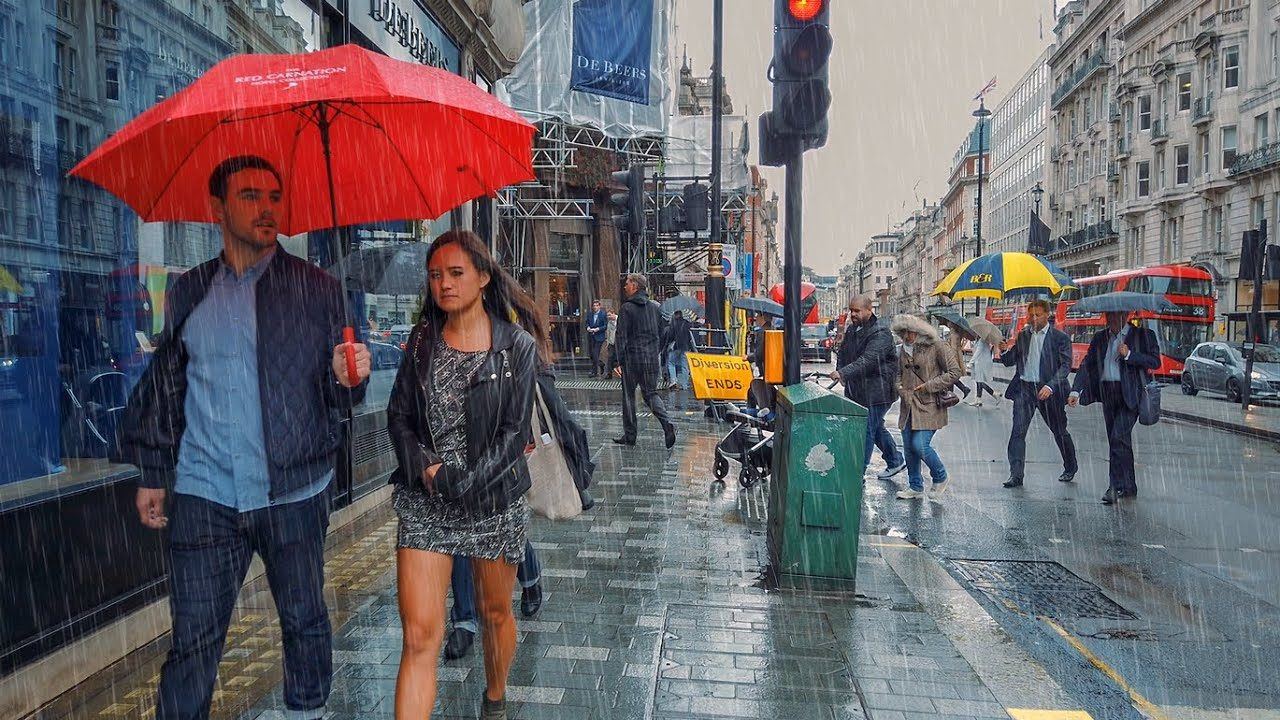
It is tempting to read that table as a list of months to avoid. That would be a mistake. Wet-season travel is cheaper, emptier and often more beautiful. Hanoi's Old Quarter with the lights doubled in the wet paving beats the same streets in flat sunshine, and you share it with fewer people.
Singapore's twenty-five rainy days in December are days on which it rains hard for forty minutes and then stops. Seattle's eighteen are mostly gray drizzle. The two call for different plans.
So the real question is what shape the rain takes here, and what that does to the order of your day.
How do you plan a day around rain?
Anchor every day with one indoor thing
Pick something you truly want to do under a roof and place it in the day on purpose: the museum, the market hall, the long lunch, the bathhouse. If the weather holds, you do it anyway and the day gains a sit-down in the middle. If it breaks, the day still has a center, and you are not improvising in a doorway.
Put the outdoors in the morning
In most rainy climates, and above all in the tropics, the convective rain arrives in the afternoon. Front-load the exposed things: the walk, the viewpoint, the park, the market that spills into the street. Save the sheltered things for later. On a dry day this costs nothing, and on a wet one it saves the whole day.
Keep a rain-day bank
Hold two or three indoor places in reserve, unassigned to any day. Choose them, locate them, and make sure you would be glad to go. When an afternoon washes out, the bank turns it into a swap instead of a scramble. Do the choosing before you travel, because nobody decides well about four spare hours while soaked.
Learn where the covered ground is
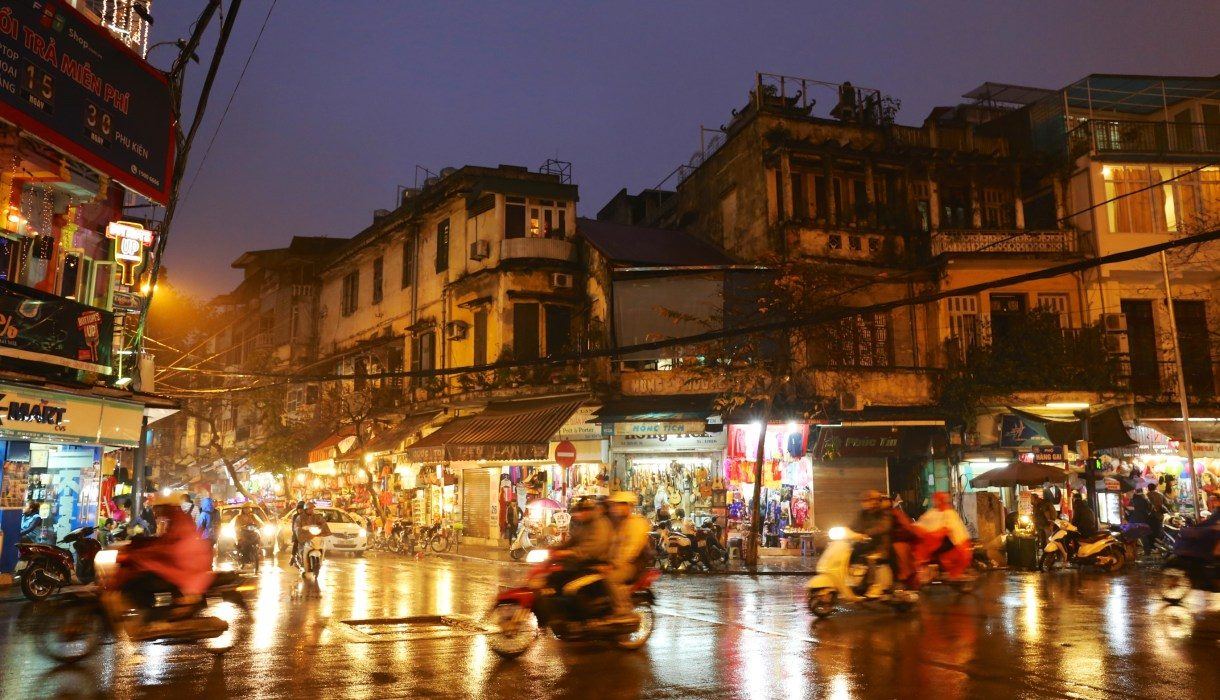
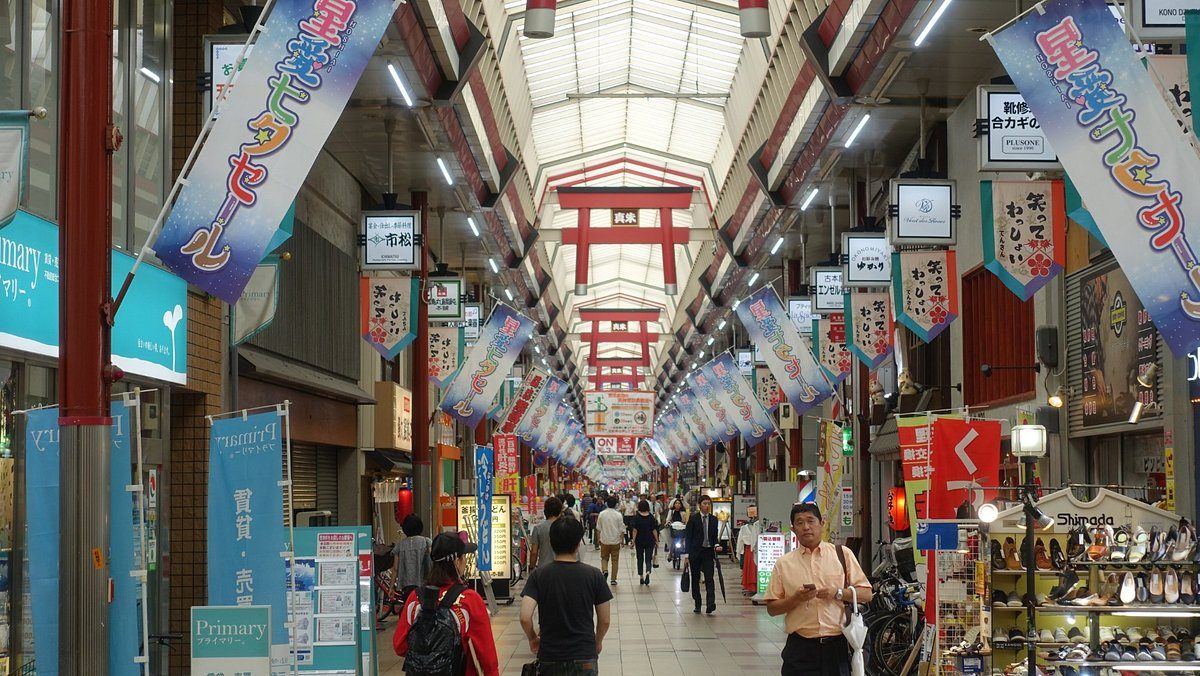
Most old cities have a dry network that rarely makes the tourist map. Japan's shotengai add up to miles of roofed shopping street. Milan, Naples, Leeds and Brussels have glass-roofed galleries. Seoul, Shanghai and Hong Kong have vast connected underground concourses. Istanbul, Bologna and Barcelona have covered markets and arcaded sidewalks you can cross a district under. Find one before you need it, and a rainy afternoon becomes somewhere to be.
The 24-hour bathhouses you can sleep in →Read the full New York City guide →
How should you get around on a rainy day?
In the rain, how you move between stops matters as much as what you see. A day built on walking hides a weather risk in every gap between stops. A day built on the metro has almost none. Five stops spread across a city means four soakings, and the same five in one district means four short dashes.
So on a wet day, tighten geography before you cut anything. Keep the stops, move them closer together, and let the train do the exposed part.
What should you pack for rain?
One line covers it: a real waterproof jacket, shoes you do not mind soaking, and no folding umbrella if the place is windy. Most articles on this subject stop there, and it matters least of anything here.
Does PoppaTrip plan around rain for you?
All of the above is bookkeeping, the kind of thing software should do for you. PoppaTrip's planner is weather-aware, and here is exactly what that does and does not mean.
The wizard has a step called Rain sensitivity with three options: Hardy, Flexible, and Avoid it. The setting changes the plan.
When your travel dates fall inside the forecast horizon, PoppaTrip pulls a day-by-day forecast for your destination. It sorts each day into a risk tier: severe, rain, cold, heat, or fine. A day counts as rain at a 50 percent chance of precipitation or 0.2 inches (5mm).
Every place PoppaTrip curates is tagged as indoor, outdoor, covered, or flexible. The curation is told to include enough indoor and covered options that every rainy forecast day has something solid to do. That is the rain-day bank, assembled for you. When the day grid is built, outdoor places move toward the driest days, and indoor and covered ones settle onto the worst.
Day trips, which are outdoors by nature, go on the driest day that is still empty. If you chose Avoid it, outdoor places stay off rainy and severe days. The one exception is a place that would otherwise have nowhere to go. It gets scheduled anyway rather than silently disappearing.
Two honest limits. First, the planner is weather-aware only for the dates it can get a forecast for. It could fall back on long-run climate normals beyond that, but that data source is not switched on yet. For now, dates outside the forecast window are planned on the ordinary rules: pace, opening hours and distance.
Second, nothing here forecasts the weather better than the forecast does. It just saves you re-sorting your own itinerary every time the forecast changes.
The rest of the day's shape comes from settings you choose anyway. Pace decides how many stops go into a day, so Slow & Easy leaves real room for a downpour and Packed does not. Picking City & Urban under environments steers the curation toward dense, covered, walkable ground, the kind that handles rain best.
The weather stays the same, but it costs you less. A trip planned with anchors, a bank and tight geography loses an hour to a downpour instead of a day. Across a week, that difference adds up to roughly one entire vacation.
There is a small consolation, too. The photographs are better in the rain, the restaurants have tables, and the line for the thing everyone lines up for is gone.
One further read on this: a wet weekend, day by day
This article covers which cities are wet and how to order the days; this next one walks one rainy city weekend in full.
- Lisbon — Spending a Perfect Rainy Weekend in Lisbon, Portugal — Wanderous Affair — A worked three-day Lisbon weekend written in the rain: the Fado Museum, the Alfama churches, the Jerónimos Monastery cloister in Belém and the 28 streetcar.