
cultural
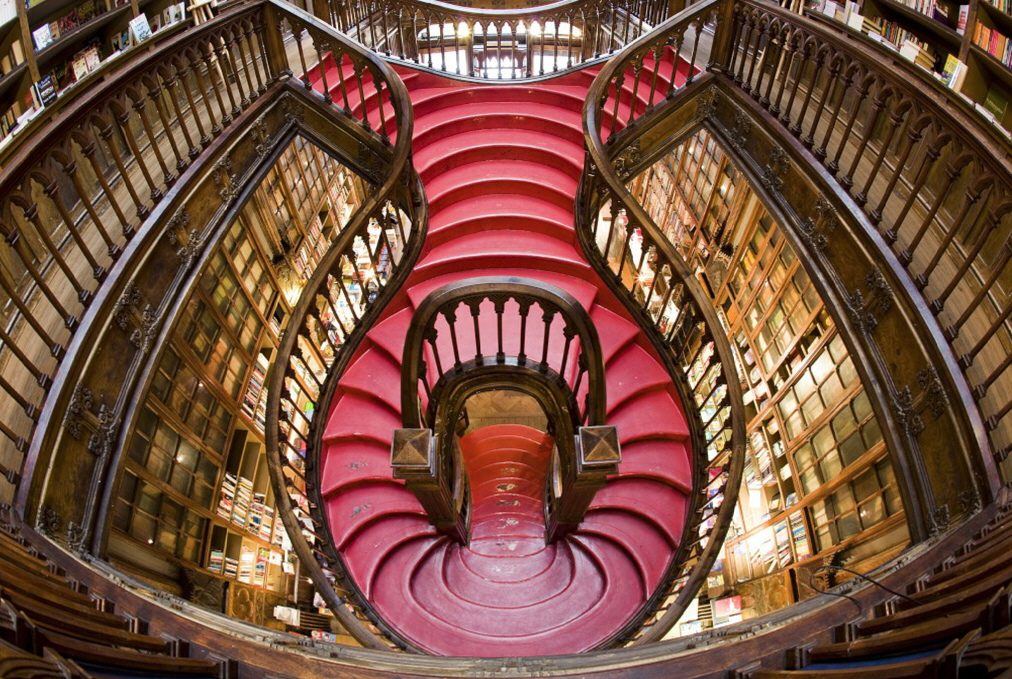
Livraria Lello
A 1906 bookshop with a crimson staircase curling through the middle of it, entered in timed 30-minute slots.
Everything worth seeing sits between a granite hilltop and a river, which means the whole city is one long descent. Start high, end at the water, and let gravity do the planning.
12 places we would actually send someone to, across 6 categories. Photos are in the written guide below, and every photo is of that specific place.
A 1906 bookshop with a crimson staircase curling through the middle of it, entered in timed 30-minute slots.
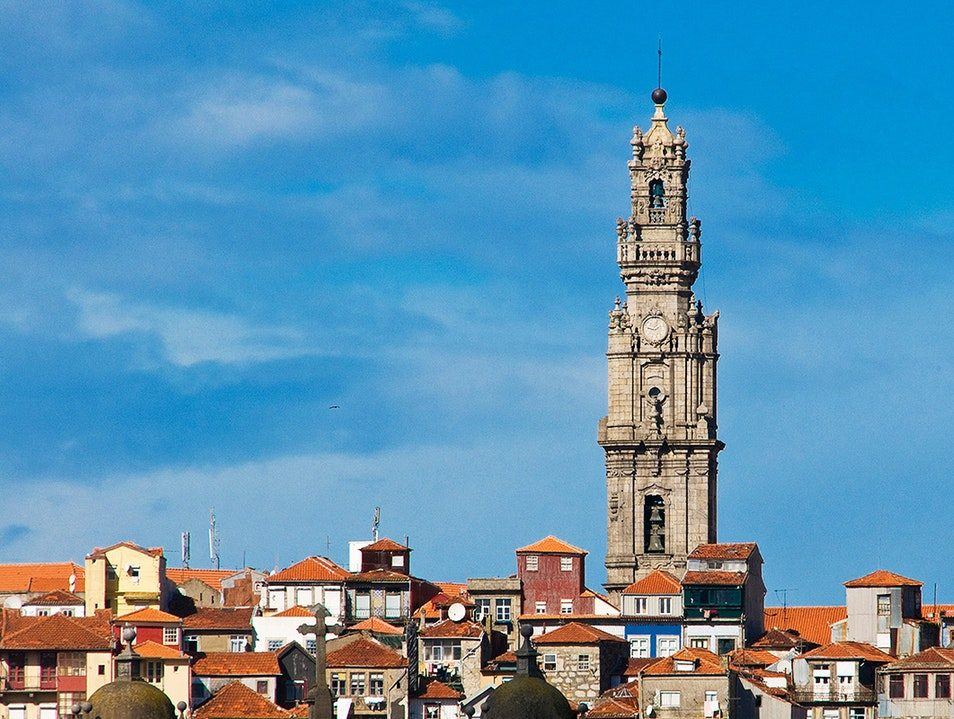
Nasoni's granite bell tower, 240 spiral steps to a balcony that puts the whole tiled city under your feet.
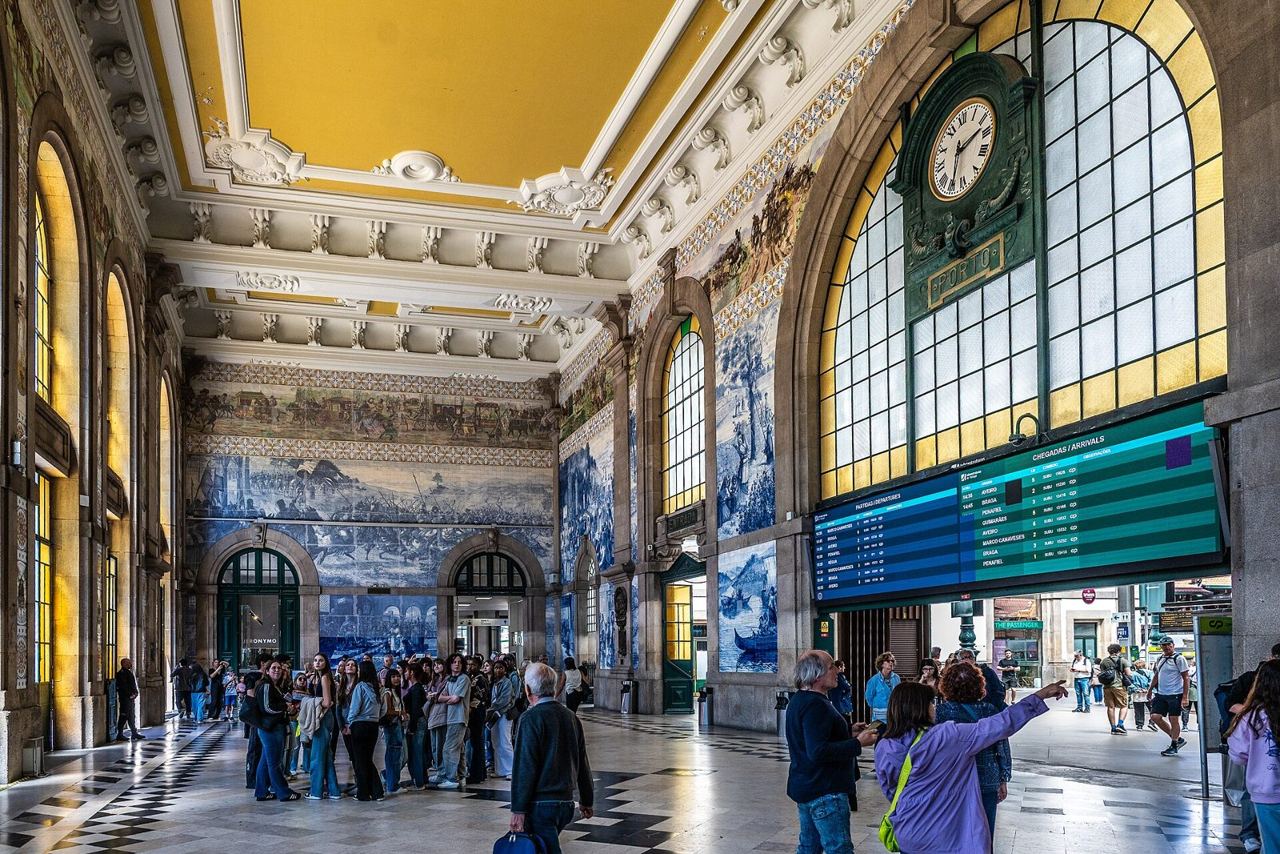
A working train station lined with 20,000 blue-and-white azulejos, painted by Jorge Colaço between 1905 and 1916.
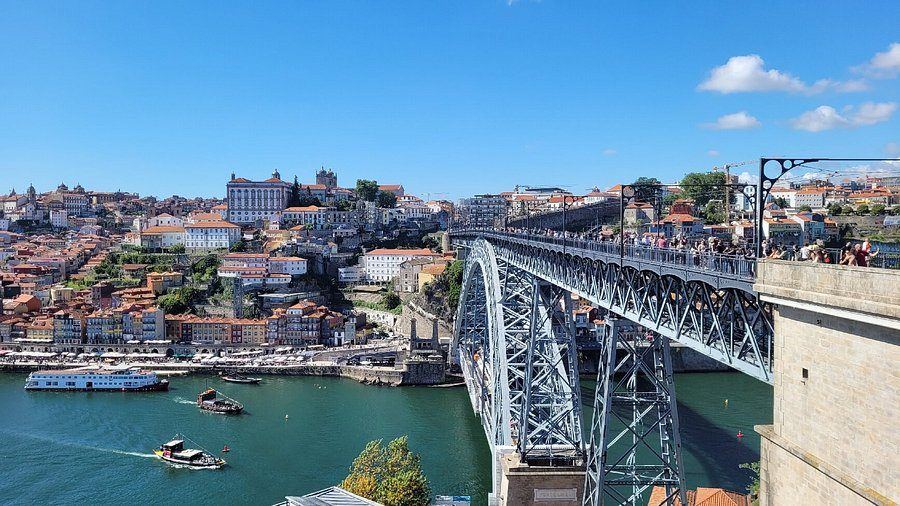
The riverfront arcades under the old city wall, and the 1886 iron bridge whose upper deck you cross on foot, 45m up.
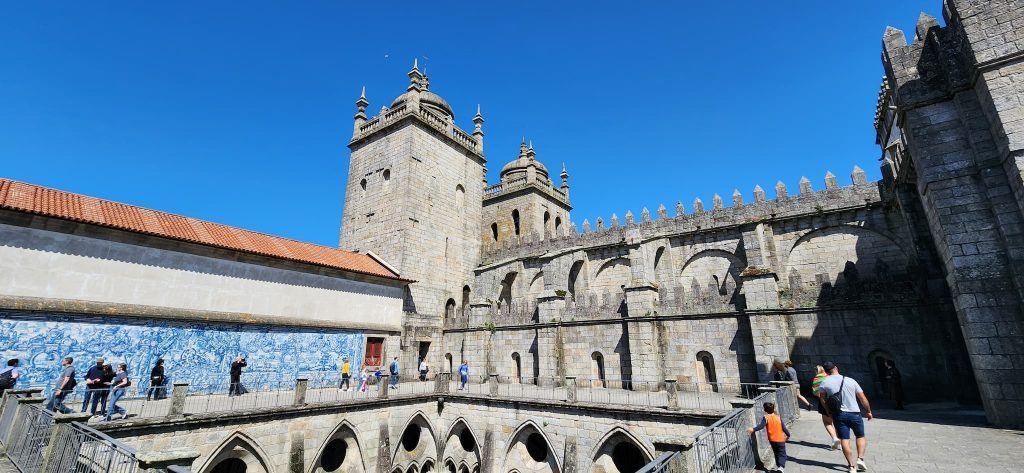
The fortress-like 12th-century cathedral on the hill, with a Gothic cloister tiled in scenes from Ovid.
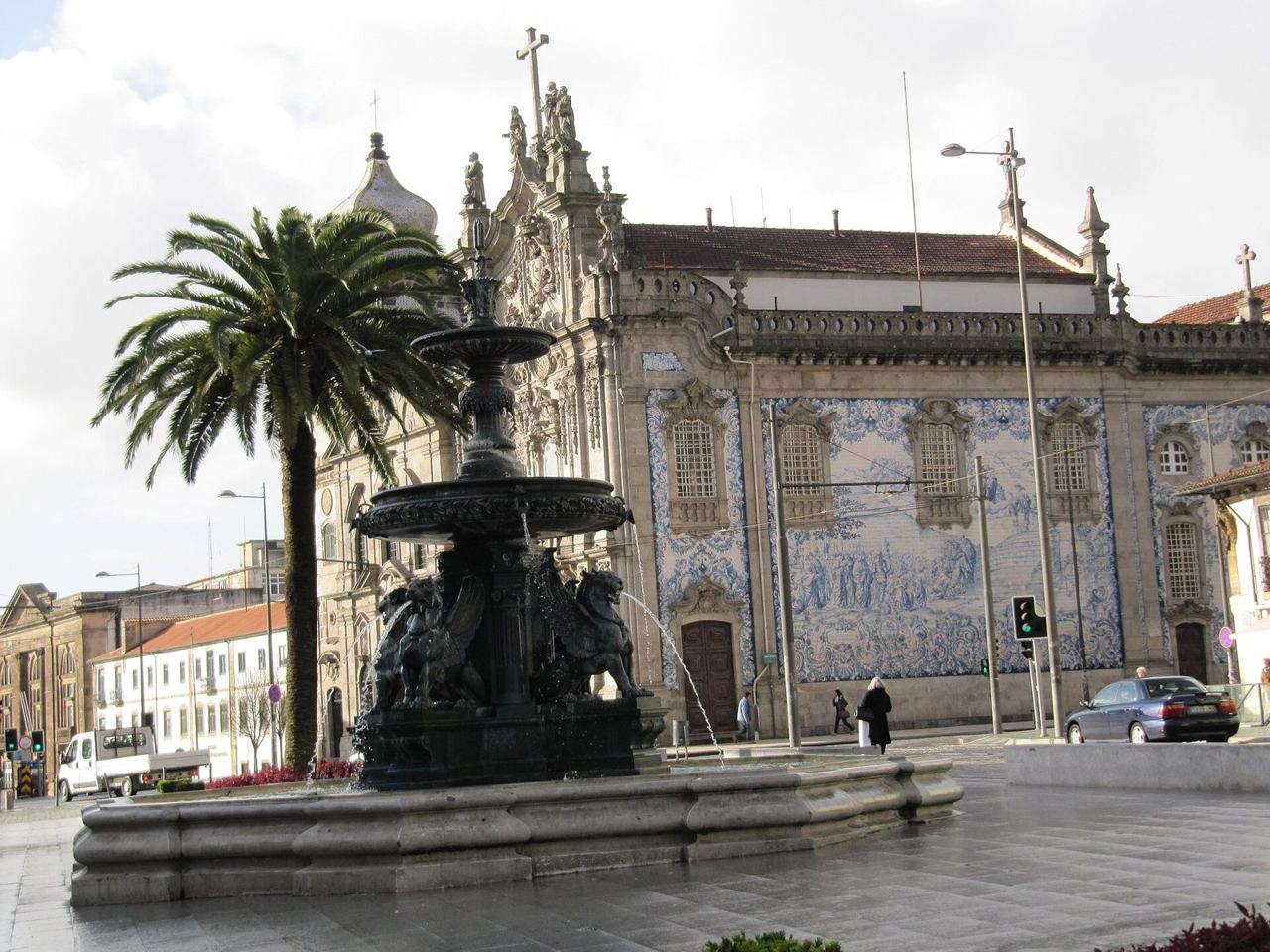
Two churches joined by a house a meter and a half wide, under a side wall painted in tiles in 1912.
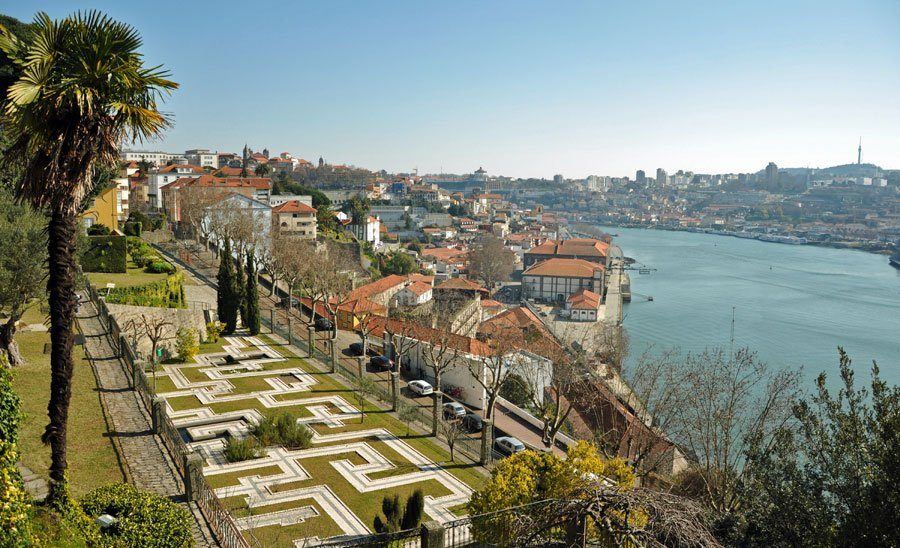
Terraced free gardens above the Douro with loose peacocks, hedged rooms and the best sunset view in the city.
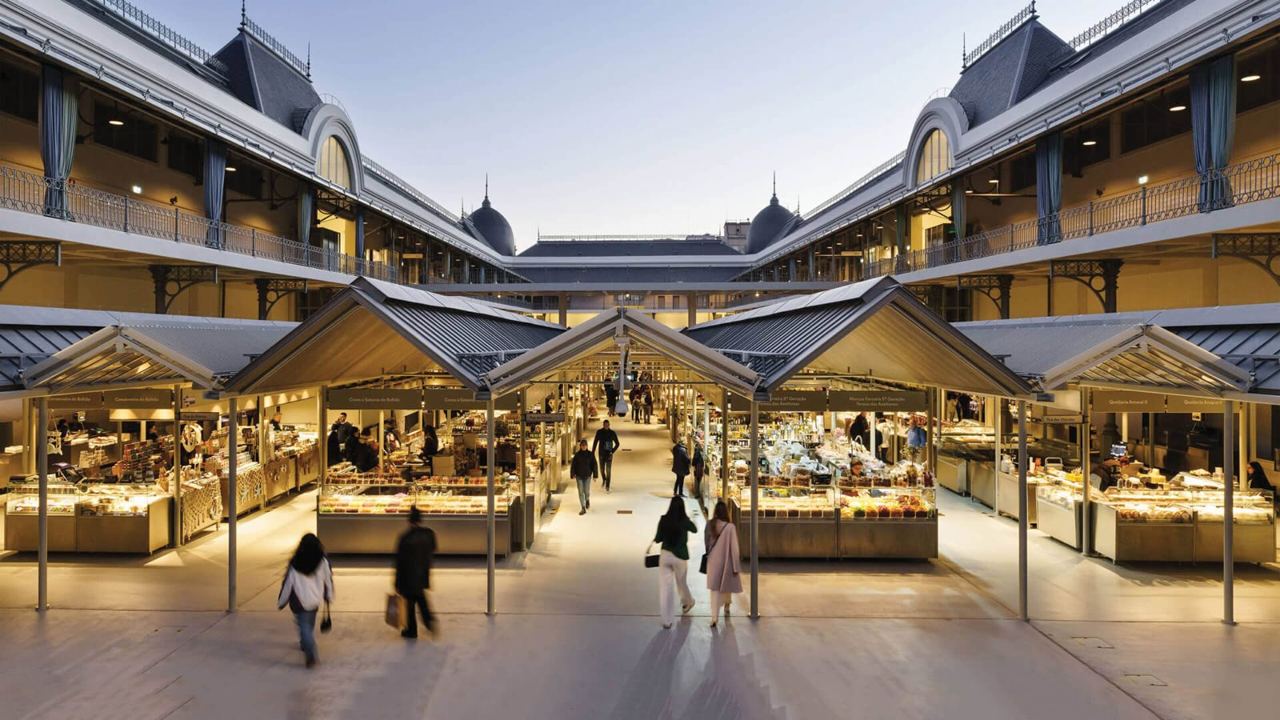
Porto's 1914 iron-and-glass market, restored and reopened in 2022, at its fullest before noon on a weekday.
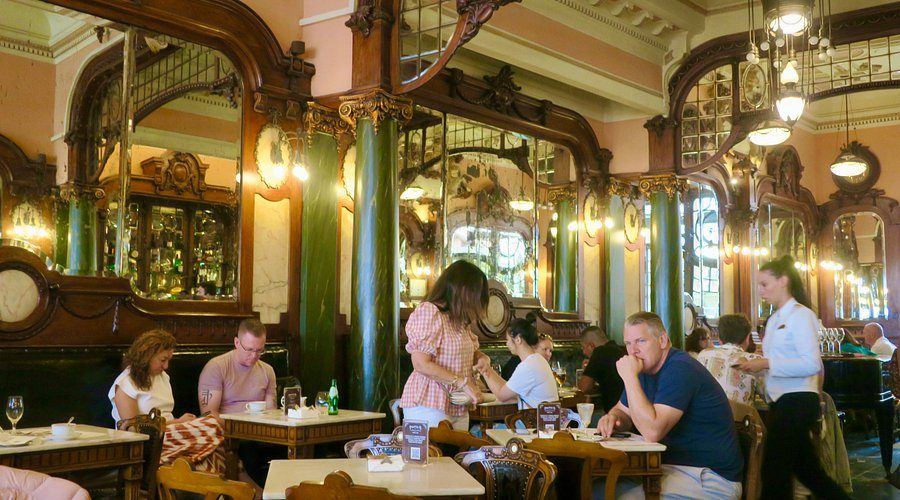
A 1921 Art Nouveau cafe on Rua de Santa Catarina — carved wood, mirrors, gilded ceiling, and a proper breakfast.
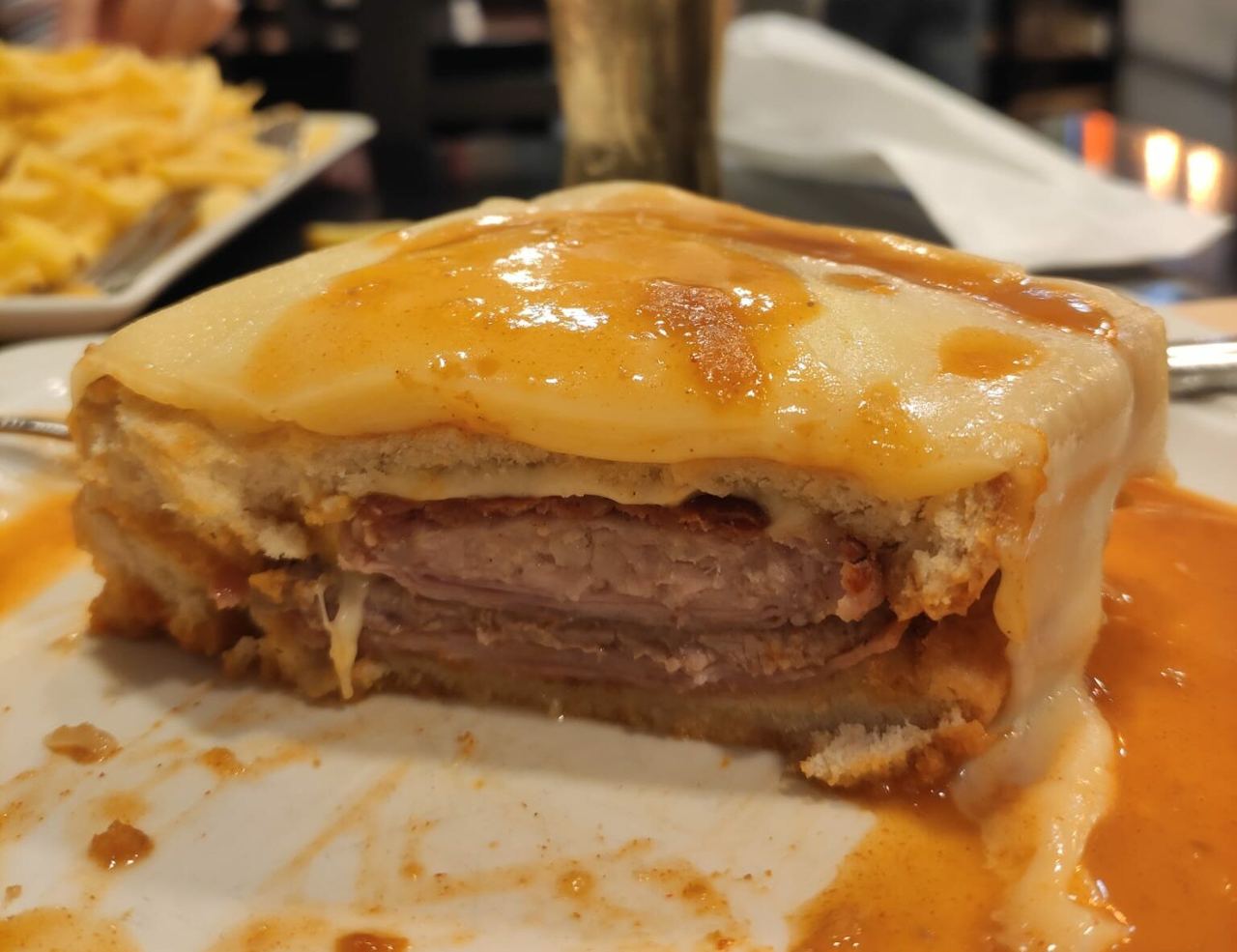
Open since 1959 and the standard-setter for Porto's francesinha — a layered sandwich under melted cheese and a hot sauce.
A 1929 wooden tram running the river bank from Infante out to the Atlantic, roughly 40 minutes end to end.
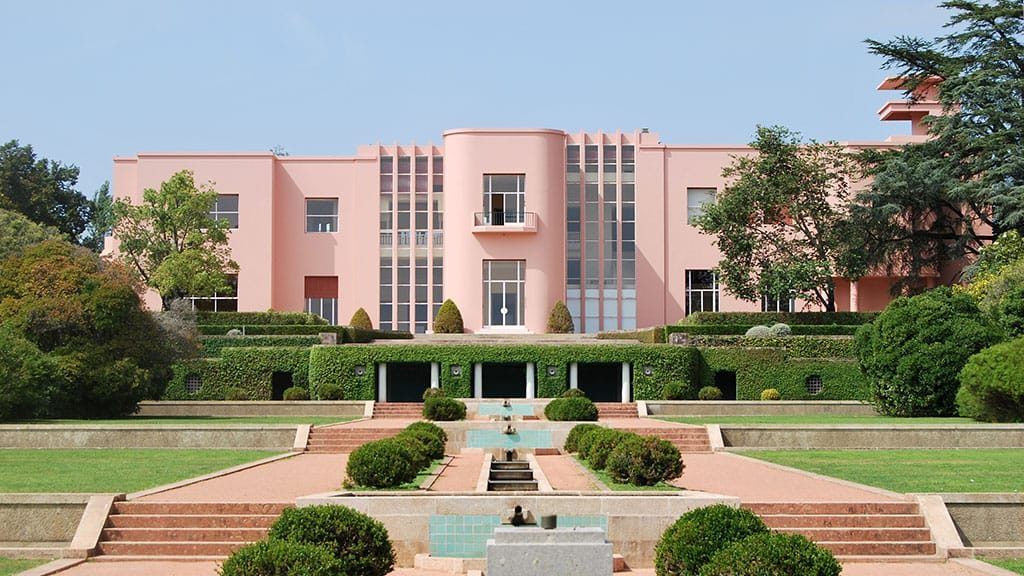
A Siza-designed contemporary art museum, a pink Art Deco villa and 18 hectares of park with a treetop walk.
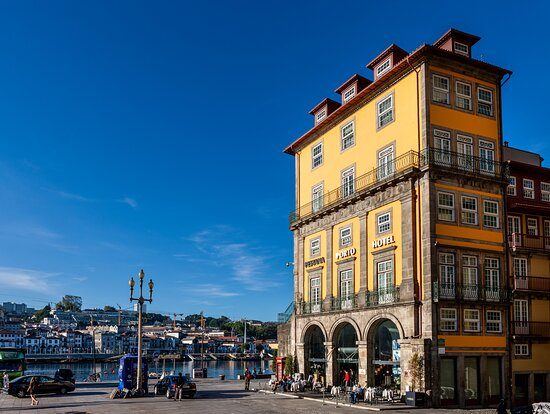 Our base for this trip
Porto rewards staying low and walking up, not the other way round: you finish every evening at the river anyway, and a hotel on the water means the last stretch of the day is fifty meters instead of a climb. The Pestana Vintage is stitched together out of a run of 16th-to-18th-century houses on Ribeira square itself, part of the UNESCO block, so no two rooms are the same shape and some have the bridge in the window. São Bento, the cathedral and Clérigos are all inside ten minutes on foot. If the riverfront feels too central, the Aliados avenue is the other sensible base — one metro stop from everything and a quieter street at night.
Praça da Ribeira — on the riverfront square, under the old city wall
Porto is small enough to cross on foot and steep enough to make you regret how you crossed it. The old city stands on a granite shelf above the Douro, and almost every street either drops toward the water or climbs away from it. Two places a five-minute walk apart on the map can be separated by sixty vertical meters and a flight of worn steps with a handrail polished by two centuries of hands.
This defeats people who plan by distance. They tick off a landmark up at Clérigos, then one down at the river, then one back up at Bolhão, and by four in the afternoon their legs are finished and they have seen a lot of the same hill three times.
So plan by altitude. Begin each day at the top, near Clérigos and the Carmo churches, and let the route fall — down through São Bento, past the cathedral, onto the riverfront, and across the bridge if you still have it in you. The only serious climb you owe yourself is the tower, and that one is a staircase with a view at the end of it.
Almost everything in this guide sits on the hill between Clérigos and the river, and the Metro do Porto does not reach down into it. The system’s closest approach is Line D, the yellow line, which runs a spine through Trindade, Aliados and São Bento — both up at the top of the hill — before crossing the Douro on the upper deck of the Ponte Dom Luís I to Jardim do Morro and Câmara de Gaia on the Vila Nova de Gaia side. Every step from Aliados or São Bento down to the cathedral, the Carmo churches and Ribeira is on foot, and that is by design: this is a walking guide first, with the metro filling in only the two ends of it.
So the plan below still reads as one walk, not a set of line changes. Livraria Lello, Torre dos Clérigos and Igreja do Carmo cluster at the top, all a five-to-ten-minute walk from São Bento or Aliados on Line D — the bookstore’s own page names the route, up Rua dos Clérigos to Rua das Carmelitas. São Bento Station is the Line D stop itself, tiles and ticket machines in the same room. The Sé sits a short climb above it, off the same station, though no official page we could read this session states the exact walk time — budget a few minutes and check a map on the day. There is no station in Ribeira at all; the closest the metro gets to the riverfront is the bridge overhead, where Line D crosses to Gaia on the upper deck as you walk it.
The second half of the day changes lines rather than staying on one. Mercado do Bolhão, Majestic Café and Café Santiago all sit near Bolhão station, on the shared central run of Lines A, B, C, E and F — the five lines the operator’s own map treats as effectively one line through the middle of the city. Serralves is off that same run too, but a stage further out: get off at Casa da Música and change to a bus (STCP 201, 502 or 504, by the museum’s own directions), or, if you are riding in on Line D, change at Trindade first, since D does not reach Casa da Música on its own. Tram 1 to Foz do Douro is not the metro at all — it is a separate 1929 STCP heritage line that starts at Infante, on the river below São Bento, and runs its own track the whole way to the Atlantic.
Livraria Lello opens at nine and sells timed thirty-minute slots, which is the single most useful fact in this guide. Book the first one. By eleven the line on Rua das Carmelitas runs the length of the block and the staircase inside is a slow-moving column of raised phones; at nine you get about four minutes alone on it, which is enough to notice that the famous crimson stair is not stone at all but painted plaster over wood, and that it flexes very slightly underfoot. The ticket costs ten euros and comes off the price of any book you buy, so buy one.
Two minutes downhill the Torre dos Clérigos goes up instead: 240 steps in a granite spiral that narrows as it climbs, until you come out onto a balcony seventy-five meters above the roofs. From there the plan of the city makes sense for the first time — the terracotta pouring down toward the river, the bridge, the far bank rising again on the other side. Ten to fifteen minutes up if you do not stop, longer if someone ahead of you does, and there is no way round them.
On the way, look at the side wall of the Igreja do Carmo: an entire facade painted in blue tile in 1912, Carmelite founding scenes done at the scale of a billboard. Then look at the seam between it and the church next door. That gap is a house — three stories, a meter and a half wide, lived in until the 1980s — squeezed in because the law of the day forbade two churches sharing a wall, and, the story goes, because nobody wanted the monks and the nuns to be neighbors through one.
São Bento is a functioning commuter station, and it is also a stop on Line D, the yellow metro — the only line that reaches this hilltop core, which is why São Bento and Aliados are the two stations this guide keeps naming. There are ticket machines, a departure board, people eating a pastry standing up with one eye on the clock. There are also 20,000 hand-painted tiles covering the entrance hall from floor to cornice, which Jorge Colaço spent eleven years installing between 1905 and 1916, and which show the Battle of Valdevez, the conquest of Ceuta, King João I arriving in Porto in 1387, and a market day on the Douro.
Nobody charges you anything and nobody stops you standing in the middle of it. Go early or late, when the hall is not full, and stand still long enough to find the small stuff — a mule with an expression on it, a woman carrying a basket badly. The panels are best read as a comic strip you are inside of.
Then climb five minutes to the Se. It is less a cathedral than a keep: 12th-century, squat, crenellated, built when Porto needed a building that could hold. The interior is dark and heavy and takes ten minutes. The cloister costs three euros and is the reason to go — a 14th-century Gothic square hung with blue azulejo panels of scenes from Ovid, and a terrace outside it that looks straight down the hill at the river you are heading for.
The last hundred meters to Ribeira are the good ones — stairs and alleys between houses stacked four and five stories, laundry across the gap, tiles in a dozen faded colors, until the lane ends and the whole river is in front of you at once. The waterfront square sits under the arcades of the medieval wall and is unashamedly the tourist heart of the city. Sit in it anyway, for half an hour, and watch the far bank.
The bridge is the real event. The Ponte Dom Luís I opened in 1886, built by a partner from Eiffel’s office, and it has two decks. Everyone finds the lower one, at water level, because it is where they already are. The upper deck is forty-five meters up and reached from the cathedral side, and walking it is the best ten minutes in Porto: a painted lane for pedestrians, Line D — the yellow metro — sliding past your elbow on its only above-ground river crossing, the river a long way underneath, and the entire old town arranged behind you like a model of itself.
Cross it. The far side is Vila Nova de Gaia, and the reason to go is that Porto only looks like Porto from over there — the whole cliff of houses in one frame, best about an hour before sunset. Walk the Gaia promenade, take the cable car back up the slope if your legs have had enough, and come home across the top deck in the dark, when the city is lit and the bridge is nearly empty.
Mercado do Bolhão is a 1914 iron-and-glass market that spent four years being rebuilt and reopened in 2022, and the argument about whether the restoration went too far is one you can settle for yourself in about ten minutes. Bolhão station, on the shared run of Lines A, B, C, E and F, sits beside it. The bones are right: two galleried levels around an open court, fish on ice below, flowers and fruit and salt cod above. Come on a weekday morning. Individual stalls start packing up in the early afternoon, and on Sunday it is shut.
Five minutes away on Rua de Santa Catarina, the Majestic has been open since 1921 and looks it: carved wood, tall mirrors, leather banquettes, a gilded ceiling, waiters in white jackets who have seen every possible way of ordering coffee. It is not cheap and it is not a secret. It is still worth an unhurried breakfast, because there is almost nowhere else you can sit inside 1921 for the price of eggs and a coffee.
Lunch is a francesinha, and it is not optional. It is a sandwich of steak and cured meats, sealed in melted cheese, in a shallow pool of hot orange sauce, usually with a fried egg on top and chips banked around it. It is enormous, it is not delicate, and it is what Porto eats. Café Santiago on Rua de Passos Manuel has been making them since 1959 and is the benchmark. Order one between two people the first time. Then order one each the second time, because you will.
The Jardins do Palácio de Cristal are free, open from eight in the morning, and terraced down the hillside in a series of hedged rooms that keep hiding the view and then handing it back. Peacocks wander the paths with total confidence and no interest in you. The main terrace looks along the Douro toward the river mouth, and it is the sunset spot the guidebooks give to busier miradouros by mistake.
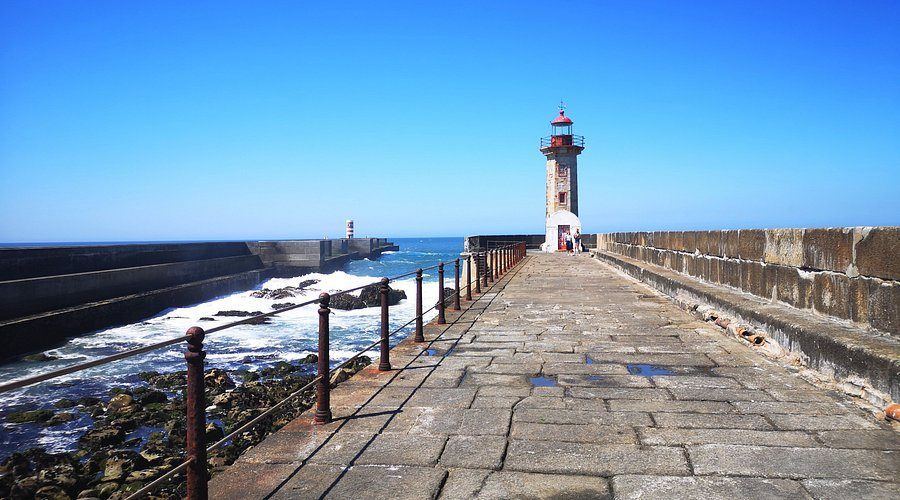
Then go to the sea, and go slowly. Tram 1 leaves from Infante near Ribeira in a varnished wooden car from 1929, with brass fittings and windows that slide down, and rattles the length of the river bank to Passeio Alegre in Foz do Douro. Forty minutes, six euros one way, one every twenty minutes or so. At the far end the Douro simply stops being a river: there is a rock breakwater, a lighthouse, Atlantic surf hitting it hard enough to soak the promenade, and a long seafront of people walking dogs in the wind. It is the best-value hour in the city.
If you have a third day, Serralves is the one place worth leaving the walking spine for. A contemporary art museum by Álvaro Siza, low and white and full of daylight, sits in eighteen hectares of park alongside a pink Art Deco villa from the 1930s, with a treetop walkway strung through the canopy. Buy the park-only ticket if the exhibition does not appeal; the grounds alone will absorb an afternoon.
Two full days covers the historic center, the bridge and Foz comfortably. A third day lets you add Serralves without rushing.
On foot, downhill, plus the metro across the Dom Luís bridge and tram 1 out to the coast. The center is about 2km across but very steep.
The first slot at 9am. Entry is timed and ticketed (about EUR10, redeemable against a book); by late morning the line outside runs 30 to 60 minutes in season.
Yes — 240 steps to a balcony 75m up, and the best single view of how the city is laid out. It opens at 9am and has evening hours in summer.
A francesinha: steak and cured meats sealed in melted cheese with a hot sauce over it. Café Santiago has been the benchmark since 1959. One between two people is a fair first attempt.
Tram 1 from Infante to Passeio Alegre in Foz do Douro — a 1929 wooden tram along the river bank, about 40 minutes, roughly EUR6 one way.
Ribeira, on the river, so the end of each day is downhill. Aliados is the quieter alternative and equally well connected.
People happy to walk a city downhill rather than drive it — the whole plan starts high at Clérigos and ends at the water, with the only real climb being the tower itself. It suits an appetite for tile and stone as much as food, between São Bento's painted station hall, the Sé's Gothic cloister and a francesinha at Café Santiago. And it suits anyone who wants the coast in the trip without leaving the city: tram 1 runs the river bank out to the Atlantic at Foz do Douro in about forty minutes.
Tell PoppaTrip your travel style in the wizard and we'll build a day-by-day itinerary with hotels, routing, and booking links. Answering the wizard and previewing your destination is free; building and unlocking your complete trip is a one-time $9.99.
Yes — every photo is a real photo of that specific place, never a stock image.
Porto is a hill with a river at the bottom — the right order turns two days into a walk downhill instead of the same climb three times.
Plan this trip in minutes →Prices/photos from our trip-planning engine.
Rain rarely ruins a trip on its own. A badly ordered day does, and rain is what exposes it. Here is which cities are wet and when, and how to build days that survive it.
Read the article →The factories below still let travelers onto the floor, from the MINI plant in Oxford to the Airbus line in Toulouse, while several famous ones have quietly stopped letting visitors in. A factory tour is rare in travel because the place is not there for you. The line runs whether you come or not, so the tours that remain impose rules no museum would dare: no camera, no backpack, passport at the gate, nobody under eleven. Here is what each one costs, what you actually see, and who gets turned away.
Read the article →The same $50 is more than enough in Hanoi and doesn’t cover a day in New York. Here is what $50, $100 and $200 a day actually buys in twelve cities: meals, local transit, one attraction entry and a coffee. The hotel and flights are counted separately.
Read the article →Seasons are too blunt to book with. Here is the week to buy and the week that quietly costs double in ten cities: the value windows, the trap weeks that look like shoulder season, and the 2027 holiday dates that move them.
Read the article →