Hoi An is small, flat, cheap and closed to traffic twice a day — and it sits at river level on the Thu Bon, which puts the old town under water most Octobers and Novembers. Here is when to come, what the heritage ticket actually buys, and how three days fit together.
7 curated places11 min readUpdated 2026-09-05
Everything worth your time in Hoi An, Vietnam
7 places we would actually send someone to, across 5 categories. Every photo is of that specific place.
historic
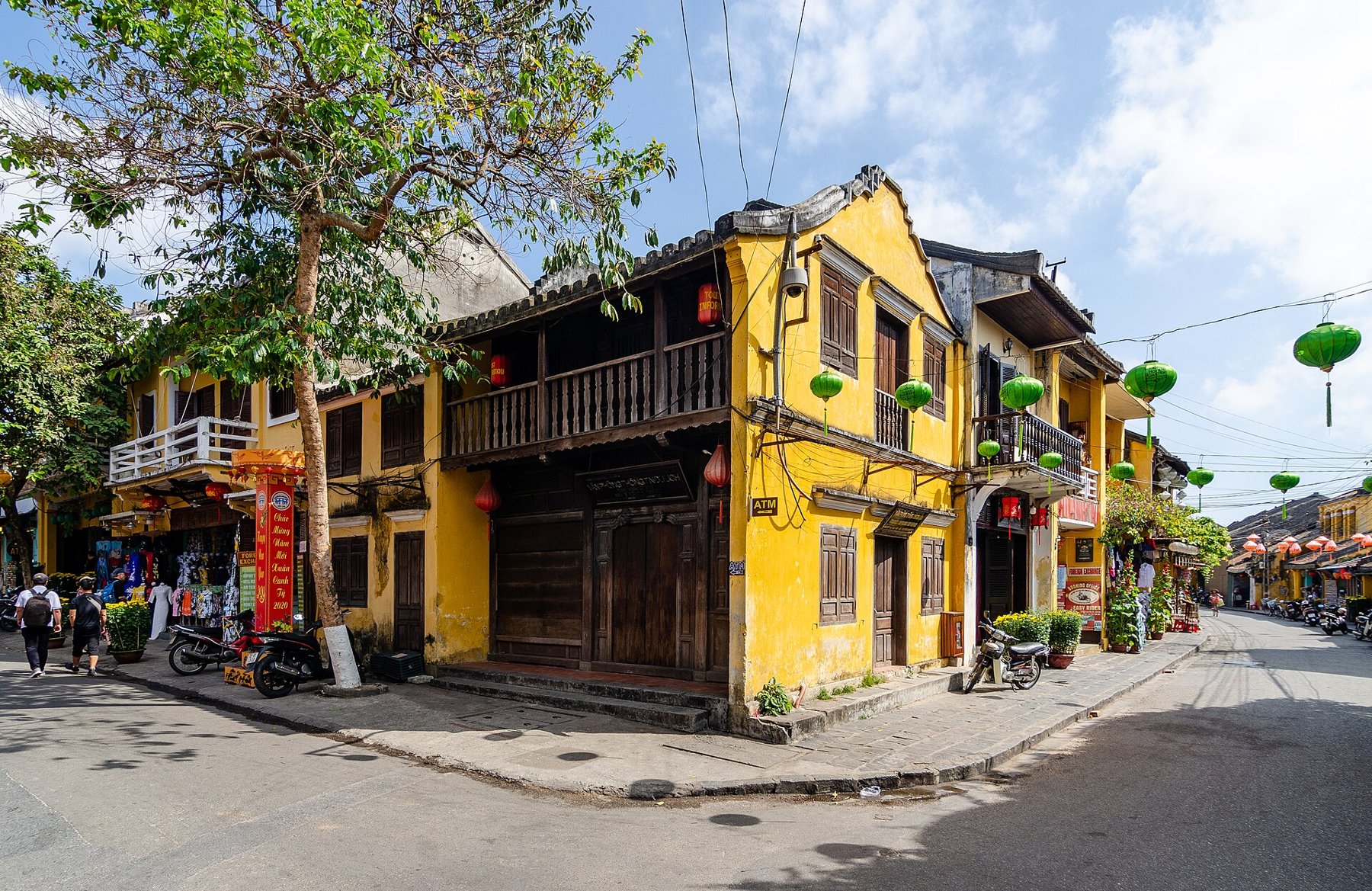
Hoi An Ancient Town
About 800 protected buildings on a bend of the Thu Bon, UNESCO-listed since 1999 and closed to motor traffic 9:00-11:00 and 15:00-21:00 (21:30 on Tran Phu, the riverfront, and on Sundays and holidays). A heritage ticket is checked at the door of the 22 ticketed sites rather than at the ends of the streets. Half a day at a walking pace.
Photo: Steffen Schmitz (more photos), CC BY-SA 4.0, via Wikimedia Commons
historic
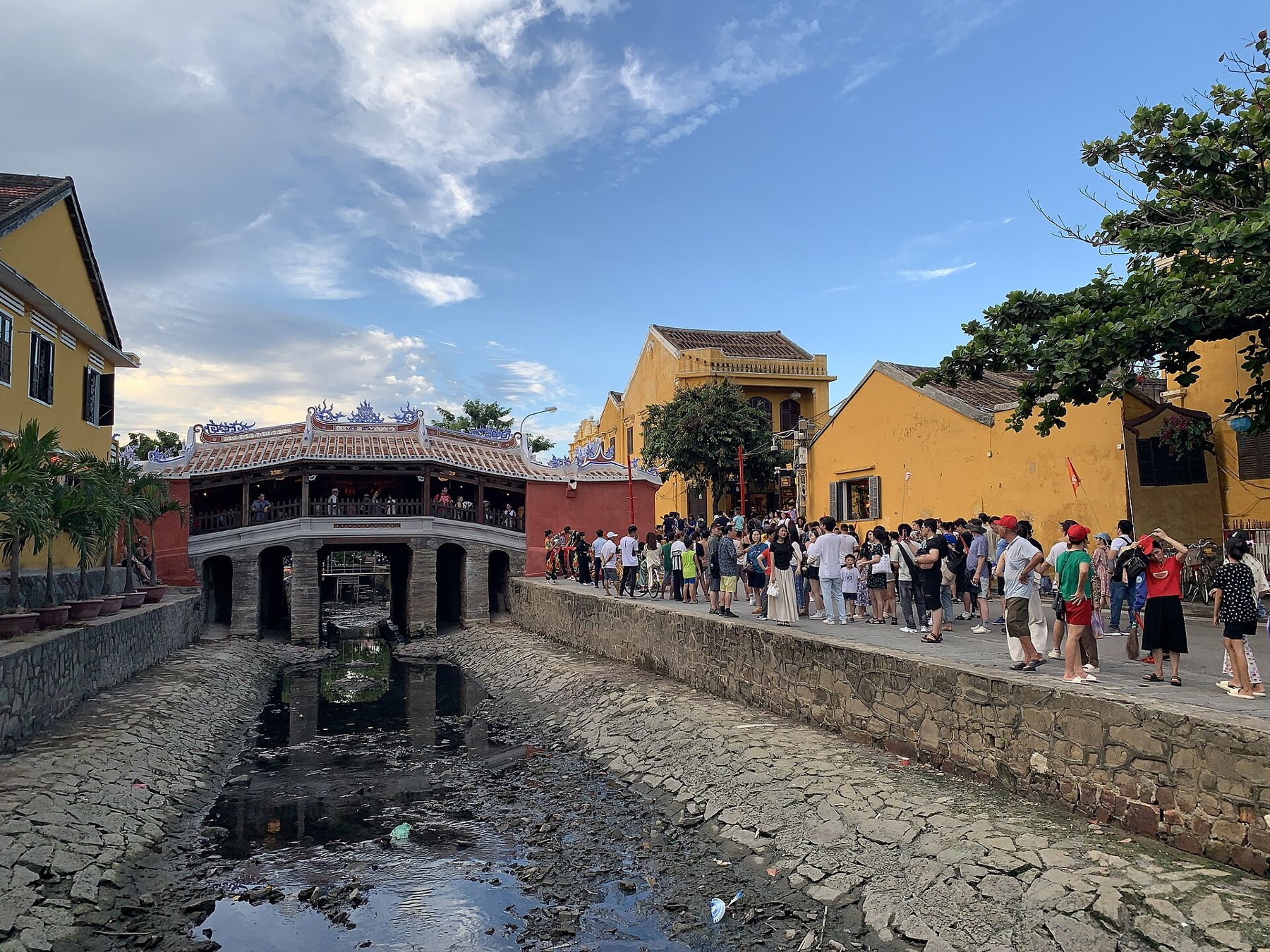
Japanese Covered Bridge (Chua Cau)
The town's symbol: an 18th-century covered bridge with a small temple built into its north side. It closed in December 2022 for a 19-month, 20.2-billion-dong restoration and reopened to the public on 3 August 2024. It is one of the two headline sites your heritage ticket lets you pick. Ten or fifteen minutes on the bridge, longer for the photograph from the bank.
Photo: Chainwit., CC BY 4.0, via Wikimedia Commons
cultural
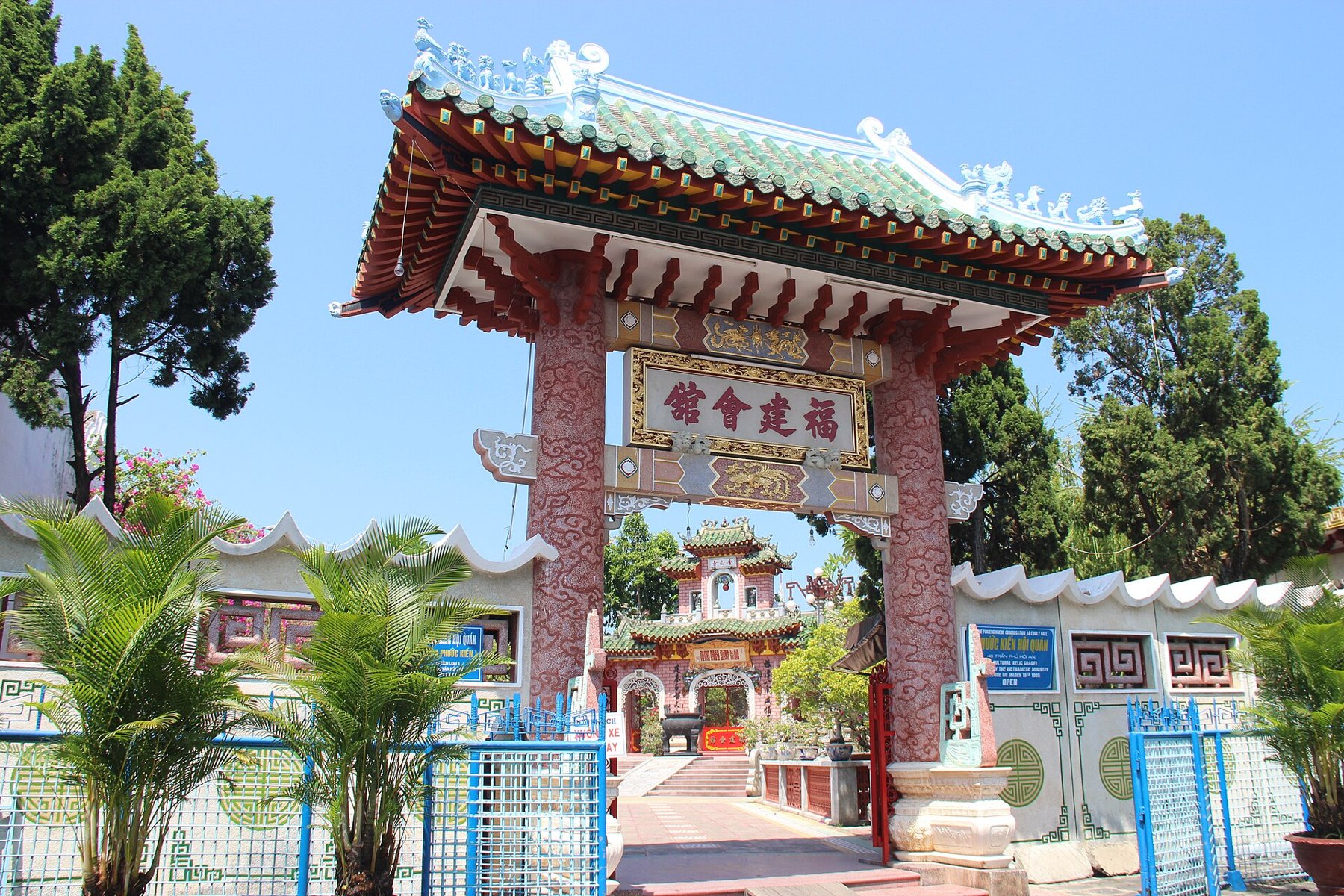
Fujian Assembly Hall (Phuc Kien)
The grandest of the Chinese congregation halls, first built in the 1690s and entered through a porcelain-inlaid triple gate. Inside are the sea-goddess altar and an 1875 scale model of a Fujian trading junk with eyes painted on its bows. Open roughly 7:00-18:00 and covered by the heritage ticket. About thirty minutes.
Photo: Gary Todd from Xinzheng, China, CC0, via Wikimedia Commons
cultural
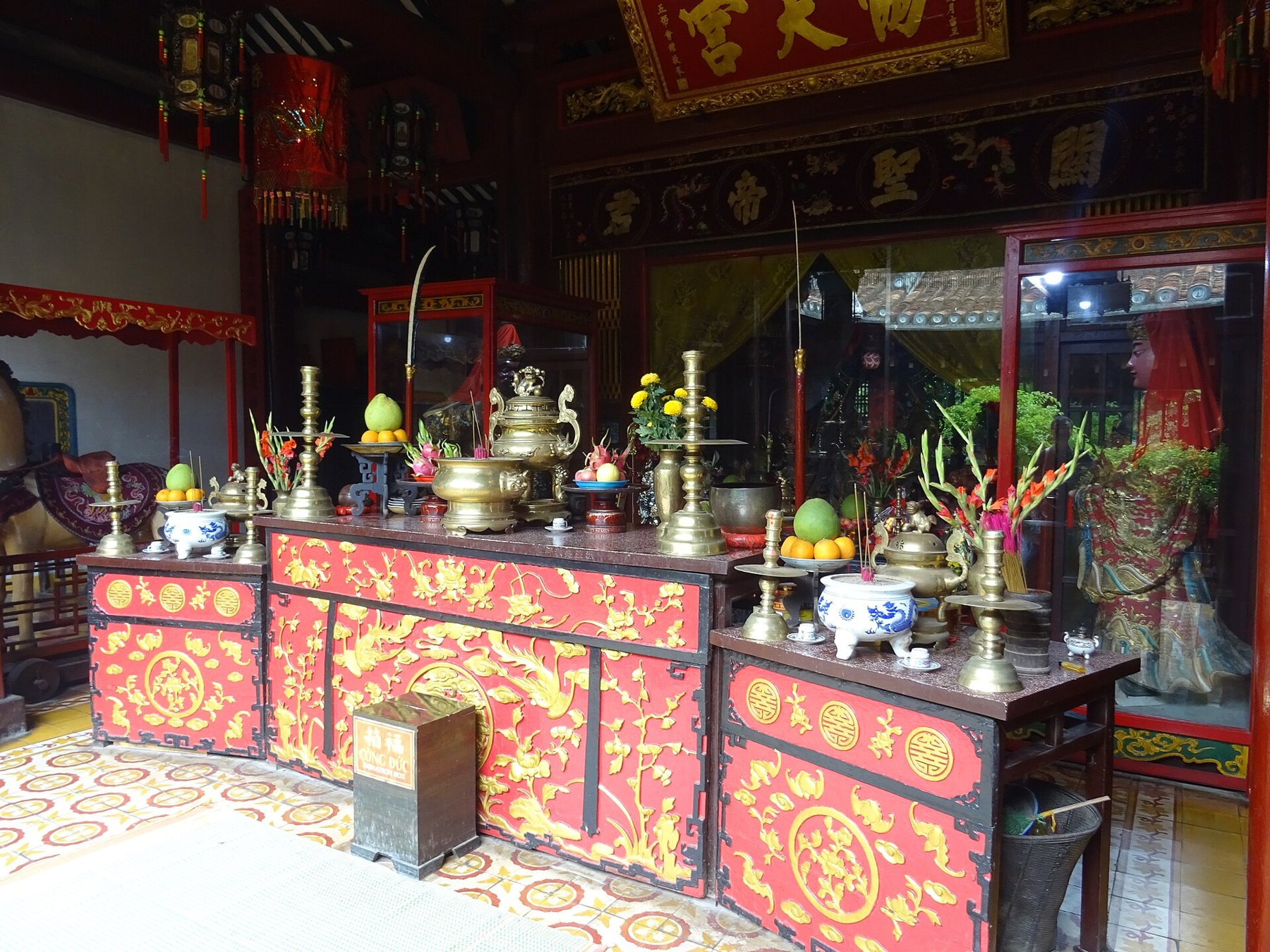
Quan Cong Temple
The 1653 temple to the general Quan Cong on Tran Phu, at the market end of the old town. It is the other headline site the ticket lets you choose instead of the Japanese Covered Bridge, which makes it a real decision rather than a filler stop. Fifteen to twenty minutes.
Photo: Christophe95, CC BY-SA 4.0, via Wikimedia Commons
shopping
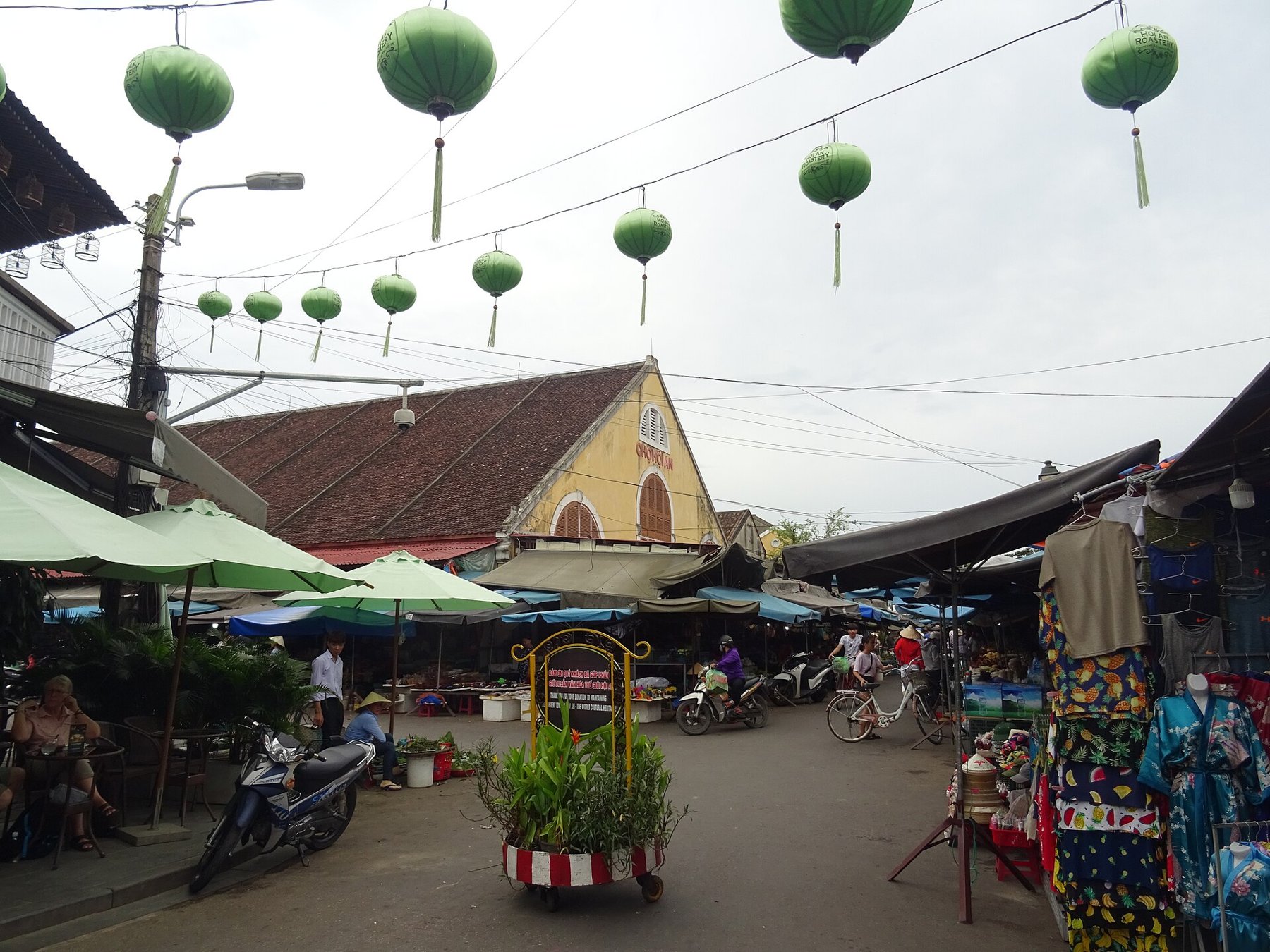
Hoi An Central Market
Free, at the east end of Tran Phu on the river. Produce and fabric in the halls, the cooked-food section where a bowl of cao lau runs 25,000-30,000 dong (about $1), and the fabric stalls that feed the tailor trade. Busiest and best early. Around forty-five minutes.
Photo: Christophe95, CC BY-SA 4.0, via Wikimedia Commons
scenic
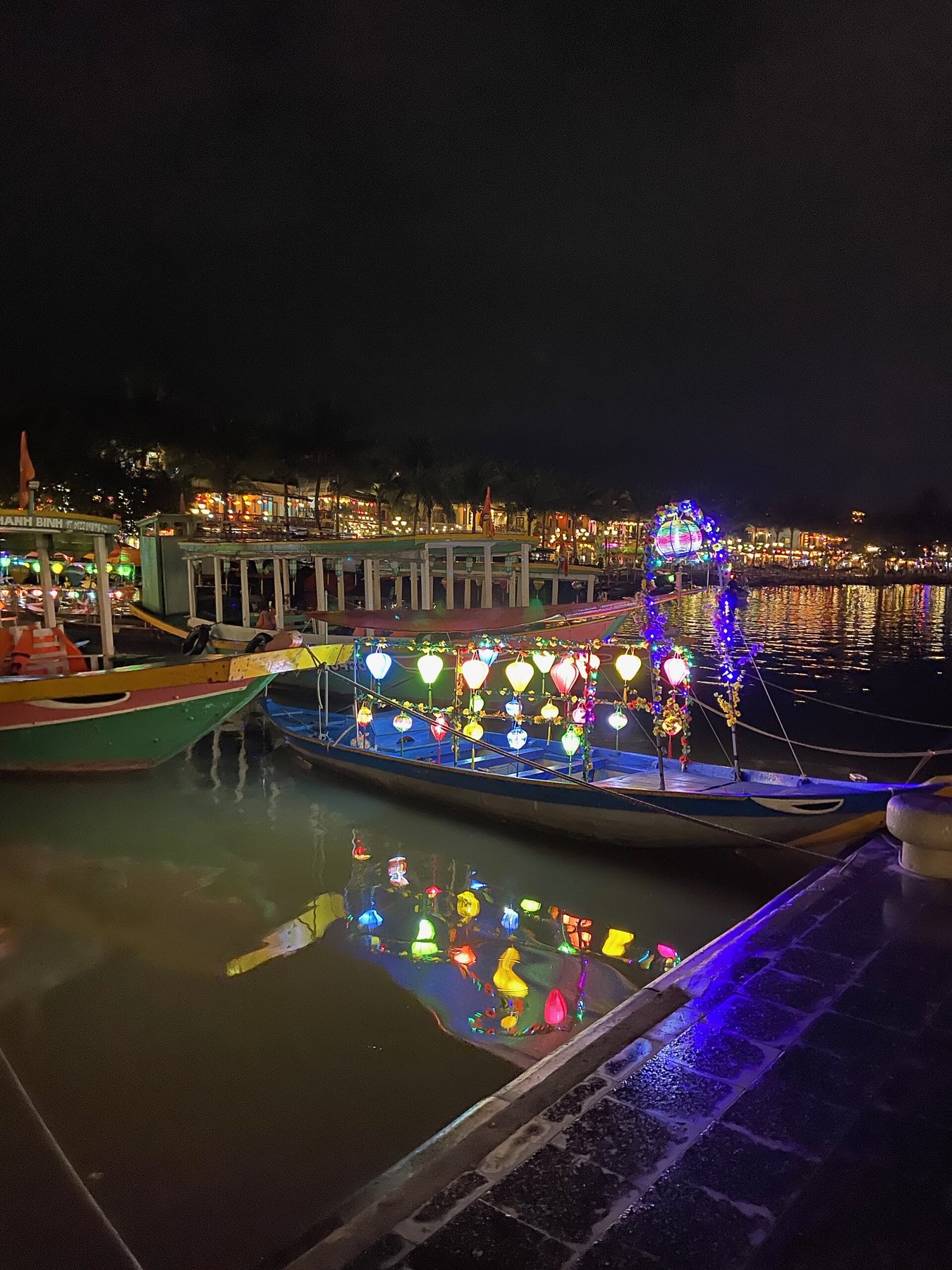
Lantern boat on the Hoai River
The rowed sampan hung with paper lanterns, boarded from the steps on Bach Dang or by An Hoi Bridge after dark. Posted fares are 170,000 dong for one to three people and 220,000 for four to five — per boat, not per person, for about twenty minutes. Candle lanterns to float cost 20,000-40,000. Agree the total and the head count before you step in.
Photo: Kuroczynski, CC BY-SA 4.0, via Wikimedia Commons
nature
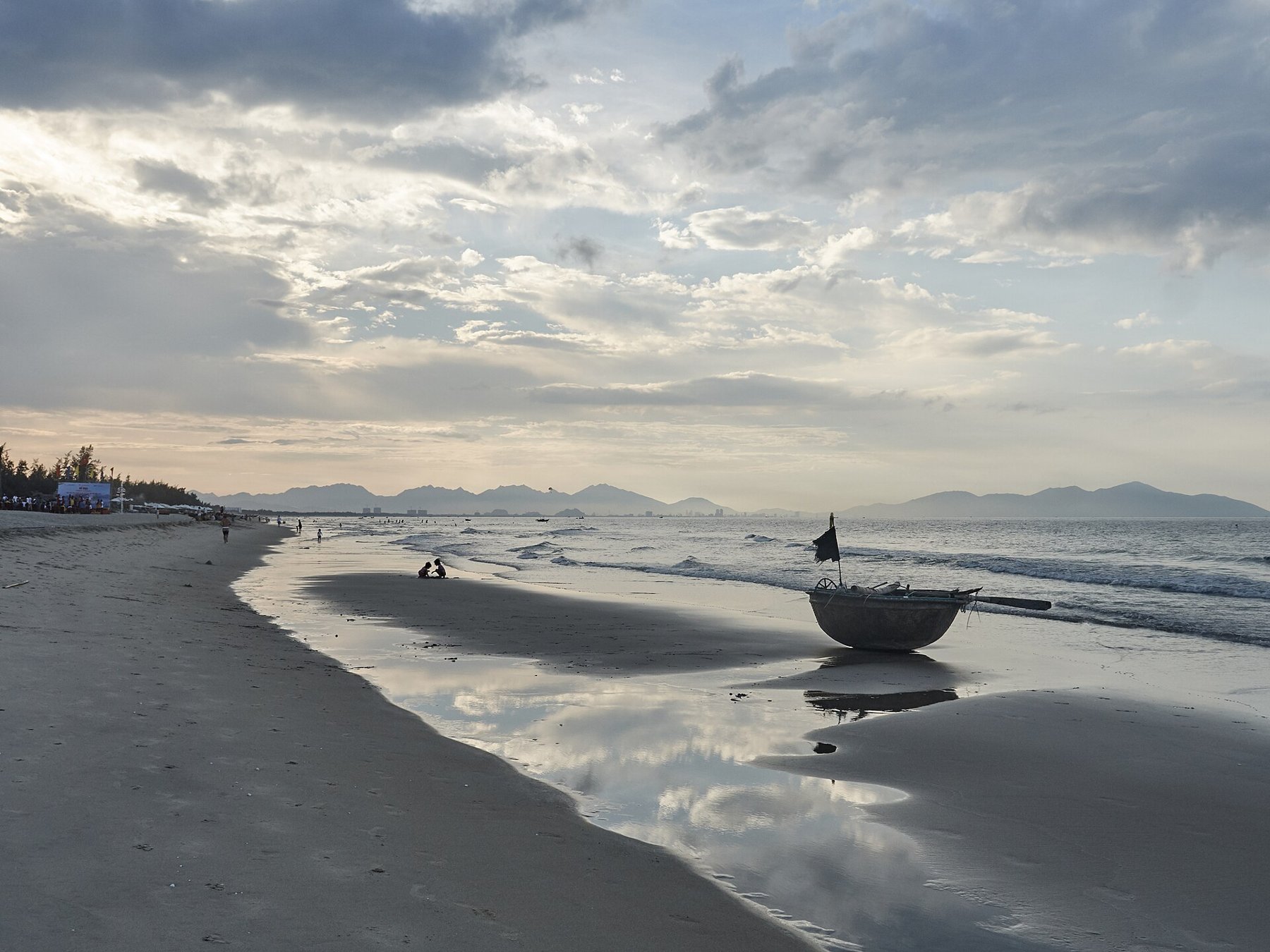
An Bang Beach
Free, about 4km and fifteen minutes by bicycle from the old town, and the beach Hoi An actually uses now. A sun lounger is 10,000-50,000 dong, or free with a food or drink order at one of the beachfront places. Mornings are calmest, and the sea is at its best from roughly March to August. A half-day.
Photo: Edgardo W. Olivera from Montevideo, Uruguay, CC BY 2.0, via Wikimedia Commons
The guide
Three Days in Hoi An: The Town Floods, So the Calendar Comes First
· 11 min read · Written by the PoppaTrip editors
Pick the month before you pick anything else
Hoi An's Ancient Town sits at river level on a bend of the Thu Bon, and it floods. Not rarely, and not only in exceptional years: most Octobers and Novembers the river comes up over the riverside streets, Bach Dang and Cong Nu Ngoc Hoa first, then An Hoi island, and the heritage houses, assembly halls and museums close while the water is up and for at least half a day after it drops.
In late October 2025 the Thu Bon crested at 5.62 meters at Cau Lau — fourteen centimeters above the 1964 record, the worst flood in sixty years. The old town went under one to two meters of water, around 40,000 visitors were moved between hotels, and 35 people died across central Vietnam. Hoi An reopened to visitors on 1 November 2025, within days of the water dropping, which is the other half of the picture: this town recovers fast and it is not a place to write off.
So the rule is not "don't go". It is: if you can choose your month, choose February to May, and if you are traveling in October or November, do not make Hoi An the immovable anchor of the trip. Book refundable, keep a spare day, stay north of the river rather than on Bach Dang if the forecast turns, and accept that the ticketed houses close when water is in the streets.
February to May is unusually clear-cut here because the town's two attractions want the same weather. February runs 25-27°C with low humidity and little rain; March, at 25-30°C, is the month most often named the best single one; April, at 28-33°C, is hot and bright and the month An Bang comes into its own. June to August is the hot end of the dry season — fine for the beach, punishing for the midday old town. January is dry-ish but cool and gray. One more calendar item: Tet, the Lunar New Year, closes many family businesses and moves every year, so confirm the dates before booking anything.
Hoi An Ancient Town — About 800 protected buildings on a bend of the Thu Bon, UNESCO-listed since 1999 and closed to motor traffic 9:00-11:00 and 15:00-21:00 (21:30 on Tran Phu, the riverfront, and on Sundays and holidays). A heritage ticket is checked at the door of the 22 ticketed sites rather than at the ends of the streets. Half a day at a walking pace.
Photo: Steffen Schmitz (more photos), CC BY-SA 4.0, via Wikimedia Commons
The heritage ticket, and what it actually buys
The Ancient Town runs on a heritage ticket, and the scheme is genuinely in flux right now — so read this before you pay. Da Nang's official city tourism portal describes two tiers: 80,000 dong (about $3.05) for the old town plus one headline site, either the Japanese Covered Bridge or Quan Cong Temple, and two more cultural attractions; or 120,000 dong (about $4.60) for that same headline site plus the museum system and three more attractions, valid for up to three days.
Almost every independent guide and local operator still describes the older scheme: a flat 120,000 dong for foreign visitors, a paper ticket with five tear-off tabs, good for five of the 22 heritage sites, with children 1.0-1.4m at 50,000 dong and under a meter free. Validity is quoted as 24 hours by most sources, three days by the official portal, and ten days by one long-standing independent guide. We could not establish which is being sold at the booths today. The honest instruction: buy only at an official booth, ask what the ticket covers and how long it lasts before you hand over money, and keep the stub.
Official booths sit behind the Japanese Covered Bridge, at An Hoi Bridge, on Hai Ba Trung, at 78 Le Loi and at the Heritage Conservation Center at 10B Tran Hung Dao, opening roughly 9:00-17:00; independent counts run as high as eleven around the perimeter. The heritage buildings themselves keep roughly 8:30-17:30.
On enforcement, plainly: the ticket is checked at the door of the 22 sites, not generally at the ends of the streets. One independent guide reports never being stopped simply for walking the town across three visits, while every one of the 22 sites, the Japanese Bridge included, does ask. The ticket funds the conservation of roughly 800 protected buildings, and at four or five dollars it is not the place to economize.
Japanese Covered Bridge (Chua Cau) — The town's symbol: an 18th-century covered bridge with a small temple built into its north side. It closed in December 2022 for a 19-month, 20.2-billion-dong restoration and reopened to the public on 3 August 2024. It is one of the two headline sites your heritage ticket lets you pick. Ten or fifteen minutes on the bridge, longer for the photograph from the bank.
Photo: Chainwit., CC BY 4.0, via Wikimedia CommonsFujian Assembly Hall (Phuc Kien) — The grandest of the Chinese congregation halls, first built in the 1690s and entered through a porcelain-inlaid triple gate. Inside are the sea-goddess altar and an 1875 scale model of a Fujian trading junk with eyes painted on its bows. Open roughly 7:00-18:00 and covered by the heritage ticket. About thirty minutes.
Photo: Gary Todd from Xinzheng, China, CC0, via Wikimedia CommonsQuan Cong Temple — The 1653 temple to the general Quan Cong on Tran Phu, at the market end of the old town. It is the other headline site the ticket lets you choose instead of the Japanese Covered Bridge, which makes it a real decision rather than a filler stop. Fifteen to twenty minutes.
Photo: Christophe95, CC BY-SA 4.0, via Wikimedia Commons
Day one: the old town, in the hours it belongs to walkers
The Ancient Town closes to motor traffic 9:00 to 11:00 and again 15:00 to 21:00 Monday to Saturday, with Tran Phu and the Hoai riverfront running to 21:30, and 21:30 on Sundays and public holidays. Cars are banned from the core at all times. Plan the walking for those windows — they are what makes the town pleasant, and the gap between them, 11:00 to 15:00, is exactly the part of the day you should be sitting down anyway.
Start with the ticketed core in the morning block: the Japanese Covered Bridge, restored across nineteen months and reopened in August 2024; the Fujian Assembly Hall, with its porcelain-inlaid gate and the 1875 model junk with eyes painted on the bows; and Tan Ky Old House, built in 1741, lived in by seven generations, with the flood levels marked on the walls inside — which will make more sense to you here than anywhere else. Quan Cong Temple is the alternative headline pick to the bridge if you would rather spend the choice there.
Break for the middle of the day at the Central Market, where cao lau costs 25,000 to 30,000 dong and the same dish with a river view costs two or three times that fifty meters away. If the heat or the rain wins, the Precious Heritage Museum is free, indoors, and not on the heritage ticket — Rehahn's portraits of Vietnam's 54 ethnic groups, and the one stop in this guide that costs nothing at all.
In the evening, take a lantern boat on the Hoai. The posted fares are 170,000 dong for one to three people and 220,000 for four to five — per boat, for about twenty minutes — and the confusion that spoils it is people assuming it is per person, so agree the total and the head count before boarding. Floating lanterns run 20,000 to 40,000. If your dates catch the 14th night of a lunar month, that is the Full Moon Lantern Night: electric light off, candle lanterns up, folk performances in the streets, and the traffic ban tightened to 15:00-21:30. Published date lists disagree by a day, so confirm with your hotel the week you arrive.
Hoi An Central Market — Free, at the east end of Tran Phu on the river. Produce and fabric in the halls, the cooked-food section where a bowl of cao lau runs 25,000-30,000 dong (about $1), and the fabric stalls that feed the tailor trade. Busiest and best early. Around forty-five minutes.
Photo: Christophe95, CC BY-SA 4.0, via Wikimedia CommonsLantern boat on the Hoai River — The rowed sampan hung with paper lanterns, boarded from the steps on Bach Dang or by An Hoi Bridge after dark. Posted fares are 170,000 dong for one to three people and 220,000 for four to five — per boat, not per person, for about twenty minutes. Candle lanterns to float cost 20,000-40,000. Agree the total and the head count before you step in.
Photo: Kuroczynski, CC BY-SA 4.0, via Wikimedia Commons
Day two: the beach, the herb beds and the coconut channels
Everything on day two is within a flat five kilometers, so rent a bicycle — about 25,000 to 30,000 dong a day, and a great many hotels and homestays hand them to guests free. Go early: the sea is calmest in the morning and the ride is unpleasant by eleven from April onward.
An Bang Beach is fifteen minutes out and is the beach Hoi An actually uses. It is free; a lounger costs 10,000 to 50,000 dong, or nothing if you order food or a drink at one of the beachfront places. Cua Dai, immediately south, is the honest footnote — it was the main beach until coastal erosion took most of its sand, and breakwaters and nourishment work have brought back a usable but partial strand. Recent reports describe a decent stretch, a few loungers and a much quieter feel. Go there for the quiet, not for the beach.
In the afternoon, pick one of two green stops rather than both. Tra Que Vegetable Village is 3km out, 35,000 dong a person, a 400-year-old herb-growing village named one of UN Tourism's Best Tourism Villages in 2024; the fee goes to the village fund and covers the hands-on farming as well as the walk. It is at its best at dawn or late afternoon, when the watering happens.
The other is Cam Thanh's water-coconut channels, 5km east, ridden in a round bamboo basket boat: 30,000 to 50,000 dong entry and 80,000 to 100,000 a person for a 45 to 60 minute ride, usually including entry, with a 100,000 dong surcharge on a short list of 2026 public holidays. Here is the honest note, because it decides whether you enjoy it: the standard version is loud. Spinning-boat displays performed to speakers strapped to the boats, dozens of craft in the same channel, and a fair share of reviewers calling it a tourist trap. It is genuinely fun if that is what you expect and dispiriting if you came for quiet — ask for an early morning slot for the calmer version.
If it is between March and August and the weather is settled, the Cham Islands are the bigger version of this day: a marine-protected archipelago 15km offshore, 20-30 minutes by speedboat from Cua Dai pier, roughly 500,000 to 600,000 dong return including the conservation fee. From about October to February the sea is rough and crossings are suspended in bad weather, so never book it as a fixed item in an autumn trip.
An Bang Beach — Free, about 4km and fifteen minutes by bicycle from the old town, and the beach Hoi An actually uses now. A sun lounger is 10,000-50,000 dong, or free with a food or drink order at one of the beachfront places. Mornings are calmest, and the sea is at its best from roughly March to August. A half-day.
Photo: Edgardo W. Olivera from Montevideo, Uruguay, CC BY 2.0, via Wikimedia Commons
Day three: My Son at opening, and the truth about the tailors
My Son is the one day trip that earns the day. It is a UNESCO-listed valley of brick Cham Hindu temple-towers built between roughly the 4th and 13th centuries, 60km and about an hour from Hoi An. Entry is 150,000 dong, it opens at 6:30 and closes at 17:30, and the ticket includes the electric shuttle over the 1.3km of forest road from the gate as well as the Cham dance performances at the on-site theater.
Leave Hoi An around 5:00 or 5:30 and be at the gate for opening. This is not aesthetic advice: the site is unshaded brick, it bakes by mid-morning, and the coach groups land around 9:00. Four hours door to door, and you are back for a late lunch with the afternoon intact.
Which brings us to the tailors, and the most oversold thing in town. What Hoi An sells is fast made-to-measure — an existing block pattern cut down to your measurements — not bespoke in the sense a London or Naples tailor means it. That is not an insult: the work is often good and the value is real. But the 24-hour suit is one fitting, and a first fitting almost always finds something. Two fittings is the minimum for a garment that actually fits, and three days is the realistic timeline for anything structured like a jacket.
Two numbers to carry in. An honest mid-market price for a real-wool suit with two fittings is $200 to $400; at the $100 end, a polyester blend sold as Italian wool is the standard misrepresentation, so ask to see and feel the cloth. And the scheduling rule that fixes most of the disappointment: order on your first day in town, not your last. If you would rather spend the evening on a spectacle than a fitting, the Hoi An Memories Show runs on Impression Island at 600,000, 750,000 or 1,200,000 dong a seat — by a distance the most expensive thing in this guide, and entirely optional.
Getting there, getting around, and what changed in 2025
There is no airport at Hoi An. You fly into Da Nang International, 30km north, and the transfer takes 40 to 50 minutes. Grab runs 250,000 to 350,000 dong (about $10 to $13) plus a 30,000 dong airport surcharge that goes to the driver; a metered taxi from the rank is 300,000 to 400,000, with Mai Linh and Vinasun the reputable names; a private transfer booked ahead costs a little more for a name board at arrivals. The cheap option is the Yellow Bus number 1 at 30,000 dong, but read the catch: it takes 60 to 90 minutes and runs from city-center stops in Da Nang, not from the terminal. Many Hoi An hotels include a free shuttle on stays of two nights or more if you arrange it in advance — ask when you book, because it is worth more than the room upgrade.
Once you are there, a bicycle is the whole answer. Rental is about 25,000 to 30,000 dong a day and hotels often lend them free; the old town, An Bang, Tra Que and Cam Thanh are all a flat ride apart, and the town's traffic-free hours are designed around people not being in cars.
One administrative change worth knowing. On 1 July 2025 Quang Nam province was merged into Da Nang City, and Hoi An stopped being a city of its own — it is now the wards of Hoi An, Hoi An Tay and Hoi An Dong, plus Tan Hiep commune, inside Da Nang City. Street addresses have not changed, but anything printed "Hoi An, Quang Nam" now reads "Hoi An, Da Nang", which matters for booking forms, visa paperwork and taxi apps.
On money: the dong sits at roughly 26,100 to the US dollar as of September 2026, and every USD figure on this page uses that rate. Cards work in hotels and larger restaurants; markets, street food, boats and bicycle rental are cash. Apart from the tailoring and the Memories Show, everything in this guide is a single-digit dollar item. On visas, check the current Vietnamese e-visa and exemption rules for your own passport before you book — they move, and this guide will not promise you an entry status.
Eating: four dishes that belong to this town
Cao lau is the one that exists nowhere else: thick chewy noodles, sliced pork, herbs and crisp croutons, traditionally made with water drawn from particular old town wells. A bowl is 25,000 to 30,000 dong, about a dollar, at a market stall or a specialist. Order it once from the market and once from a proper cao lau house and you will taste the difference the broth makes.
White rose dumplings — banh bao banh vac — are translucent shrimp dumplings which, by long tradition, one family makes and supplies to most of the restaurants in town. A plate runs 60,000 to 80,000 dong. Com ga Hoi An is the local chicken rice: shredded poached chicken over turmeric rice, distinct from the Hainanese version, and sold all through the market and the streets behind it.
Then banh mi, Hoi An's other claim. Banh Mi Phuong at 2B Phan Chau Trinh is the famous one — queue before 7:30 or after 14:00 if you would rather not stand. Madam Khanh, the Banh Mi Queen, at 115 Tran Cao Van, opens roughly 8:00 to 19:30 and has the shorter line. The price to know: a banh mi is 25,000 to 50,000 dong, and anything above about 60,000 is tourist pricing.
The cheapest honest introduction to all four is the cooked-food section of the Central Market, where the average dish across town runs one to three dollars. The old town restaurants charge two to three times market prices for the same plates with a river view, which is a fair trade for one meal and a poor one for six. For the evening, this guide points at coffee rather than anything else — Vietnamese drip coffee, coconut coffee, and a riverside table for as long as you want it.
Hoi An Central Market — Free, at the east end of Tran Phu on the river. Produce and fabric in the halls, the cooked-food section where a bowl of cao lau runs 25,000-30,000 dong (about $1), and the fabric stalls that feed the tailor trade. Busiest and best early. Around forty-five minutes.
Photo: Christophe95, CC BY-SA 4.0, via Wikimedia Commons
The short answers
When is Hoi An flood season, and should I avoid it?
October and November. Hoi An sits at river level on the Thu Bon and the old town floods most years — the riverside streets first, then An Hoi island, with the ticketed heritage houses closed while the water is up. In late October 2025 the river crested 14cm above the 1964 record, the worst flood in sixty years, and the town reopened to visitors within days on 1 November. It is not a reason to skip Hoi An, but it is a reason not to make it the immovable anchor of an October or November trip.
When is the best time to visit Hoi An?
February to May, and it is unusually clear-cut because the old town and the beach want the same weather. February runs 25-27°C with low humidity and little rain, March at 25-30°C is the month most often named the best single one, and April at 28-33°C is hot, bright and the start of the beach season. June to August is the hot end of the dry season. September to December is the wet half, with the flood window inside it.
How much is the Hoi An Ancient Town ticket and what does it cover?
The scheme is in flux, so ask at the booth before you pay. Da Nang's official tourism portal describes two tiers — 80,000 dong for one headline site plus two attractions, or 120,000 dong for a headline site plus the museums and three attractions, valid up to three days. Independent guides and operators still describe the older ticket: a flat 120,000 dong with five tear-off tabs for five of the 22 heritage sites, with validity variously quoted as 24 hours, three days or ten. Buy only at an official booth and keep the stub.
Do I need the ticket just to walk around Hoi An?
In practice, no. The ticket is checked at the door of the 22 heritage sites — the Japanese Covered Bridge, the assembly halls, the old houses, the museums — rather than at the ends of the streets, and an independent guide reports never being stopped simply for walking the town across three visits. You do need it for every one of those 22 buildings, and at four or five dollars it funds the conservation of about 800 protected houses.
Is the Japanese Covered Bridge open?
Yes. It closed in December 2022 for a 19-month restoration costing 20.2 billion dong, split between the province and the city, and reopened to the public on 3 August 2024 with its foundation, pillars and abutments reinforced. It is one of the two headline sites your heritage ticket lets you choose.
When is Hoi An closed to traffic?
From 9:00 to 11:00 and again from 15:00 to 21:00 Monday to Saturday, with Tran Phu and the Hoai riverfront running to 21:30, and 21:30 on Sundays and public holidays. Cars are banned from the core at all times. On the 14th lunar night and during Ancient Town Night events the restriction runs 15:00-21:30 and bicycles are limited on some streets too. Plan your walking around those windows.
How much is a lantern boat, and when is the Full Moon Lantern Night?
Posted fares are 170,000 dong for one to three people and 220,000 for four to five — per boat, not per person, for about twenty minutes — with floating lanterns at 20,000 to 40,000. Agree the total and the head count before boarding. The Full Moon Lantern Night falls on the 14th night of each lunar month, when electric light goes off and candle lanterns go up; published date lists disagree by a day, so confirm with your hotel the week you arrive.
How do I get from Da Nang airport to Hoi An?
It is 30km and 40 to 50 minutes. Grab runs 250,000 to 350,000 dong plus a 30,000 dong airport surcharge, a metered taxi from the rank is 300,000 to 400,000 with Mai Linh and Vinasun the reputable names, and a private transfer costs a little more for a name board at arrivals. The Yellow Bus number 1 is 30,000 dong but takes 60 to 90 minutes and runs from city-center stops in Da Nang, not the terminal. Many hotels include a free shuttle on stays of two nights or more — ask when you book.
Is My Son worth the trip, and what does it cost?
Yes, and it is the one day trip that earns its day. My Son is a UNESCO-listed valley of brick Cham Hindu temple-towers from roughly the 4th to 13th centuries, 60km and an hour from Hoi An. Entry is 150,000 dong, it opens at 6:30, and the ticket includes the electric shuttle from the gate and the Cham dance performances. Leave town by 5:30 and be there at opening — the site is unshaded brick and the coaches arrive around 9:00.
Which beach should I go to, An Bang or Cua Dai?
An Bang. It is free, about 4km and fifteen minutes by bicycle, with loungers at 10,000 to 50,000 dong or free with a food or drink order, and it is the beach the town actually uses. Cua Dai, just south, lost most of its sand to coastal erosion; breakwater and nourishment work have brought back a usable but partial strand, and recent reports describe a decent stretch, a few loungers and a much quieter feel. Go there for the quiet, not for the beach.
Is the coconut basket boat ride worth doing?
It depends entirely on what you expect. Entry is 30,000 to 50,000 dong and a 45 to 60 minute ride is 80,000 to 100,000 a person, usually including entry. The standard version is loud — spinning-boat displays performed to speakers strapped to the boats, dozens of craft in one channel — and plenty of reviewers call it a tourist trap. It is genuinely fun if that is the day you wanted and dispiriting if you came for quiet. Ask for an early morning slot for the calmer version.
Is Hoi An tailoring actually any good?
The work is often good and the value is real, but what is sold is fast made-to-measure — an existing block pattern cut to your measurements — not bespoke in the London or Naples sense. A 24-hour suit is one fitting, and a first fitting almost always finds something; two fittings is the minimum and three days is realistic for a jacket. Budget $200 to $400 for a real-wool suit with two fittings; at the $100 end, a polyester blend sold as Italian wool is the standard misrepresentation. Order on your first day, not your last.
How many days do you need in Hoi An?
Three. Day one is the Ancient Town on foot inside the traffic-free hours, with a lantern boat after dark. Day two is An Bang beach in the morning and either Tra Que or the Cam Thanh coconut channels in the afternoon, all by bicycle. Day three is My Son at opening and the afternoon free. A fourth day buys the Cham Islands, but only between about March and August.
Who does Hoi An especially suit?
Slow travelers and cyclists, above all: the old town, the beach, the herb village and the coconut channels are all within a flat five kilometers, almost everything costs a dollar or two, and the town closes its own streets to traffic twice a day so you can walk them. It suits food-first travelers on any budget — four town dishes, none over three dollars at the market — and anyone who wants one great ruin, My Son, without a long journey. It suits less well anyone traveling in October or November who cannot move dates, anyone expecting true bespoke tailoring, and anyone who dislikes a thoroughly touristed town. Hoi An is beautiful and it is busy; the honest fix is early mornings.
Written by hand and fact-checked on 2026-09-05. Opening hours, ticketing and prices
change — check them before you rely on them.
FAQ
Questions about Hoi An, Vietnam
When is Hoi An flood season, and should I avoid it?
October and November. Hoi An sits at river level on the Thu Bon and the old town floods most years — the riverside streets first, then An Hoi island, with the ticketed heritage houses closed while the water is up. In late October 2025 the river crested 14cm above the 1964 record, the worst flood in sixty years, and the town reopened to visitors within days on 1 November. It is not a reason to skip Hoi An, but it is a reason not to make it the immovable anchor of an October or November trip.
When is the best time to visit Hoi An?
February to May, and it is unusually clear-cut because the old town and the beach want the same weather. February runs 25-27°C with low humidity and little rain, March at 25-30°C is the month most often named the best single one, and April at 28-33°C is hot, bright and the start of the beach season. June to August is the hot end of the dry season. September to December is the wet half, with the flood window inside it.
How much is the Hoi An Ancient Town ticket and what does it cover?
The scheme is in flux, so ask at the booth before you pay. Da Nang's official tourism portal describes two tiers — 80,000 dong for one headline site plus two attractions, or 120,000 dong for a headline site plus the museums and three attractions, valid up to three days. Independent guides and operators still describe the older ticket: a flat 120,000 dong with five tear-off tabs for five of the 22 heritage sites, with validity variously quoted as 24 hours, three days or ten. Buy only at an official booth and keep the stub.
Do I need the ticket just to walk around Hoi An?
In practice, no. The ticket is checked at the door of the 22 heritage sites — the Japanese Covered Bridge, the assembly halls, the old houses, the museums — rather than at the ends of the streets, and an independent guide reports never being stopped simply for walking the town across three visits. You do need it for every one of those 22 buildings, and at four or five dollars it funds the conservation of about 800 protected houses.
Is the Japanese Covered Bridge open?
Yes. It closed in December 2022 for a 19-month restoration costing 20.2 billion dong, split between the province and the city, and reopened to the public on 3 August 2024 with its foundation, pillars and abutments reinforced. It is one of the two headline sites your heritage ticket lets you choose.
When is Hoi An closed to traffic?
From 9:00 to 11:00 and again from 15:00 to 21:00 Monday to Saturday, with Tran Phu and the Hoai riverfront running to 21:30, and 21:30 on Sundays and public holidays. Cars are banned from the core at all times. On the 14th lunar night and during Ancient Town Night events the restriction runs 15:00-21:30 and bicycles are limited on some streets too. Plan your walking around those windows.
How much is a lantern boat, and when is the Full Moon Lantern Night?
Posted fares are 170,000 dong for one to three people and 220,000 for four to five — per boat, not per person, for about twenty minutes — with floating lanterns at 20,000 to 40,000. Agree the total and the head count before boarding. The Full Moon Lantern Night falls on the 14th night of each lunar month, when electric light goes off and candle lanterns go up; published date lists disagree by a day, so confirm with your hotel the week you arrive.
How do I get from Da Nang airport to Hoi An?
It is 30km and 40 to 50 minutes. Grab runs 250,000 to 350,000 dong plus a 30,000 dong airport surcharge, a metered taxi from the rank is 300,000 to 400,000 with Mai Linh and Vinasun the reputable names, and a private transfer costs a little more for a name board at arrivals. The Yellow Bus number 1 is 30,000 dong but takes 60 to 90 minutes and runs from city-center stops in Da Nang, not the terminal. Many hotels include a free shuttle on stays of two nights or more — ask when you book.
Is My Son worth the trip, and what does it cost?
Yes, and it is the one day trip that earns its day. My Son is a UNESCO-listed valley of brick Cham Hindu temple-towers from roughly the 4th to 13th centuries, 60km and an hour from Hoi An. Entry is 150,000 dong, it opens at 6:30, and the ticket includes the electric shuttle from the gate and the Cham dance performances. Leave town by 5:30 and be there at opening — the site is unshaded brick and the coaches arrive around 9:00.
Which beach should I go to, An Bang or Cua Dai?
An Bang. It is free, about 4km and fifteen minutes by bicycle, with loungers at 10,000 to 50,000 dong or free with a food or drink order, and it is the beach the town actually uses. Cua Dai, just south, lost most of its sand to coastal erosion; breakwater and nourishment work have brought back a usable but partial strand, and recent reports describe a decent stretch, a few loungers and a much quieter feel. Go there for the quiet, not for the beach.
Is the coconut basket boat ride worth doing?
It depends entirely on what you expect. Entry is 30,000 to 50,000 dong and a 45 to 60 minute ride is 80,000 to 100,000 a person, usually including entry. The standard version is loud — spinning-boat displays performed to speakers strapped to the boats, dozens of craft in one channel — and plenty of reviewers call it a tourist trap. It is genuinely fun if that is the day you wanted and dispiriting if you came for quiet. Ask for an early morning slot for the calmer version.
Is Hoi An tailoring actually any good?
The work is often good and the value is real, but what is sold is fast made-to-measure — an existing block pattern cut to your measurements — not bespoke in the London or Naples sense. A 24-hour suit is one fitting, and a first fitting almost always finds something; two fittings is the minimum and three days is realistic for a jacket. Budget $200 to $400 for a real-wool suit with two fittings; at the $100 end, a polyester blend sold as Italian wool is the standard misrepresentation. Order on your first day, not your last.
How many days do you need in Hoi An?
Three. Day one is the Ancient Town on foot inside the traffic-free hours, with a lantern boat after dark. Day two is An Bang beach in the morning and either Tra Que or the Cam Thanh coconut channels in the afternoon, all by bicycle. Day three is My Son at opening and the afternoon free. A fourth day buys the Cham Islands, but only between about March and August.
Who does Hoi An especially suit?
Slow travelers and cyclists, above all: the old town, the beach, the herb village and the coconut channels are all within a flat five kilometers, almost everything costs a dollar or two, and the town closes its own streets to traffic twice a day so you can walk them. It suits food-first travelers on any budget — four town dishes, none over three dollars at the market — and anyone who wants one great ruin, My Son, without a long journey. It suits less well anyone traveling in October or November who cannot move dates, anyone expecting true bespoke tailoring, and anyone who dislikes a thoroughly touristed town. Hoi An is beautiful and it is busy; the honest fix is early mornings.
How many places are in this Hoi An, Vietnam guide?
7 curated places, each with a real photo, a category, and a short description.
What categories does it cover?
historic, cultural, shopping, scenic, nature.
How do I plan a full trip to Hoi An, Vietnam?
Tell PoppaTrip your travel style in the wizard and we'll build a day-by-day itinerary with hotels, routing, and booking links. Answering the wizard and previewing your destination is free; building and unlocking your complete trip is a one-time $9.99.
Do the photos show the real venues?
Yes — every photo is a real photo of that specific place, never a stock image.
Ready to plan your Hoi An, Vietnam trip?
Hoi An is the rare destination where the month matters more than the map — the flood calendar decides the trip, and then everything is within a flat five kilometers.

 historic