The fastest way to make sense of Paris is to stop thinking in arrondissements and start thinking in lines. Three days on three of them covers the Louvre, the island, the tower and the hill; a fourth on the RER buys you Versailles.
20 places we would actually send someone to, across 6 categories. Photos are in the written guide below, and every photo is of that specific place.
cultural
Musée du Louvre
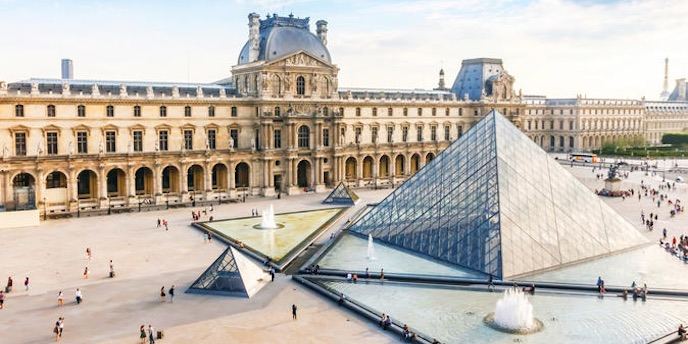
The largest museum in the world, in a palace the kings of France kept adding to for six centuries, with a glass pyramid dropped in the middle of its courtyard in 1989. Nobody sees it all; the trick is to pick two wings and let the rest go.
nature
Jardin des Tuileries
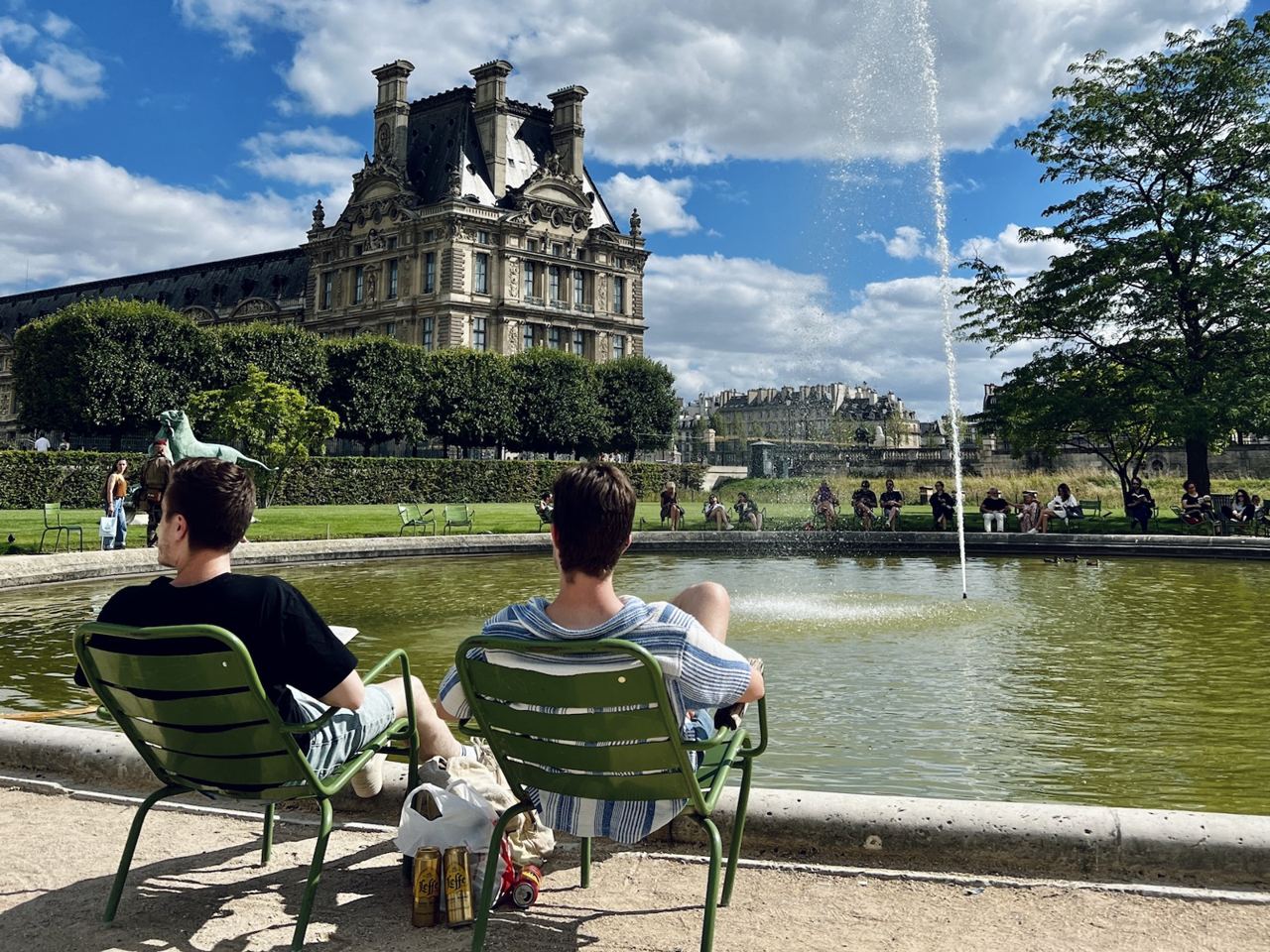
The formal garden running from the Louvre to the Place de la Concorde, laid out in gravel walks, clipped trees and two round ponds where children push wooden sailboats. It is the flat green middle of the Right Bank and it costs nothing.
cultural
Musée de l'Orangerie
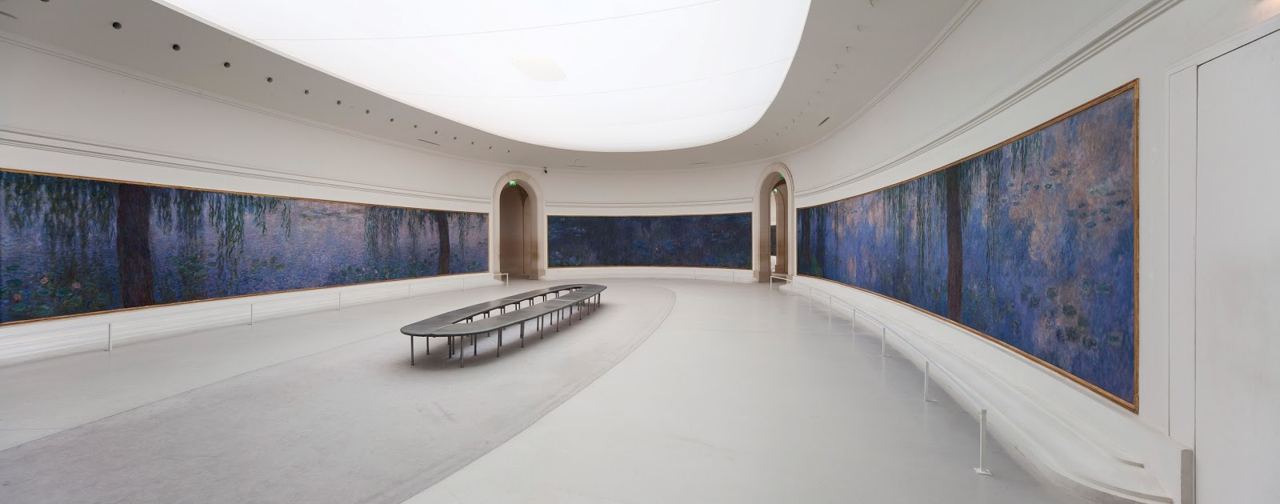
A small museum at the Seine end of the Tuileries built around two oval rooms holding Monet's Water Lilies, hung the way he wanted them, on curved walls in daylight. Downstairs is the Walter-Guillaume collection of Cézanne, Renoir, Matisse and Picasso.
shopping
Le Marais
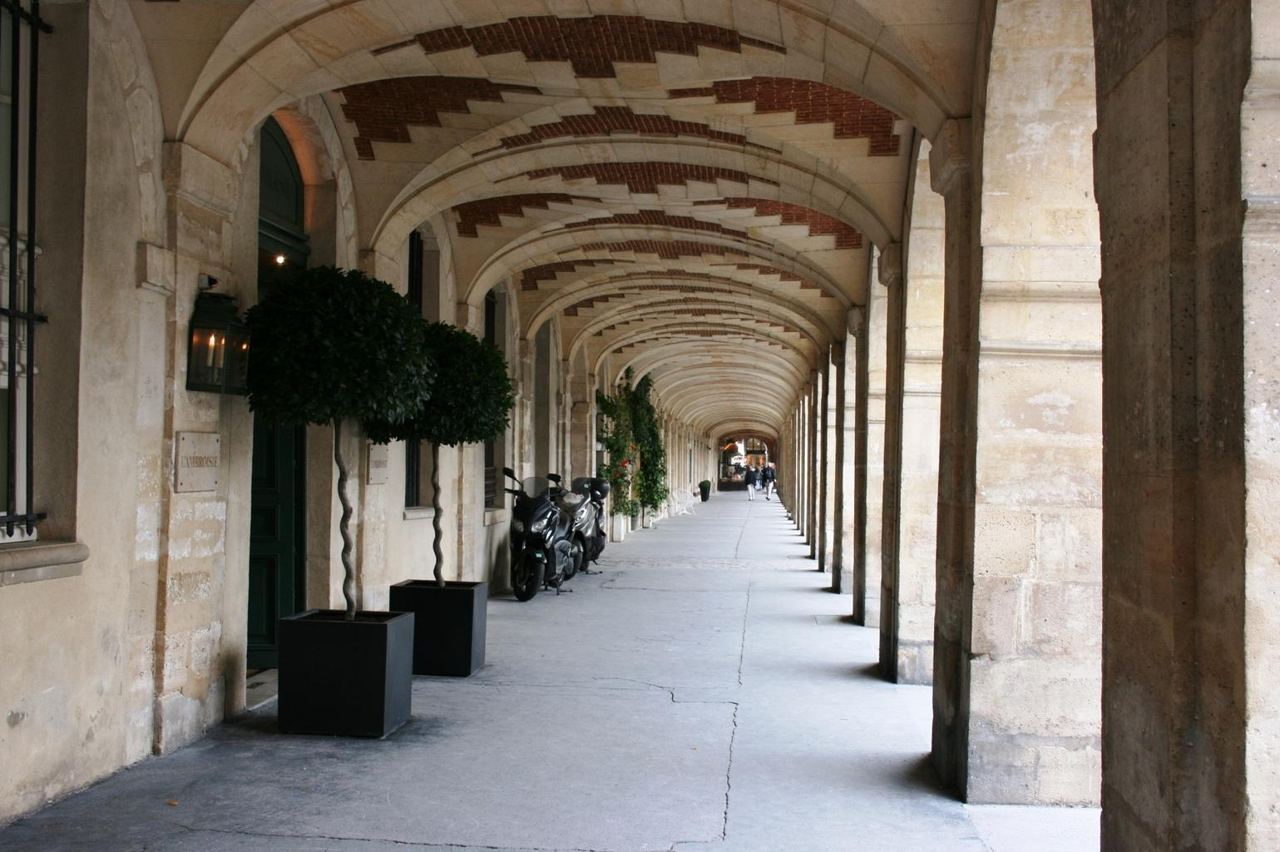
The old aristocratic quarter on the Right Bank that never got rebuilt, so the streets are still narrow and the seventeenth-century mansions are still standing. Place des Vosges, the oldest planned square in the city, sits at the eastern end under its arcades.
cultural
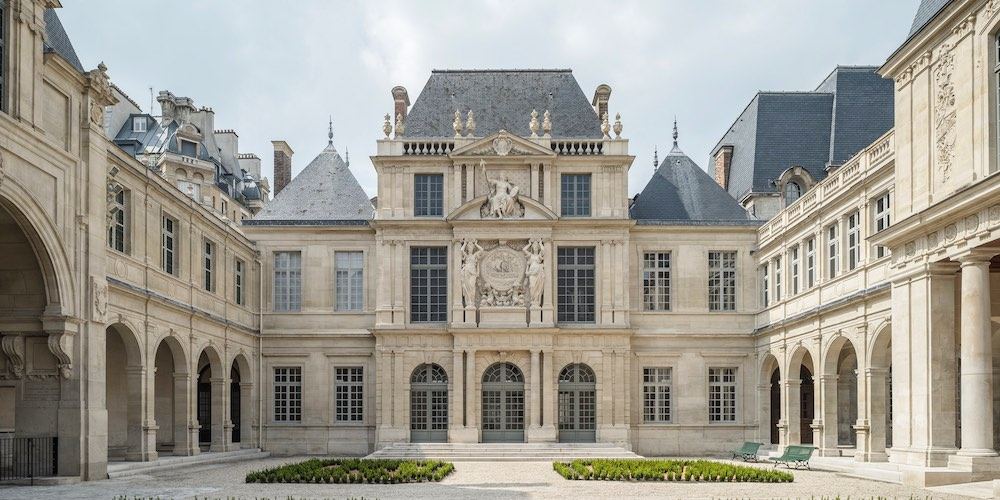
Musée Carnavalet
The city's own history museum, spread through two Marais mansions, from prehistoric canoes dug out of the Seine to Revolution relics and a reconstructed Art Nouveau jewelry shop. The permanent collection is free.
food
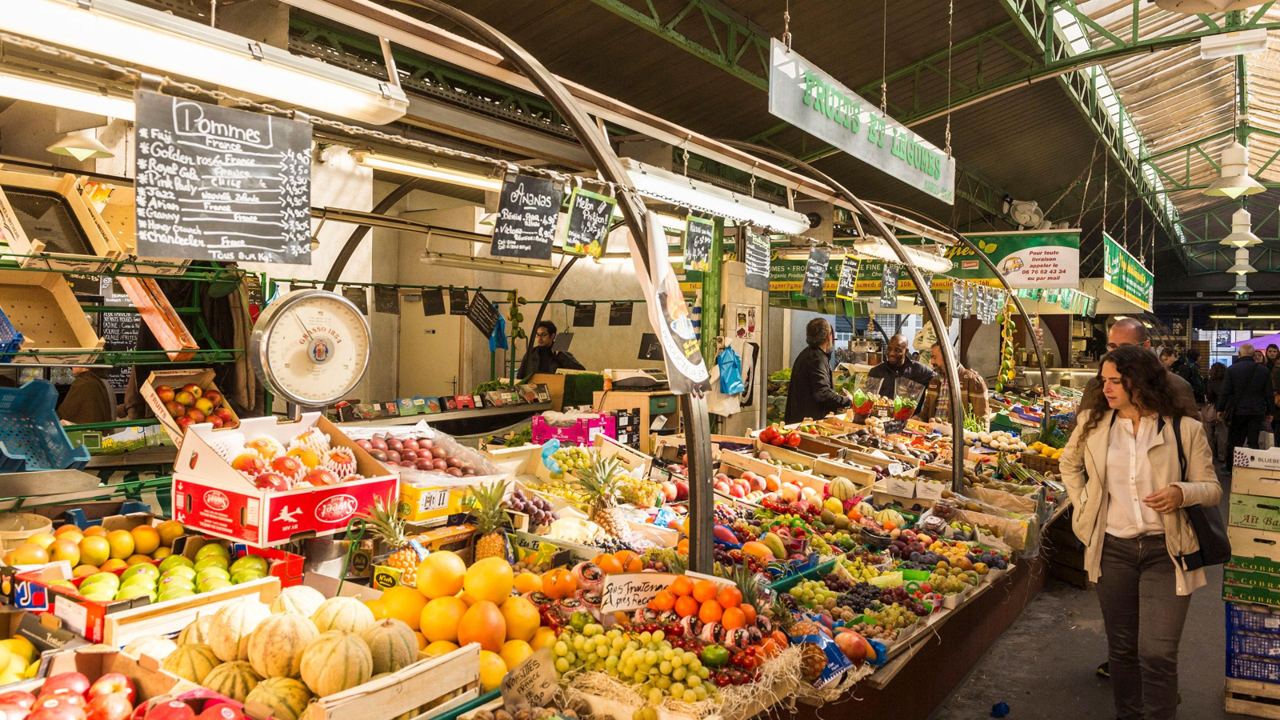
Marché des Enfants Rouges
A covered market in the northern Marais, small, loud and mostly lunch counters now — Moroccan, Japanese, Italian, a couple of produce stalls — with shared tables between them. You eat standing or elbow to elbow, and that is the appeal.
historic
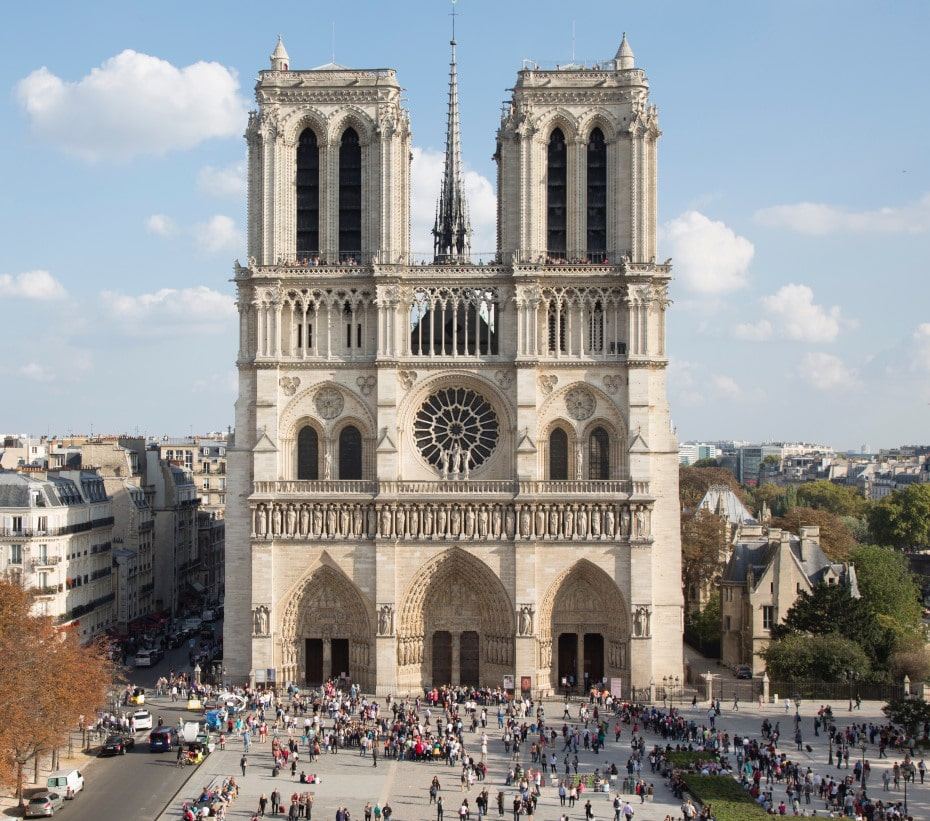
Notre-Dame Cathedral
The Gothic cathedral on the Île de la Cité, begun in 1163, gutted by fire in 2019 and reopened in December 2024 with its stone scrubbed to a color most living people had never seen it. Entry is free.
historic
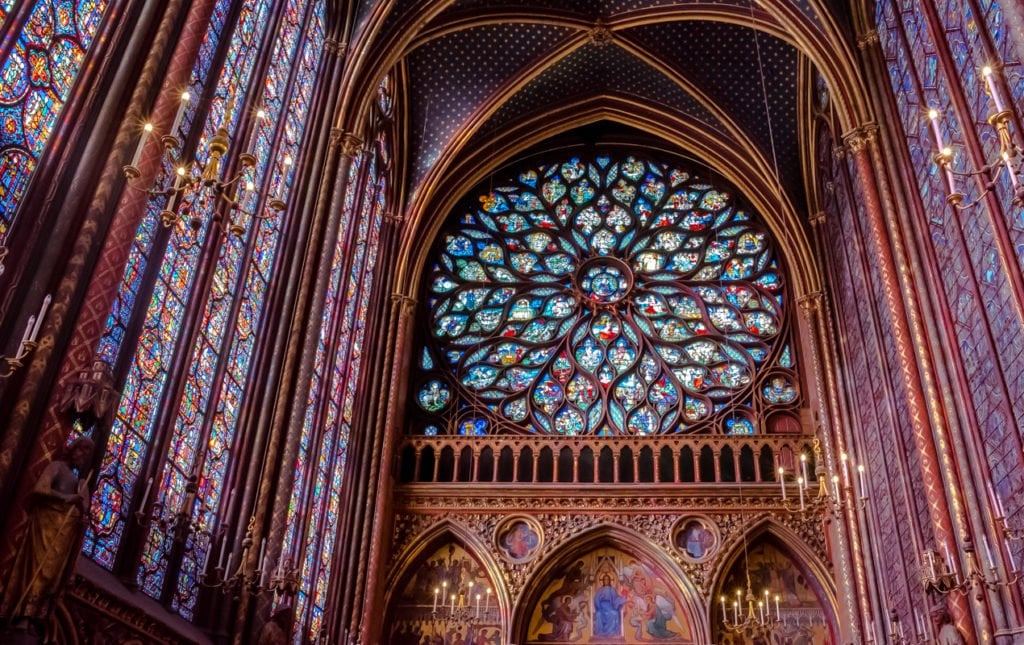
Sainte-Chapelle
A royal chapel of the 1240s a few doors from Notre-Dame, built as a reliquary and glazed almost wall to wall: fifteen windows of thirteenth-century glass climbing two stories around a room with almost no wall left in it. Go on a bright day.
historic
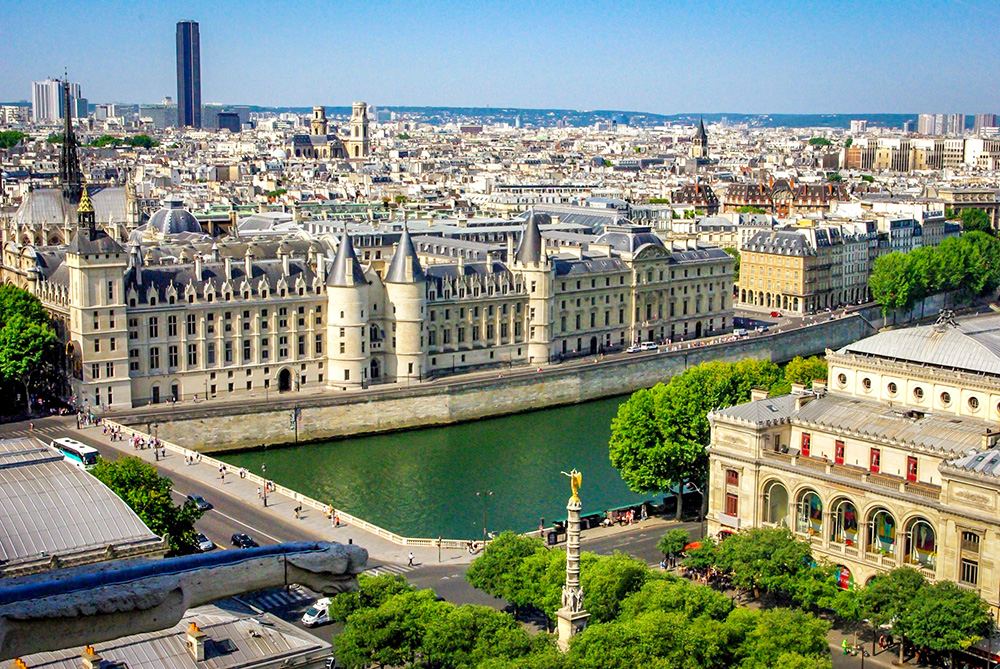
Conciergerie
The surviving ground floor of the medieval royal palace, a vast vaulted hall of pillars, later the prison where Marie-Antoinette was held before the guillotine. It shares a courtyard and a combined ticket with Sainte-Chapelle.
nature
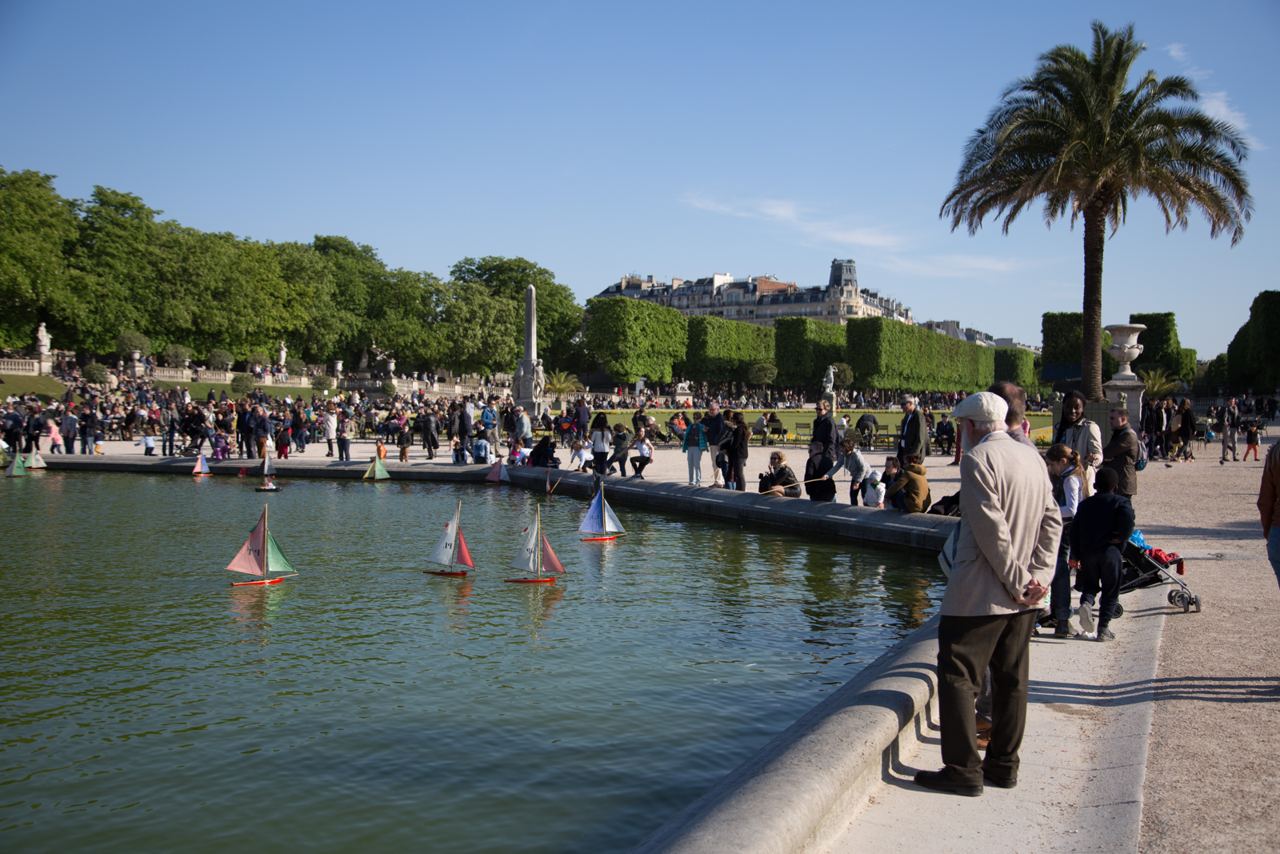
Jardin du Luxembourg
The Left Bank's big garden, wrapped around the palace where the French Senate sits: a central basin with toy boats, orchards, beehives, a puppet theater and several thousand of the green metal chairs you are allowed to drag anywhere you like.
food
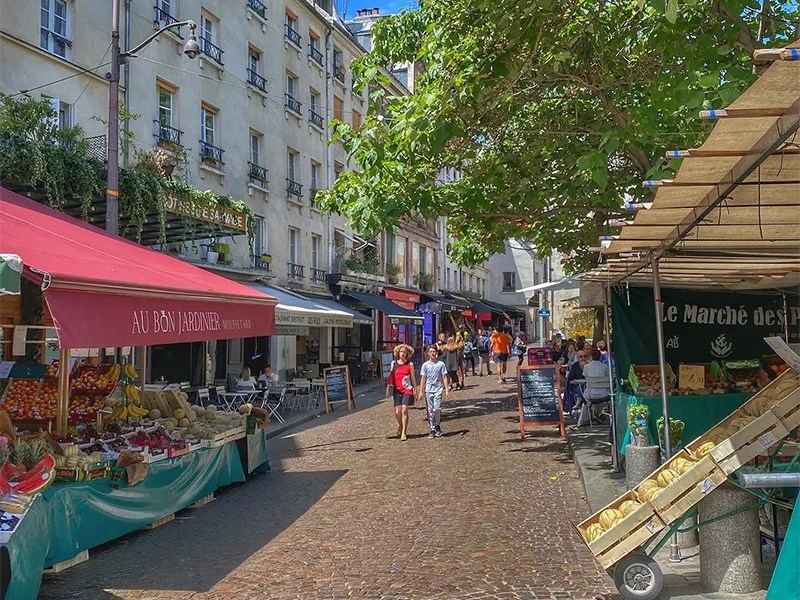
Rue Mouffetard
A narrow market street running downhill through the Latin Quarter, lined with cheese shops, bakeries, fishmongers and small restaurants, with a morning produce market at the bottom end. One of the oldest streets in the city and still a food street first.
historic
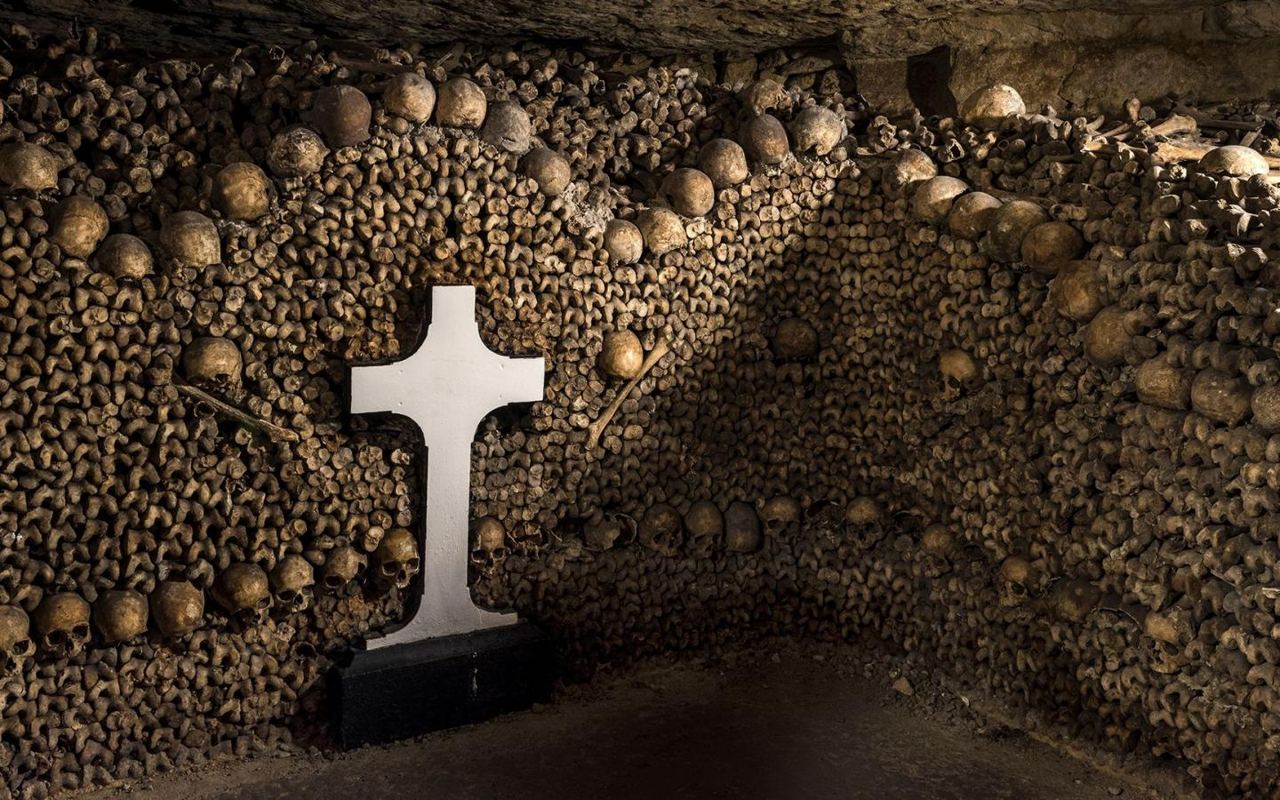
Catacombs of Paris
A mile of tunnel 65 feet under Montparnasse where the bones of about six million people were stacked after the city's overflowing cemeteries were emptied in the late 1700s. Femurs and skulls laid up in walls, with dated plaques telling you which graveyard each wall came from.
historic
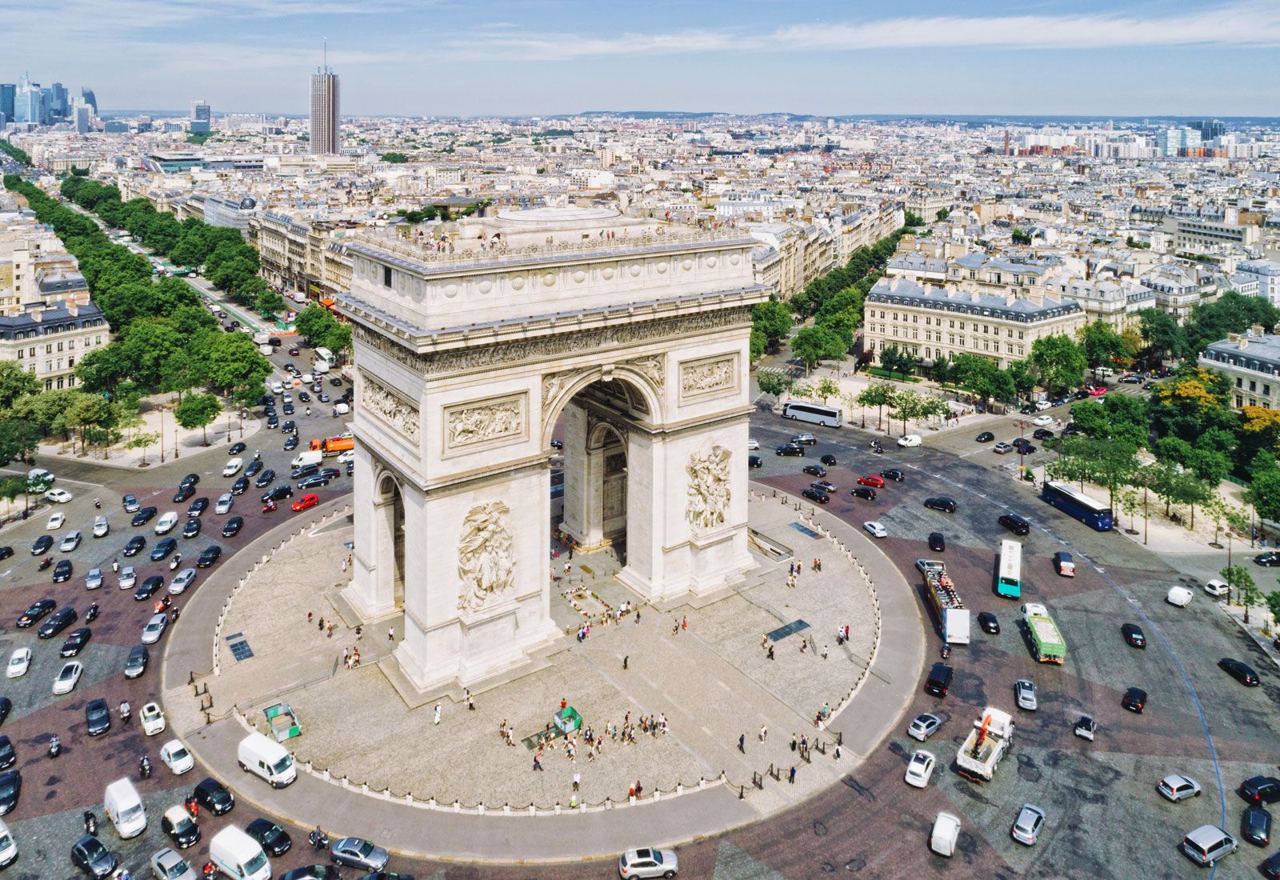
Arc de Triomphe
Napoleon's triumphal arch at the top of the Champs-Élysées, finished in 1836, with the Tomb of the Unknown Soldier and its flame underneath. The terrace on top looks straight down twelve avenues radiating from the circle.
scenic
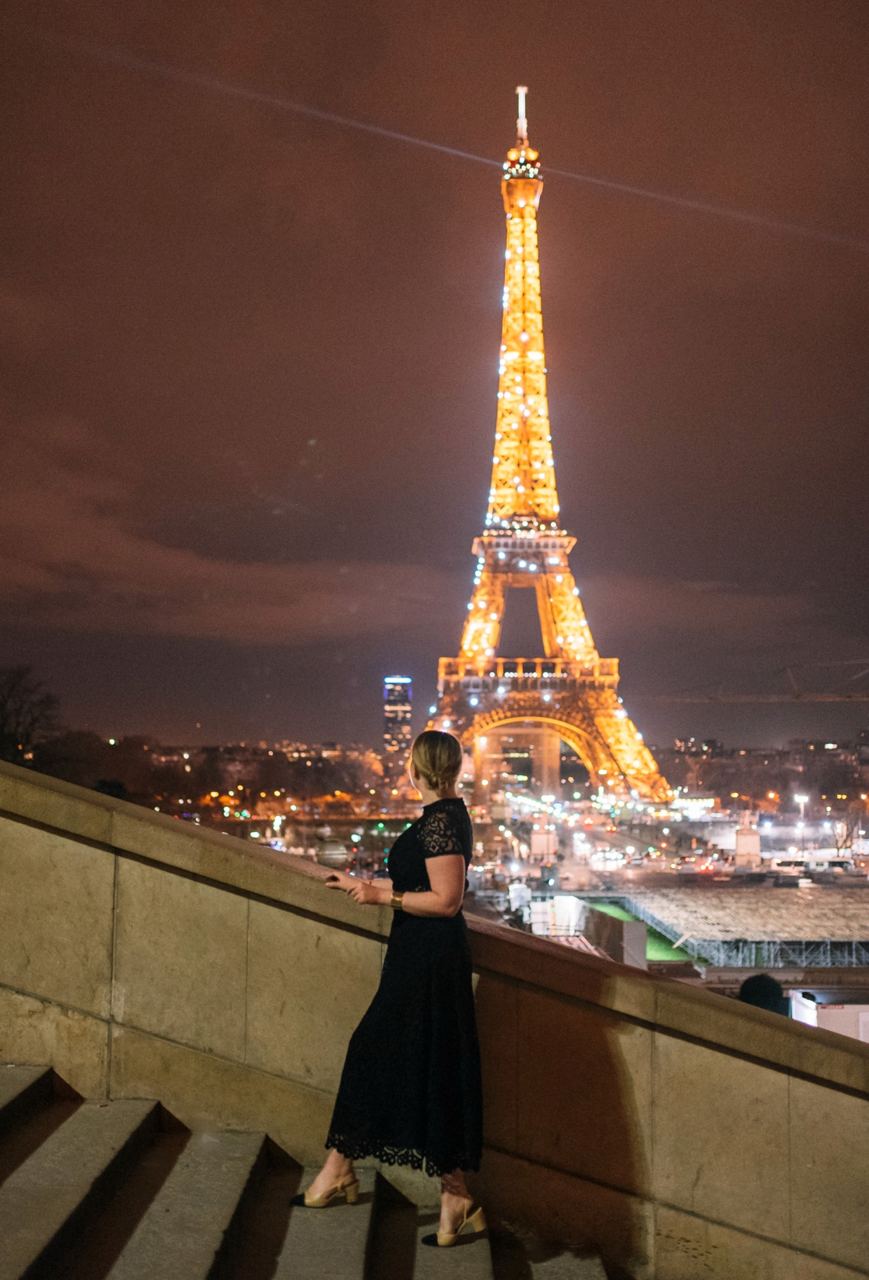
Eiffel Tower
The iron tower Gustave Eiffel's company built for the 1889 world's fair and the city then failed to pull down. Three levels, two of them reachable on foot, and the best view of it is from the ground at Trocadéro rather than from the top of it.
cultural
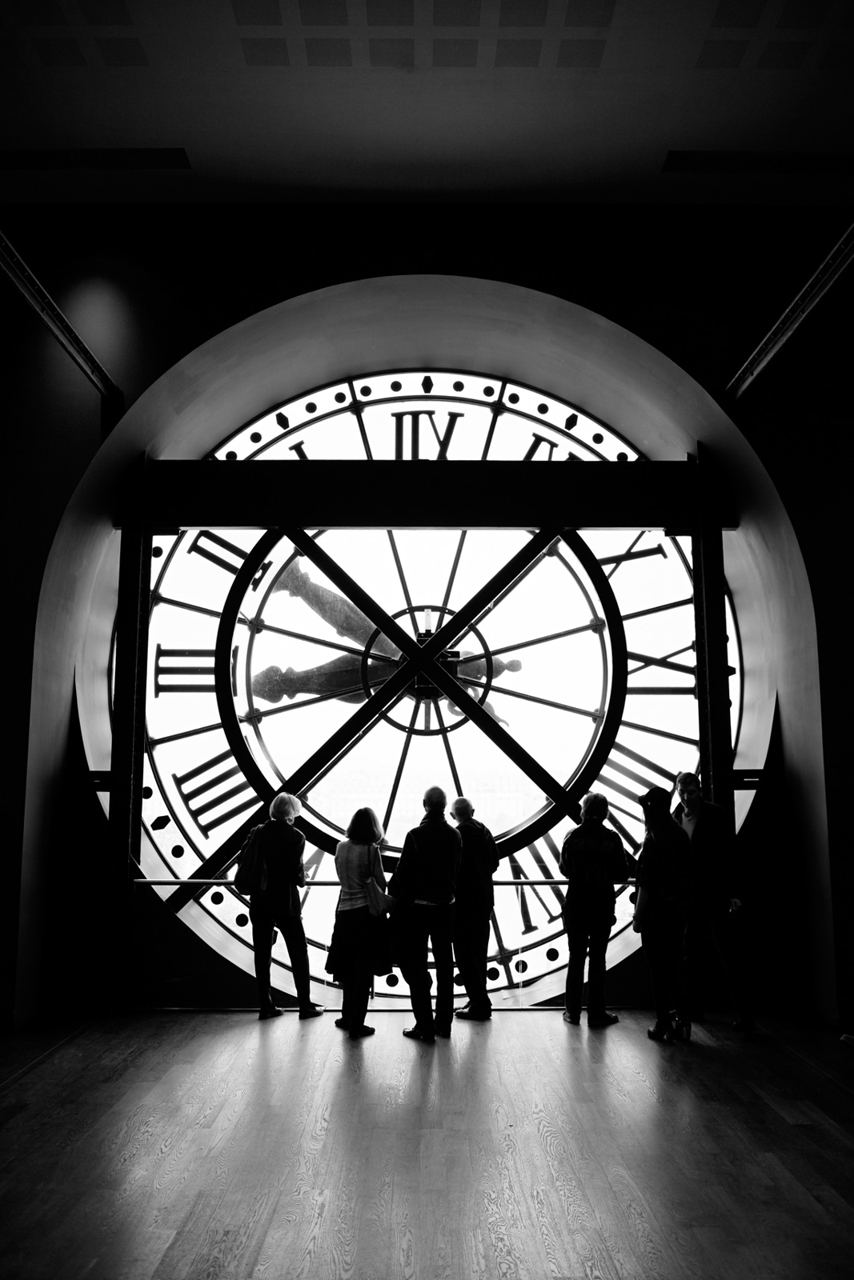
Musée d'Orsay
A Beaux-Arts railway station of 1900 turned into the museum of French art between 1848 and 1914, which means the greatest room of Impressionists anywhere, upstairs under the roof, and the station's giant clock to look at the river through.
cultural
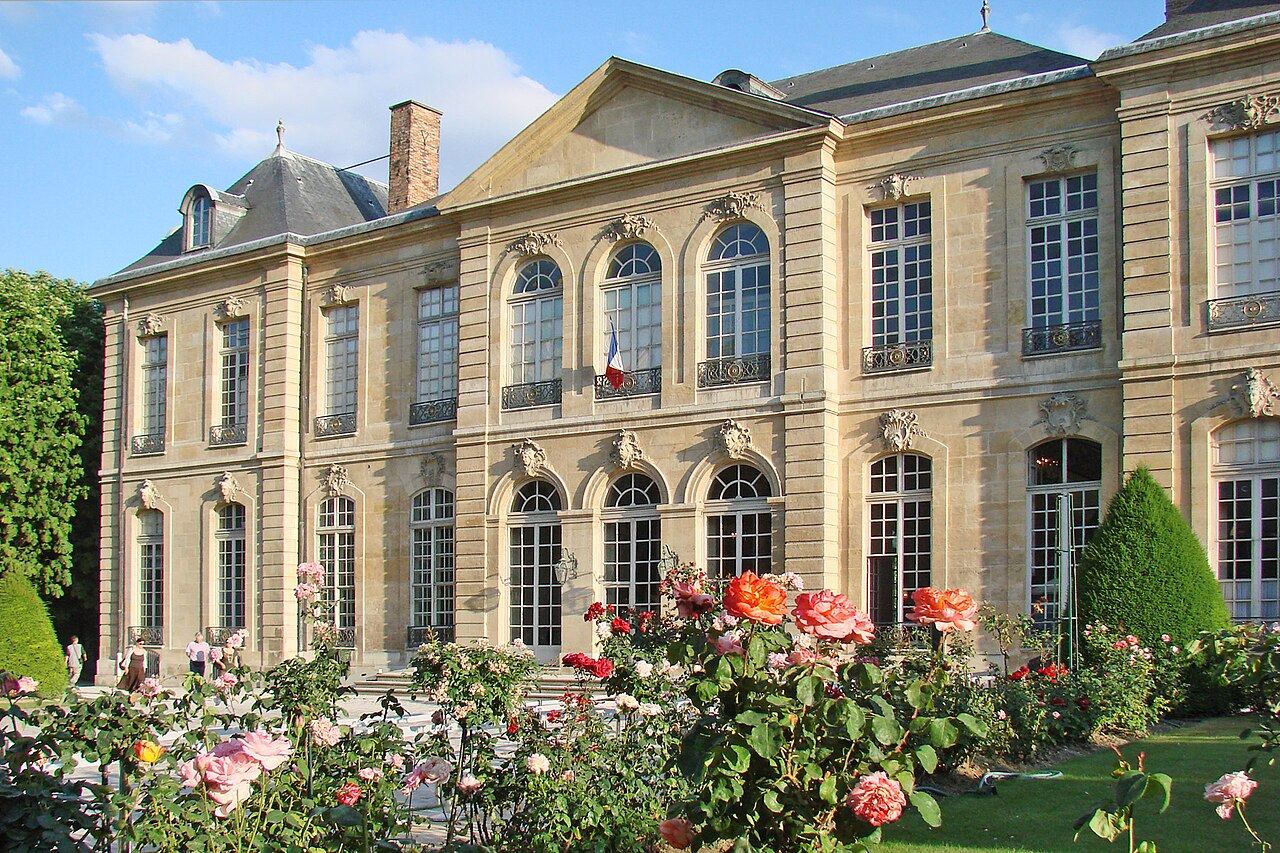
Musée Rodin
Rodin's own studio and showroom, an eighteenth-century mansion he rented, with the sculpture garden behind it where The Thinker and The Gates of Hell stand among clipped hedges and roses. The garden is as much of the visit as the house.
historic
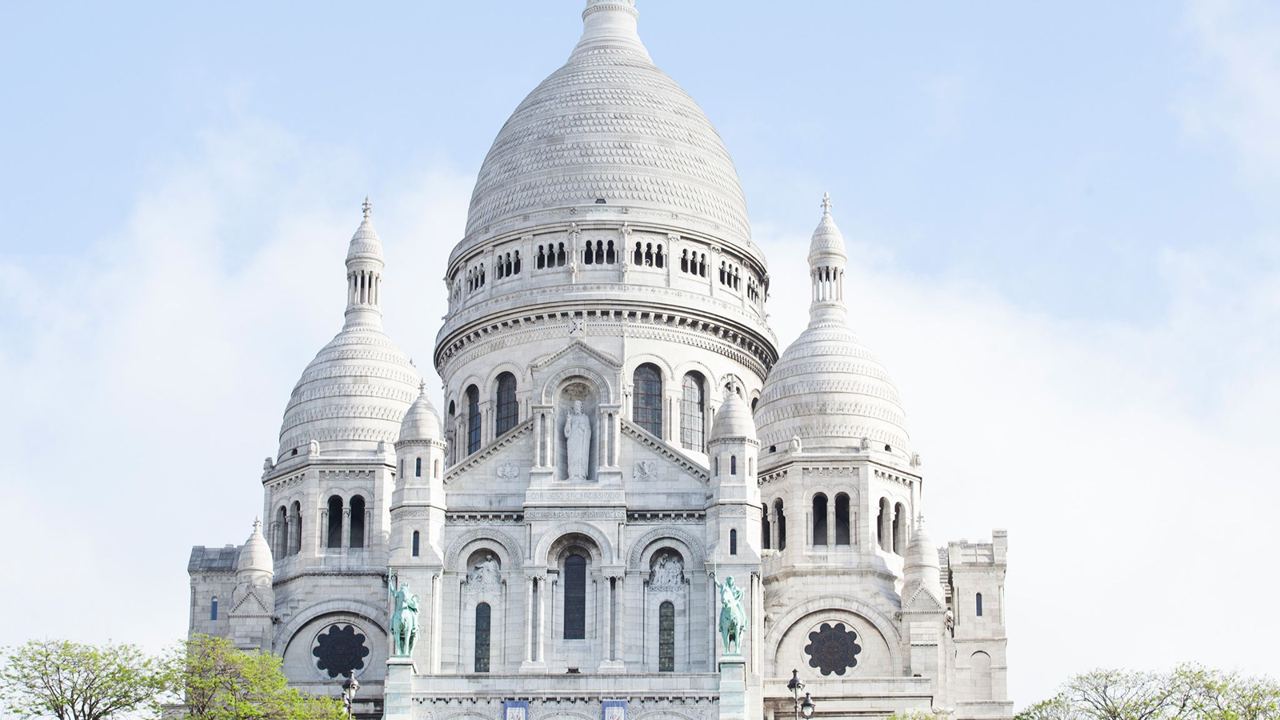
Montmartre and Sacré-Cœur
The hill at the north end of the city, with the white basilica of Sacré-Cœur on top, finished in 1914, and a village of stairs, small squares and vineyard walls below it. Free to enter, open until half past ten at night, and the steps out front are the cheap seats for the view.
historic
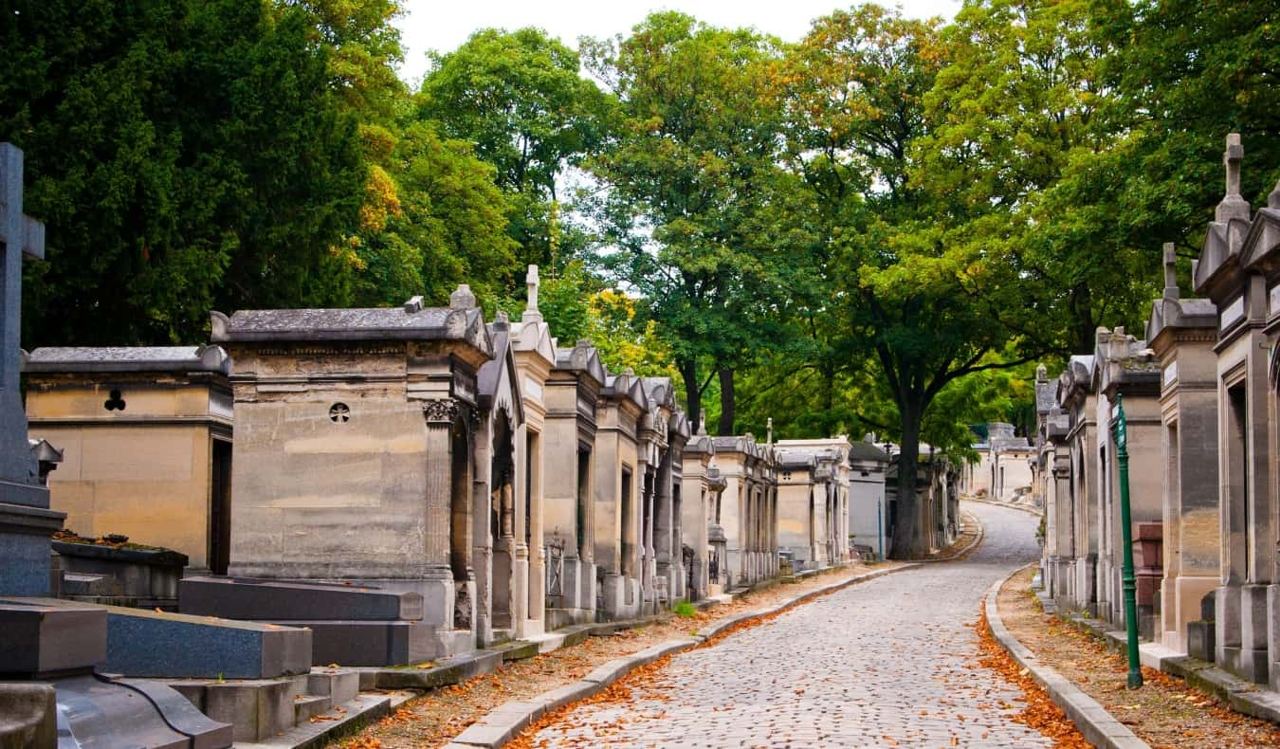
Père-Lachaise Cemetery
A hundred acres of cobbled avenues, chestnut trees and crowded tombs on a hill in the east of the city, opened in 1804 and now the most visited cemetery in the world. Chopin, Oscar Wilde, Edith Piaf and Jim Morrison are all here, and so are a lot of cats.
scenic
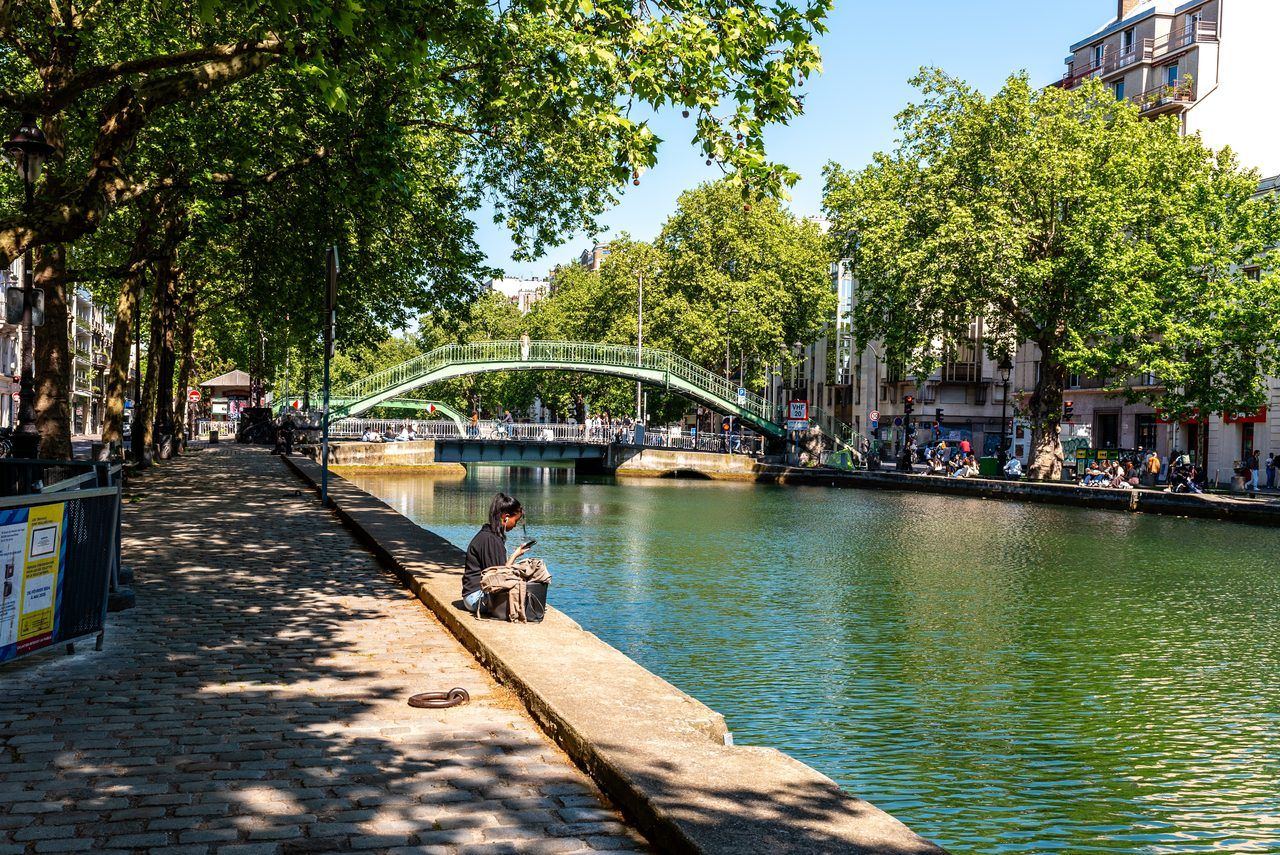
Canal Saint-Martin
A canal cut under Napoleon to bring drinking water into the city, running between plane trees and iron footbridges through the tenth arrondissement, with locks that still work and step down the boats in front of you. In the evening people sit on the quay with a picnic.
historic
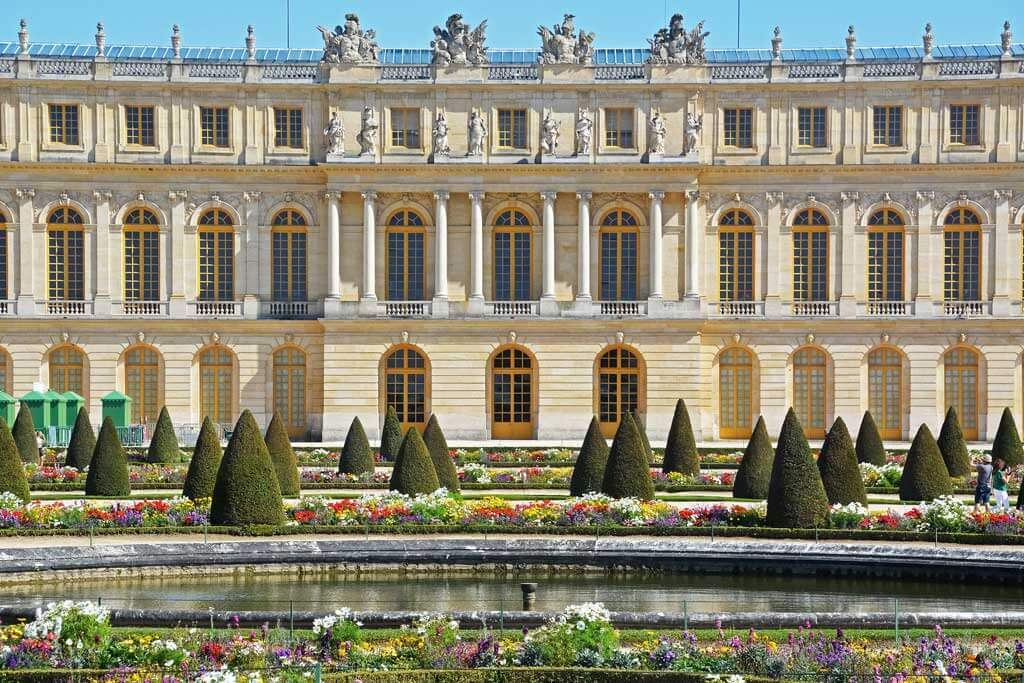
Palace of Versailles
Louis XIV's move out of Paris in the 1680s, and the seat of the French court until 1789: the Hall of Mirrors, the state apartments, and behind them a garden and park big enough to spend the entire day in without going back indoors.
The guide
Paris in Three Days: One Métro Line at a Time
· 14 min read · Researched and edited by PoppaTrip
Twenty arrondissements, one river, and why the map makes sense once you see it
Paris proper is small. The city inside the ring road covers about 40 square miles, roughly an eighth the land area of New York City (about 300 square miles), and you can walk from the Louvre to Notre-Dame in twenty minutes. Almost everything a first trip wants is inside that ring, and almost all of it is within a few hundred yards of a Métro entrance.
The city is divided into twenty arrondissements that spiral outward from the middle like a snail shell, starting with the 1st at the Louvre and winding clockwise to the 20th at Père-Lachaise. The number is the last two digits of the postcode, so 75004 is the 4th, which is half of the Marais. You do not need to memorize any of this. You do need to know that a low number means central and a high number means further out, and that the spiral is why the 6th and the 16th are nowhere near each other.
The Seine cuts the city roughly east to west and splits it into the Right Bank to the north and the Left Bank to the south. The Right Bank is the Louvre, the Marais, the grands boulevards, Montmartre and the money. The Left Bank is the Latin Quarter, the universities, Saint-Germain, the Luxembourg garden, Orsay and Rodin. Two islands sit in the middle of the river, and the larger one, the Île de la Cité, holds Notre-Dame, Sainte-Chapelle and the Conciergerie within one block of each other.
France uses the euro. Every price in this guide is given in US dollars first with the euro figure in parentheses, converted at €1 to about $1.15 — the rate read from open.er-api.com on September 22, 2026. Prices and opening hours here were read off each museum or monument’s own website the same week, and they move, so confirm anything your day depends on.
One thing that is not open, and that older guidebooks will send you to: the Centre Pompidou closed its Paris building for a full renovation and its own site now says to find its program at other venues "from 2025 to 2030." Do not build an afternoon around it.
The whole city, grouped by Métro line
The Métro has fourteen numbered lines and they are named by their end stations rather than by direction, so the platform sign says "Château de Vincennes" or "La Défense" and you work out which end you want. Trains come every few minutes. Nothing in this guide needs more than one change, and most of it needs none, because three lines happen to run straight through the things you came for. Station names and line numbers below are the ones printed on the network map; exits are given only where the venue’s own page names one, and where it does not, this guide says so rather than invent a letter. All checked September 2026.
Line 1 is the spine of the Right Bank. It runs east to west along the line the river takes, under the Rue de Rivoli, and it touches in order: Bastille, Saint-Paul for the Marais and the Place des Vosges, Hôtel de Ville, Châtelet, Louvre-Rivoli and Palais-Royal-Musée du Louvre for the museum, Tuileries for the garden, Concorde for the Orangerie, Champs-Élysées-Clemenceau, George V, and Charles de Gaulle-Étoile for the Arc de Triomphe. That is Day 1, and it is one line from end to end. Line 1 is also driverless, which means you can stand at the very front window and watch the tunnel come at you, and the Marais stops on it are a two-minute walk from line 8 at Chemin Vert if you want the Carnavalet end of the quarter instead.
Line 4 is the north-south line through the middle, and it is the only one that stops on the Île de la Cité. Cité station is the one for Notre-Dame, Sainte-Chapelle and the Conciergerie: the Sainte-Chapelle’s own page gives its address as 10 boulevard du Palais and names Cité on line 4 and Châtelet on lines 1, 7, 11 and 14, with RER B and C at Saint-Michel, and the Conciergerie at 2 boulevard du Palais names the same stations. Neither publishes an exit letter. Carry on south on line 4 and you get Saint-Michel and Odéon for the Latin Quarter and the Luxembourg garden, then Denfert-Rochereau for the Catacombs, which is where Day 2 ends.
Line 6 is the elevated one, and it is the reason to plan Day 3 around it. It runs from Charles de Gaulle-Étoile at the Arc de Triomphe south through Trocadéro, comes out of the tunnel to cross the river on the Pont de Bir-Hakeim with the Eiffel Tower filling the window, and continues to Denfert-Rochereau and Nation. The stretch between Passy and Bir-Hakeim is the best free view in the city and it costs one Métro fare. The tower is also on RER C at Champ de Mars-Tour Eiffel, and the ground-level view most photographs are taken from is at Trocadéro on lines 6 and 9.
Line 12 carries the second half of Day 3: north from Solférino, which is the station for the Musée d’Orsay on the Left Bank, up under the river to Concorde, Madeleine and Saint-Lazare, and on to Abbesses for Montmartre — the deepest station in the network, with an elevator, because the platform is under the hill. Sacré-Cœur is a climb from there, or you take line 2 to Anvers and the funicular up, which accepts an ordinary Métro ticket. The Musée Rodin is a short walk from Orsay and is on line 13 at Varenne.
Line 2 and line 3 are the northern and eastern arc, and both stop at Père Lachaise for the cemetery; line 2 also serves Anvers for Montmartre and Nation. The canal is lines 5 and 11 at République, or line 5 at Jacques Bonsergent. The RER is the express layer beneath the Métro: RER A and B cross in the middle and go to the airports, and RER C runs along the Left Bank quays to Versailles Château Rive Gauche, which is Day 4 and the only trip in this guide that leaves the city.
Two practical notes about the system itself. A single ticket covers one journey across the Métro and RER inside Paris with changes included, but you tap out of the RER, so keep it until you are on the street. And not every station has an elevator — the network is old and deep, and Abbesses at 118 feet down is the extreme case — so if stairs are a problem, check before you pick a station.
Day 1, Line 1 — the Louvre, the garden, the Water Lilies, and the Marais
Start at the Louvre and start early. It opens at 9am, closes at 6pm on Monday, Thursday, Saturday and Sunday, stays open until 9pm on Wednesday and Friday, and is closed every Tuesday and on January 1, May 1 and December 25. Last entry is an hour before closing and the rooms are cleared half an hour before. Checked on the museum’s own page in September 2026.
The ticket price changed in 2026 and it is worth knowing before you are standing at the machine: admission is $25 (€22) for residents and citizens of the European Economic Area and $37 (€32) for everyone else, which includes American visitors. Everyone under 18 is free, and so is any EEA citizen under 26. There is free entry on the first Friday of the month after 6pm except in July and August, and on July 14. Book a time slot online; the pyramid entrance without one is the longest line in Paris.
Inside, pick two things and mean it. The Mona Lisa is a small painting behind glass at the end of a room containing several hundred people holding phones, and the honest advice is to see it in three minutes on the way to something else — the Italian galleries either side of it, the Egyptian rooms in the Sully wing, the Near Eastern reliefs, or the French nineteenth-century canvases in the Denon wing, which are enormous and almost empty. The building itself is half the visit: walk through the medieval foundations in the basement, which are the base of the twelfth-century fortress the palace grew out of.
Come out into the Jardin des Tuileries, which runs west from the museum to the Place de la Concorde in gravel walks and clipped limes. It is free, it is flat, and the green metal chairs around the ponds are public property — drag one to wherever the sun is. At the far end, tucked by the river, is the Musée de l’Orangerie: two oval rooms built to Monet’s specification for eight Water Lilies panels, lit from above, with a bench in the middle of each. It opens 9am to 6pm with last admission at 5:15pm, is closed Tuesdays, May 1, the morning of July 14 and December 25, and costs $14 (€12.50) full rate or $11 (€10) reduced. A timed slot is required. It is a forty-minute museum and one of the two or three best hours in the city.
Get back on line 1 and ride east to Saint-Paul for the Marais. This is the quarter that missed the nineteenth-century rebuilding, so the streets still bend and the mansions still have their courtyards. Place des Vosges, the oldest planned square in Paris, is four sides of brick and stone arcades around a garden of plane trees, and you walk in under an arch. Around it: the Musée Carnavalet, the city’s own history museum in two of those mansions, open Tuesday to Sunday 10am to 6pm, closed Mondays and on January 1, May 1 and December 25, with the permanent collection free and no booking needed. It runs from Neolithic canoes pulled out of the Seine to a Revolution gallery to shopfronts saved from demolition, and it is the single best answer to the question of what you have been walking around in all day.
Eat in the northern Marais at the Marché des Enfants Rouges, a covered market that is now mostly a dozen lunch counters — Moroccan, Japanese, Italian, Lebanese — with shared tables wedged between the produce stalls. Order from two of them. It is busiest at lunch and closed Mondays like most Paris markets, and if it is heaving, the streets around it are full of falafel counters and small wine bars that are not.
Musée du Louvre — The largest museum in the world, in a palace the kings of France kept adding to for six centuries, with a glass pyramid dropped in the middle of its courtyard in 1989. Nobody sees it all; the trick is to pick two wings and let the rest go.
Jardin des Tuileries — The formal garden running from the Louvre to the Place de la Concorde, laid out in gravel walks, clipped trees and two round ponds where children push wooden sailboats. It is the flat green middle of the Right Bank and it costs nothing.
Musée de l'Orangerie — A small museum at the Seine end of the Tuileries built around two oval rooms holding Monet's Water Lilies, hung the way he wanted them, on curved walls in daylight. Downstairs is the Walter-Guillaume collection of Cézanne, Renoir, Matisse and Picasso.
Le Marais — The old aristocratic quarter on the Right Bank that never got rebuilt, so the streets are still narrow and the seventeenth-century mansions are still standing. Place des Vosges, the oldest planned square in the city, sits at the eastern end under its arcades.
Musée Carnavalet — The city's own history museum, spread through two Marais mansions, from prehistoric canoes dug out of the Seine to Revolution relics and a reconstructed Art Nouveau jewelry shop. The permanent collection is free.
Marché des Enfants Rouges — A covered market in the northern Marais, small, loud and mostly lunch counters now — Moroccan, Japanese, Italian, a couple of produce stalls — with shared tables between them. You eat standing or elbow to elbow, and that is the appeal.
Day 2, Line 4 — the island, the Latin Quarter, and six million people underground
Everything before lunch today is within one block of Cité station on line 4. Start at Notre-Dame, which reopened in December 2024 after the 2019 fire and is now the cleanest Gothic interior in France — the stone was scrubbed back to a pale cream nobody alive had seen. Entry to the cathedral is free. The cathedral’s own site says booking is not mandatory but is strongly recommended, with time slots released a few hours ahead and same-day only, and gives weekday hours of 9am to 6pm, until 8:30pm on Thursdays. Checked September 2026. The towers are a separate, ticketed visit: $18 (€16), reservation compulsory and online only with nothing sold on site, 424 steps and 226 feet (69 meters) up, open 9am to 11pm from April 1 to September 30 and 9am to 5:30pm from October 1 to March 31, last entry an hour before.
Two hundred yards away, through a security check, is Sainte-Chapelle, and it is the thing on this list most likely to stop you talking. Louis IX built it in the 1240s to hold what he believed was the Crown of Thorns, and the upper chapel is fifteen windows of thirteenth-century glass rising two stories with almost no wall between them. Go when the sun is out and go in the middle of the day. It is open 9am to 7pm from April 1 to September 30 and 9am to 5pm from October 1 to March 31, last entry half an hour before closing, closed January 1, May 1 and December 25. Admission is $25 (€22) for non-EEA visitors and $18 (€16) for EEA nationals and residents; the combined ticket with the Conciergerie is $34 (€30) and $26 (€23) respectively. Under-18s are free, as are EU nationals aged 18 to 25. Time slots are half an hour long, so a 10am booking means being through the door by 10:30am.
The Conciergerie is the same building complex, entered from 2 boulevard du Palais: the surviving ground floor of the medieval royal palace, a hall of vaults and pillars the size of a church, and later the prison where Marie-Antoinette spent her last weeks. It is open 9:30am to 6pm year-round with last entry at 5:30pm, closed May 1 and December 25, and costs $15 (€13) on its own, which is why the combined ticket is the obvious buy if you want both.
Cross to the Left Bank and spend the afternoon at a slower speed. The Jardin du Luxembourg is fifteen minutes’ walk south, or line 4 to Odéon: a garden wrapped around the palace where the Senate sits, with a big octagonal basin in the middle where children rent wooden sailboats and push them with sticks. The Senate’s own page says the garden’s hours follow sunrise and sunset and change on the 1st and 16th of each month, so it opens later and closes earlier in winter; entry is free. Take a chair, sit by the water, and do nothing for an hour. That is the correct use of it.
Walk east into the Latin Quarter for Rue Mouffetard, a narrow street that runs downhill past cheese shops, bakeries and fishmongers to a produce market at the bottom, with Place Monge on line 7 a block away. It is a street to buy lunch on rather than sit down on — a baguette, something from the fromagerie, a tarte — although the restaurants at the top are decent and the ones at the very bottom are better.
Finish underground if you have the nerve for it. The Catacombs of Paris hold the bones of roughly six million people, moved down into old limestone quarries when the city’s cemeteries overflowed in the late 1700s, and stacked into walls of femurs and skulls with plaques naming the graveyard each wall came from. It is a mile-long circuit, about an hour, 131 steps down and 112 back up, and it is genuinely cold. Open Tuesday to Sunday 9:45am to 8:30pm with last admission at 7:30pm, closed Mondays and on January 1, May 1 and December 25. It is also the most expensive ticket in this guide by some distance: $36 (€31) full, $29 (€25) reduced, $17 (€15) for children 8 to 17, free under 8, audio guide included. Book online — the walk-up line is long and the entry is a small door in a small building at Denfert-Rochereau. Not for anyone who dislikes tight spaces.
Notre-Dame Cathedral — The Gothic cathedral on the Île de la Cité, begun in 1163, gutted by fire in 2019 and reopened in December 2024 with its stone scrubbed to a color most living people had never seen it. Entry is free.
Sainte-Chapelle — A royal chapel of the 1240s a few doors from Notre-Dame, built as a reliquary and glazed almost wall to wall: fifteen windows of thirteenth-century glass climbing two stories around a room with almost no wall left in it. Go on a bright day.
Conciergerie — The surviving ground floor of the medieval royal palace, a vast vaulted hall of pillars, later the prison where Marie-Antoinette was held before the guillotine. It shares a courtyard and a combined ticket with Sainte-Chapelle.
Jardin du Luxembourg — The Left Bank's big garden, wrapped around the palace where the French Senate sits: a central basin with toy boats, orchards, beehives, a puppet theater and several thousand of the green metal chairs you are allowed to drag anywhere you like.
Photo: Wulf Alex, CC0, via Wikimedia CommonsRue Mouffetard — A narrow market street running downhill through the Latin Quarter, lined with cheese shops, bakeries, fishmongers and small restaurants, with a morning produce market at the bottom end. One of the oldest streets in the city and still a food street first.
Catacombs of Paris — A mile of tunnel 65 feet under Montparnasse where the bones of about six million people were stacked after the city's overflowing cemeteries were emptied in the late 1700s. Femurs and skulls laid up in walls, with dated plaques telling you which graveyard each wall came from.
Day 3, Line 6 then Line 12 — the arch, the tower, the Impressionists, and the hill
Begin at Charles de Gaulle-Étoile, where twelve avenues meet at the Arc de Triomphe. Do not try to cross the traffic circle: there is an underpass from the Champs-Élysées side, and the Tomb of the Unknown Soldier with its flame underneath the arch is free to walk up to. The terrace on top is 284 steps, and the monument’s own page notes that the elevator is out for maintenance until further notice, with a lift available only for those who need it. Hours are 10am to 11pm from April 1 to September 30 and 10am to 10:30pm from October 1 to March 31, opening at 11am on Tuesdays, last admission 45 minutes before closing. Admission in 2026 is $23 (€20) from April 1 to September 30 — with $17 (€14.50) every Wednesday in that period — and $17 (€14.50) the rest of the year. Under-26 residents of the EU are free. Checked September 2026.
Now take line 6 south and stay standing. It climbs out of the tunnel after Passy and crosses the Seine on the Pont de Bir-Hakeim with the Eiffel Tower directly ahead, which is the best view in Paris for the price of a Métro ride. Get off at Bir-Hakeim for the tower itself, or ride one stop further and walk back, or come at it from Trocadéro on lines 6 and 9, where the terrace in front of the Palais de Chaillot gives you the picture everyone takes.
Whether you go up is a real question. The official rates page gives adult tickets ranging from $17 to $42 (€14.80 to €36.70) depending on how you climb and how far, with $4 to $21 (€3.80 to €18.40) for children and young people; the top by elevator is $42 (€36.70) for an adult and the stairs-to-the-second-floor-then-lift-to-the-top ticket is $32 (€28.00), both read off the operator’s own pages in September 2026. Adult means 25 and over, with reduced bands for 12 to 24 and 4 to 11. Book weeks ahead for a summer slot. The case for going up is the second floor, not the summit — it is high enough to read the street plan and low enough to see people. The case against is that you cannot see the Eiffel Tower from the Eiffel Tower, and the view of it from the Trocadéro or from the Champ de Mars grass is free.
Afternoon on the Left Bank. The Musée d’Orsay is a 1900 railway station converted into the museum of French art from 1848 to 1914, which in practice means the finest collection of Impressionists anywhere, on the top floor under the glass roof — Monet, Renoir, Degas, Van Gogh, Cézanne — and a station clock the size of a room to look at the river through. It is open Tuesday to Sunday 9:30am to 6pm, late on Thursday until 9:45pm with last access at 9pm, closed Mondays, May 1 and December 25. Admission is $18 (€16) full and $15 (€13) reduced, with a $14 (€12) rate for Thursday visits starting at 6pm, and free entry for everyone on the first Sunday of the month. Solférino on line 12 is the Métro station; RER C stops at Musée d’Orsay itself.
Ten minutes’ walk away is the Musée Rodin, which is the quieter half of that afternoon: the mansion Rodin rented as a studio, and behind it a sculpture garden with The Thinker and The Gates of Hell set among hedges and roses. Open Tuesday to Sunday 10am to 6:30pm with last admission at 5:45pm, closed Mondays and on January 1, May 1 and December 25, full price $16 (€14), with free admission on the first Sunday of the month from October through March. Varenne on line 13. If the weather is decent, the garden alone justifies it.
Finish on the hill. Line 12 runs north to Abbesses, the deepest station in the network at about 118 feet down — take the elevator — and you come out in the middle of Montmartre, which was a village with vineyards and windmills until the city swallowed it in 1860 and is still laid out like one, all stairs and small squares. Sacré-Cœur stands on top, white, finished in 1914, and the basilica is free and open every day from 6:30am to 10:30pm. The dome is a separate paid climb of 280 steps up a narrow stair, roughly 10:30am to 8:30pm with last admission at 8pm, closed for a break at midday and subject to weather — tickets are sold at the ticket office on site only, and no price is quoted here because that page does not publish one. The steps in front are free and they are where most people end up at sunset. Walk downhill afterward rather than back up: the streets west of the basilica toward the Moulin de la Galette are the part of Montmartre that still looks like the paintings.
Arc de Triomphe — Napoleon's triumphal arch at the top of the Champs-Élysées, finished in 1836, with the Tomb of the Unknown Soldier and its flame underneath. The terrace on top looks straight down twelve avenues radiating from the circle.
Eiffel Tower — The iron tower Gustave Eiffel's company built for the 1889 world's fair and the city then failed to pull down. Three levels, two of them reachable on foot, and the best view of it is from the ground at Trocadéro rather than from the top of it.
Musée d'Orsay — A Beaux-Arts railway station of 1900 turned into the museum of French art between 1848 and 1914, which means the greatest room of Impressionists anywhere, upstairs under the roof, and the station's giant clock to look at the river through.
Musée Rodin — Rodin's own studio and showroom, an eighteenth-century mansion he rented, with the sculpture garden behind it where The Thinker and The Gates of Hell stand among clipped hedges and roses. The garden is as much of the visit as the house.
Montmartre and Sacré-Cœur — The hill at the north end of the city, with the white basilica of Sacré-Cœur on top, finished in 1914, and a village of stairs, small squares and vineyard walls below it. Free to enter, open until half past ten at night, and the steps out front are the cheap seats for the view.
Day 4, optional, RER C — Versailles
If you have a fourth day, this is the one that changes register completely. Versailles is about eleven miles southwest of the middle of Paris, and the simplest way there is RER C to Versailles Château Rive Gauche, which the estate’s own page says is about a ten-minute walk from the palace gates. SNCF trains also work: from Gare Montparnasse to Versailles Chantiers is an eighteen-minute walk at the far end, and from Gare Saint-Lazare to Versailles Rive Droite is seventeen. Any of them are covered by a Navigo pass, a Mobilis or a Paris Visite.
The estate is closed on Mondays, every week. That single fact ruins more Versailles days than anything else. The Palace opens at 9am, the Trianon estate at noon, and the estate’s practical page gives closing at 6:30pm in the main season with shorter hours from November through March; the Park and Gardens are open daily from 7am to 8:30pm. It also closes on December 25, January 1 and May 1.
Tickets, from the estate’s own 2026 page. In high season, April 1 to October 31, the Passport — which covers the Palace with a timed entry, the Trianon estate and the gardens — is $40 (€35), or $37 (€32) at the European Economic Area reduced rate, with a late-admission Passport for entry to the Palace after 4pm at $32 (€28). In low season, November 1 to March 31, the same Passport is $29 (€25) and $25 (€22), with late admission after 3pm at $21 (€18) and $17 (€15). The Trianon estate on its own is $17 (€15). The gardens are free except on days with a Musical Fountains or Musical Gardens show, which costs $17 (€15); a combined Musical Gardens and Trianon ticket is $23 (€20). Under-18s are free, as are EEA residents and nationals under 26, and holders of a Paris Museum Pass still need to collect a free Passport ticket. Prices checked September 2026.
How to actually spend the day: go early or go after 3pm, and give the gardens more time than you think. The Hall of Mirrors at 11am in July is a slow-moving crowd; the same room at 9:15am is a room. The park behind it is enormous — the Grand Canal, the Trianon palaces, and Marie-Antoinette’s model hamlet with its thatched cottages and its working farm — and you can rent a bike or a boat or just walk it. Bring food, because the restaurant options inside are limited and expensive, and expect the whole thing to take seven hours door to door.
Palace of Versailles — Louis XIV's move out of Paris in the 1680s, and the seat of the French court until 1789: the Hall of Mirrors, the state apartments, and behind them a garden and park big enough to spend the entire day in without going back indoors.
Two more, if you have a day in the city instead — Line 2 and the canal
Père-Lachaise is a hundred acres of cobbled avenues and chestnut trees on a hill in the 20th, opened in 1804 and now the most visited cemetery in the world, and it is a genuinely good walk rather than a morbid errand. Chopin, Oscar Wilde, Gertrude Stein, Edith Piaf and Jim Morrison are all here, along with a great many tombs of people nobody remembers, which is the more affecting part. Entry is free. The city’s own page gives hours of 8am to 6pm Monday to Friday, from 8:30am on Saturday and from 9am on Sunday and public holidays between March 16 and November 5, closing at 5:30pm in winter, with no admission in the last fifteen minutes. Lines 2 and 3 both stop at Père Lachaise. Take a map from the gate or you will spend the afternoon lost, which is not the worst outcome.
The Canal Saint-Martin is the other half of this day and the opposite mood. Napoleon had it cut to bring clean water into the city; it runs through the 10th arrondissement between double rows of plane trees, crossed by green iron footbridges that swing open, and its locks still work, stepping the boats down in front of you while people watch from the edge. There is nothing to pay and nothing to see in the museum sense. The point is a couple of hours on the quay in the evening with something from a bakery, which is what half the neighborhood does. République on lines 3, 5, 8, 9 and 11 is the nearest big interchange; Jacques Bonsergent on line 5 puts you on the water.
Père-Lachaise Cemetery — A hundred acres of cobbled avenues, chestnut trees and crowded tombs on a hill in the east of the city, opened in 1804 and now the most visited cemetery in the world. Chopin, Oscar Wilde, Edith Piaf and Jim Morrison are all here, and so are a lot of cats.
Canal Saint-Martin — A canal cut under Napoleon to bring drinking water into the city, running between plane trees and iron footbridges through the tenth arrondissement, with locks that still work and step down the boats in front of you. In the evening people sit on the quay with a picnic.
Getting around: one ticket, one card, and the airport
The Métro, the RER inside Paris, the buses and the trams are one system under Île-de-France Mobilités, and since the 2025 fare simplification a single Métro-Train-RER ticket is valid anywhere on the Métro and RER network inside the region at one flat price, changes included. This guide does not quote that single-ticket price: the operator’s fare pages could not be read directly when it was checked in September 2026, so look up the current figure on iledefrance-mobilites.fr rather than trusting a number from a blog.
Two figures could be confirmed from the operator’s own 2026 fare material and they are the ones that matter most to a visitor. The Navigo Jour, the one-day pass, is $14 (€12) in 2026 and covers every zone in the region except the airports. And there is now a single flat airport fare of $15 (€13) covering both Charles-de-Gaulle and Orly from anywhere in Île-de-France, which replaced the old zone arithmetic. The monthly Navigo, for the record, went to $104 (€90.80) on January 1, 2026 — not something a week-long visitor needs.
Do the arithmetic on the day pass rather than buying it reflexively. A day of four or five Métro journeys is roughly the break-even point; a day when you walk between the Louvre, the Tuileries and the Marais is not. Buy tickets from the machines in any station — they take contactless cards — or load them onto a phone, and keep the ticket until you are out of the RER, because those barriers check you on the way out as well as in.
Walking is the real answer for the middle of the city. Paris is dense and flat except for the two hills, the blocks are short, and the distances you assume need a train usually do not: the Louvre to Notre-Dame is twenty minutes, Notre-Dame to the Luxembourg garden fifteen. Use the Métro to cross the city and your feet for everything inside a neighborhood.
Taxis are metered and there are ride apps, and both are slow in central traffic. The Vélib’ bike share is everywhere and the city has built a lot of protected bike lane in recent years, including along the Rue de Rivoli, which is now closed to through traffic — it is a genuinely good way to move if you are comfortable in traffic. And a warning worth taking seriously: pickpocketing on the Métro line 1, at Châtelet and around the big monuments is organized and skilled. Nothing in a back pocket, nothing in an open bag, and be alert on a crowded train exactly as the doors close.
Eating: the shape of a French day, and how not to waste a meal
The rhythm is fixed and fighting it wastes days. Breakfast is small — coffee and bread, standing at a counter for less than sitting at a table. Lunch runs roughly noon to 2pm and is where the value is: the formule or menu du jour, two or three courses at a fixed price, is a fraction of what the same kitchen charges at night. Dinner does not really start before 7:30pm and most tables fill at 8:30pm. Between 3pm and 6:30pm a lot of kitchens are shut, and the places that will feed you at 4pm are the places you should be avoiding anyway.
The bakery is the institution. Buy the baguette at a boulangerie with a queue, eat it within the hour, and if the shop won a prize for it there will be a certificate in the window. A good croissant is shatteringly flaky and not sweet. And a boulangerie sandwich, a piece of cheese and a piece of fruit is a better lunch on a park bench than most sit-down meals, which is how you get the Luxembourg garden afternoon right.
In a café, a coffee means a small black espresso; ask for a café allongé if you want it longer or a noisette for a splash of milk, and a café crème is a breakfast drink that nobody orders after lunch. Prices legitimately differ between the counter, the room and the terrace, and that is posted, not a scam. Service is included in the price by law — the phrase is service compris — so tipping is a matter of rounding up a euro or two for something good, not a percentage.
For a proper meal, look for a bistro with a short handwritten menu that changes, and book it a day or two ahead; the good small rooms in the Marais, the 11th and the Latin Quarter are full every night. Markets are worth a morning in their own right — the covered Marché des Enfants Rouges in the Marais, the street market at the bottom of Rue Mouffetard — and most Paris markets are closed on Mondays, as are a great many restaurants, which catches people out on their first evening.
Tap water is safe and free: ask for une carafe d’eau and it arrives without argument. Bread comes with the meal and is not an extra.
When to go: the two good windows, the August problem, and the strikes
The best months are May and June, then September into early October. Using 1991-2020 averages for central Paris, May runs an average daily high of 66°F (18.6°C) and June 71°F (21.9°C), with long evenings — it is light past 9:30pm around the solstice — and September comes in at 69°F (20.7°C) with the summer crowds gone. These figures are thirty-year averages computed from the ERA5 reanalysis through the Open-Meteo archive, read September 22, 2026; they describe a normal year, not the one you will get.
Summer is warm rather than brutal by American standards: July and August both average a daily high of 76°F (24.2°C and 24.3°C). The catch is that a great deal of Paris housing has no air conditioning, and the heat waves that now arrive most summers push well past that average for a few days at a time. If you are here in one, do what the city does — museums and churches in the afternoon, the shaded side of the street, and the parks after 7pm.
August is the honest problem with a summer trip, and it is not about weather. A large number of small businesses close for two or three weeks — family-run restaurants, bakeries, wine shops, neighborhood bistros — with a handwritten note on the door and a reopening date in late August or early September. The big museums and monuments stay open and are as busy as ever. What you lose is exactly the layer of Paris that makes it worth coming to, so if you have the choice, take the first half of July or the first half of September instead.
Winter is gray and wet rather than cold — January averages a daily high of 45°F (7.1°C) — and rain here is spread evenly rather than concentrated in a season, running between about 1.9 and 2.7 inches a month all year. There is no dry season to aim for. Carry a small umbrella in any month and do not plan a day that depends on sun.
Two scheduling realities. French national strikes are a genuine feature of the calendar and they hit transport hardest — Métro and RER service is reduced, mainline trains and sometimes flights are cut, and museums occasionally close. They are announced days in advance, so check the operator’s site the evening before rather than discovering it at the turnstile, and keep an alternative that you can walk to. The second is the weekly closing day, which is different everywhere and catches people constantly: the Louvre is closed Tuesdays, so are the Orangerie and Carnavalet; Orsay and Rodin close Mondays, as do the Catacombs and the entire Versailles estate. Check the day before, not the morning of.
One more: the first Sunday of the month is free at Orsay year-round, at Rodin from October through March, and at several national monuments in the winter months. It is also, predictably, the busiest day of the month at those places.
The short answers
How many days do you need in Paris?
Three for the city and a fourth if you want Versailles. Day one is Line 1 on the Right Bank — the Louvre, the Tuileries, the Orangerie and the Marais. Day two is Line 4 and the Île de la Cité — Notre-Dame, Sainte-Chapelle, the Conciergerie, then the Luxembourg garden and the Catacombs. Day three is Line 6 and Line 12 — the Arc de Triomphe, the Eiffel Tower, the Musée d’Orsay and Montmartre. A fourth day on RER C buys Versailles, and a fourth day in the city instead buys Père-Lachaise and the Canal Saint-Martin.
How much does the Louvre cost in 2026?
Admission is $37 (€32) for visitors from outside the European Economic Area, which includes Americans, and $25 (€22) for EEA residents and citizens — a two-tier price that is new and catches people out. Everyone under 18 is free, as is any EEA citizen under 26. There is free entry on the first Friday of the month after 6pm except in July and August, and on July 14. The museum is closed Tuesdays and opens 9am to 6pm, staying open to 9pm on Wednesday and Friday. Checked on the museum’s own page in September 2026.
Is Notre-Dame open again, and is it free?
Yes and yes. The cathedral reopened in December 2024 after the 2019 fire and entry is free. Booking is not mandatory but the cathedral’s own site strongly recommends it, with time slots released a few hours ahead on the day. Weekday hours are 9am to 6pm, until 8:30pm on Thursdays. The towers are a separate ticket at $18 (€16), online only with a compulsory time slot and nothing sold on site, and the climb is 424 steps.
Is the Eiffel Tower worth going up?
The second floor is; the summit is a matter of taste. Adult tickets run from $17 to $42 (€14.80 to €36.70) depending on how you go up and how far — the top by elevator is $42 (€36.70) and stairs-to-the-second-floor-plus-lift-to-the-top is $32 (€28.00), checked on the operator’s own pages in September 2026 — with reduced bands for ages 12 to 24 and 4 to 11. The argument against going up at all is that the view of Paris without the Eiffel Tower in it is the one view of Paris missing the Eiffel Tower. The free alternatives are the terrace at Trocadéro and the window of Métro line 6 crossing the Pont de Bir-Hakeim.
Which Paris museums are free?
The permanent collection of the Musée Carnavalet, the city’s history museum in the Marais, is free and needs no booking. Notre-Dame is free to enter, and so is the basilica of Sacré-Cœur. The Jardin du Luxembourg, the Tuileries, Père-Lachaise and the Canal Saint-Martin cost nothing. The Musée d’Orsay is free for everyone on the first Sunday of the month, the Musée Rodin on the first Sunday from October through March, and the Louvre on the first Friday evening of the month outside July and August.
Is the Centre Pompidou open?
No. The Paris building is closed for a full renovation and the institution’s own site directs visitors to its program at other venues — the Grand Palais, the Panthéon, Centre Pompidou-Metz and others — "from 2025 to 2030." If a guidebook or an old itinerary sends you to the Beaubourg for modern art, the collection is not there at the moment.
How do you get from Paris to Versailles?
RER C to Versailles Château Rive Gauche, which the estate’s own page puts about ten minutes’ walk from the gates, is the simplest route; SNCF trains from Gare Montparnasse to Versailles Chantiers and from Gare Saint-Lazare to Versailles Rive Droite also work, with longer walks at the far end. All of them are covered by a Navigo, Mobilis or Paris Visite pass. The whole estate is closed on Mondays. In high season the Passport covering the Palace, Trianon and gardens is $40 (€35), or $37 (€32) at the EEA reduced rate; in low season it is $29 (€25) and $25 (€22). Checked September 2026.
What is the best time of year to visit Paris?
May and June, or September into early October. Average daily highs from 1991-2020 data are 66°F (18.6°C) in May, 71°F (21.9°C) in June and 69°F (20.7°C) in September, and the evenings in June are light past 9:30pm. July and August average 76°F, which is comfortable, but a lot of Paris has no air conditioning and heat waves now push well past the average. Rain is spread evenly across the year at roughly 1.9 to 2.7 inches a month, so there is no dry season to aim for.
Is August a bad time to visit Paris?
For the weather, no. For the city, partly. A large number of small businesses — family restaurants, bakeries, wine shops, neighborhood bistros — close for two or three weeks in August with a note on the door. The big museums and monuments stay open and stay busy, so what you lose is the everyday layer that makes the place worth visiting rather than the headline sights. If you can choose, take the first half of July or the first half of September.
Do you need a transit pass in Paris?
Often not. Since the 2025 fare simplification, one Métro-Train-RER ticket is valid anywhere on the Métro and RER inside the region at a flat price with changes included; this guide does not quote that figure because the operator’s fare pages could not be read directly in September 2026, so check iledefrance-mobilites.fr. The Navigo Jour day pass is $14 (€12) in 2026 for every zone except the airports, which breaks even at about four or five journeys, and there is a single flat airport fare of $15 (€13) covering both Charles-de-Gaulle and Orly. Most days in central Paris are mostly walking.
Who does Paris especially suit?
People who would rather sit somewhere than get somewhere. The city rewards an unhurried pace — an hour in a garden chair, a bakery lunch on a bench, a long dinner booked in advance — more than it rewards an efficient list. It suits anyone who likes museums, walking, eating and looking at buildings, and it is unusually kind to people traveling alone, because sitting by yourself at a café table for an hour is a completely normal thing to be doing here.
Researched, edited, and last updated 2026-09-22. Opening hours, ticketing and prices
change — check them before you rely on them.
FAQ
Questions about Paris, France
How many days do you need in Paris?
Three for the city and a fourth if you want Versailles. Day one is Line 1 on the Right Bank — the Louvre, the Tuileries, the Orangerie and the Marais. Day two is Line 4 and the Île de la Cité — Notre-Dame, Sainte-Chapelle, the Conciergerie, then the Luxembourg garden and the Catacombs. Day three is Line 6 and Line 12 — the Arc de Triomphe, the Eiffel Tower, the Musée d’Orsay and Montmartre. A fourth day on RER C buys Versailles, and a fourth day in the city instead buys Père-Lachaise and the Canal Saint-Martin.
How much does the Louvre cost in 2026?
Admission is $37 (€32) for visitors from outside the European Economic Area, which includes Americans, and $25 (€22) for EEA residents and citizens — a two-tier price that is new and catches people out. Everyone under 18 is free, as is any EEA citizen under 26. There is free entry on the first Friday of the month after 6pm except in July and August, and on July 14. The museum is closed Tuesdays and opens 9am to 6pm, staying open to 9pm on Wednesday and Friday. Checked on the museum’s own page in September 2026.
Is Notre-Dame open again, and is it free?
Yes and yes. The cathedral reopened in December 2024 after the 2019 fire and entry is free. Booking is not mandatory but the cathedral’s own site strongly recommends it, with time slots released a few hours ahead on the day. Weekday hours are 9am to 6pm, until 8:30pm on Thursdays. The towers are a separate ticket at $18 (€16), online only with a compulsory time slot and nothing sold on site, and the climb is 424 steps.
Is the Eiffel Tower worth going up?
The second floor is; the summit is a matter of taste. Adult tickets run from $17 to $42 (€14.80 to €36.70) depending on how you go up and how far — the top by elevator is $42 (€36.70) and stairs-to-the-second-floor-plus-lift-to-the-top is $32 (€28.00), checked on the operator’s own pages in September 2026 — with reduced bands for ages 12 to 24 and 4 to 11. The argument against going up at all is that the view of Paris without the Eiffel Tower in it is the one view of Paris missing the Eiffel Tower. The free alternatives are the terrace at Trocadéro and the window of Métro line 6 crossing the Pont de Bir-Hakeim.
Which Paris museums are free?
The permanent collection of the Musée Carnavalet, the city’s history museum in the Marais, is free and needs no booking. Notre-Dame is free to enter, and so is the basilica of Sacré-Cœur. The Jardin du Luxembourg, the Tuileries, Père-Lachaise and the Canal Saint-Martin cost nothing. The Musée d’Orsay is free for everyone on the first Sunday of the month, the Musée Rodin on the first Sunday from October through March, and the Louvre on the first Friday evening of the month outside July and August.
Is the Centre Pompidou open?
No. The Paris building is closed for a full renovation and the institution’s own site directs visitors to its program at other venues — the Grand Palais, the Panthéon, Centre Pompidou-Metz and others — "from 2025 to 2030." If a guidebook or an old itinerary sends you to the Beaubourg for modern art, the collection is not there at the moment.
How do you get from Paris to Versailles?
RER C to Versailles Château Rive Gauche, which the estate’s own page puts about ten minutes’ walk from the gates, is the simplest route; SNCF trains from Gare Montparnasse to Versailles Chantiers and from Gare Saint-Lazare to Versailles Rive Droite also work, with longer walks at the far end. All of them are covered by a Navigo, Mobilis or Paris Visite pass. The whole estate is closed on Mondays. In high season the Passport covering the Palace, Trianon and gardens is $40 (€35), or $37 (€32) at the EEA reduced rate; in low season it is $29 (€25) and $25 (€22). Checked September 2026.
What is the best time of year to visit Paris?
May and June, or September into early October. Average daily highs from 1991-2020 data are 66°F (18.6°C) in May, 71°F (21.9°C) in June and 69°F (20.7°C) in September, and the evenings in June are light past 9:30pm. July and August average 76°F, which is comfortable, but a lot of Paris has no air conditioning and heat waves now push well past the average. Rain is spread evenly across the year at roughly 1.9 to 2.7 inches a month, so there is no dry season to aim for.
Is August a bad time to visit Paris?
For the weather, no. For the city, partly. A large number of small businesses — family restaurants, bakeries, wine shops, neighborhood bistros — close for two or three weeks in August with a note on the door. The big museums and monuments stay open and stay busy, so what you lose is the everyday layer that makes the place worth visiting rather than the headline sights. If you can choose, take the first half of July or the first half of September.
Do you need a transit pass in Paris?
Often not. Since the 2025 fare simplification, one Métro-Train-RER ticket is valid anywhere on the Métro and RER inside the region at a flat price with changes included; this guide does not quote that figure because the operator’s fare pages could not be read directly in September 2026, so check iledefrance-mobilites.fr. The Navigo Jour day pass is $14 (€12) in 2026 for every zone except the airports, which breaks even at about four or five journeys, and there is a single flat airport fare of $15 (€13) covering both Charles-de-Gaulle and Orly. Most days in central Paris are mostly walking.
Who does Paris especially suit?
People who would rather sit somewhere than get somewhere. The city rewards an unhurried pace — an hour in a garden chair, a bakery lunch on a bench, a long dinner booked in advance — more than it rewards an efficient list. It suits anyone who likes museums, walking, eating and looking at buildings, and it is unusually kind to people traveling alone, because sitting by yourself at a café table for an hour is a completely normal thing to be doing here.
How do I plan a full trip to Paris, France?
Tell PoppaTrip your travel style in the wizard and we'll build a day-by-day itinerary with hotels, routing, and booking links. Answering the wizard and previewing your destination is free; building and unlocking your complete trip is a one-time $9.99.
Do the photos show the real venues?
Yes — every photo is a real photo of that specific place, never a stock image.
Ready to plan your Paris, France trip?
Paris rewards a plan built one Métro line at a time — the Right Bank and the Louvre on Line 1, the island and the Latin Quarter on Line 4, the tower and the hill on Lines 6 and 12, and Versailles as a whole day on the RER.