The hill fort is an hour of quiet at opening and a crush by ten. The walled city is a 1727 grid you can read like a map, and the one ticket everyone gets wrong pays for itself the moment you add a second monument.
16 places we would actually send someone to, across 4 categories. Photos are in the written guide below, and every photo is of that specific place.
historic
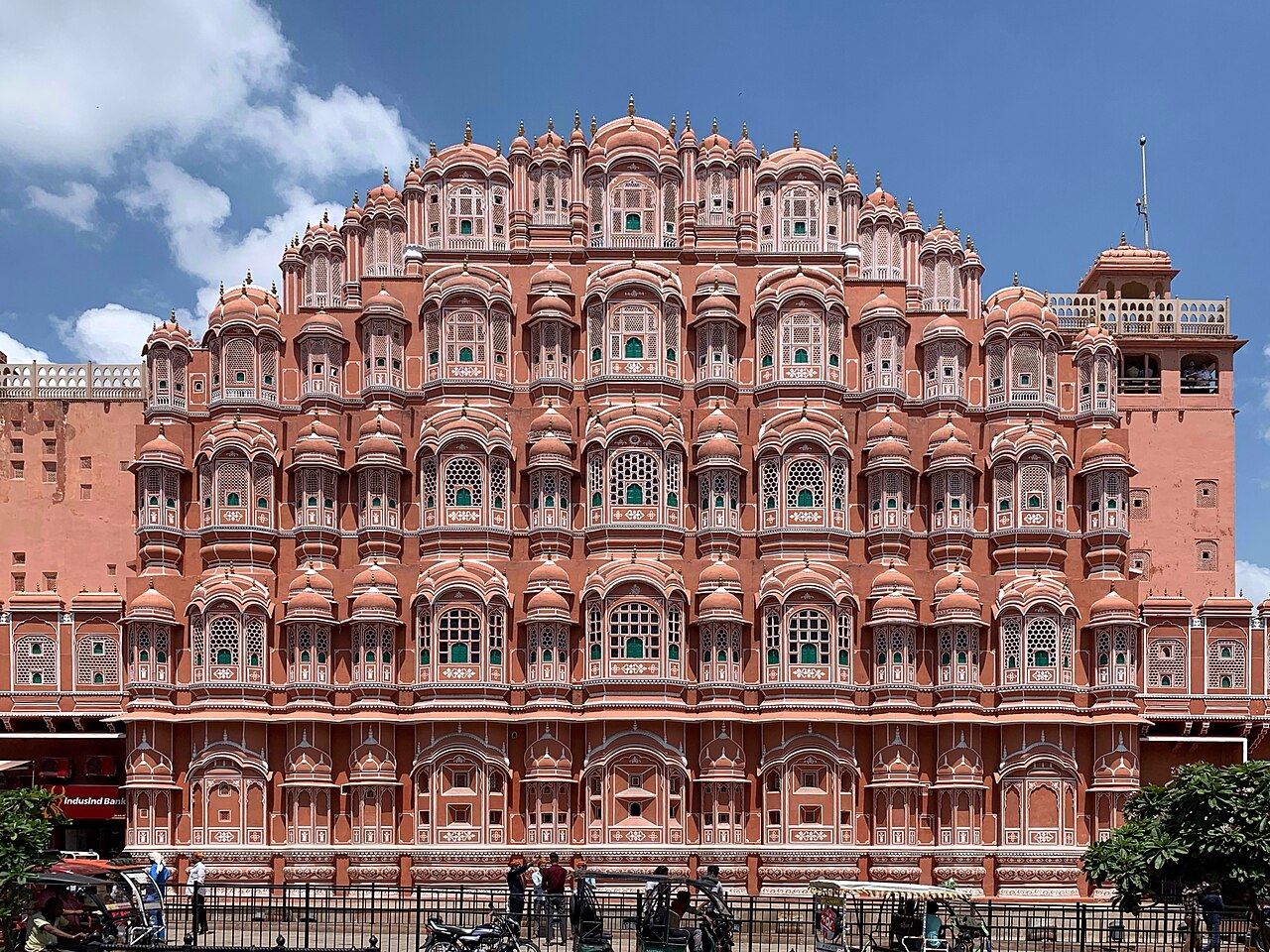
Hawa Mahal
A five-story screen of 953 latticed windows built in 1799 so the women of the court could watch the street without being seen. It is a facade rather than a palace, one room deep in places, and the windows pull a draft through it in summer.
historic
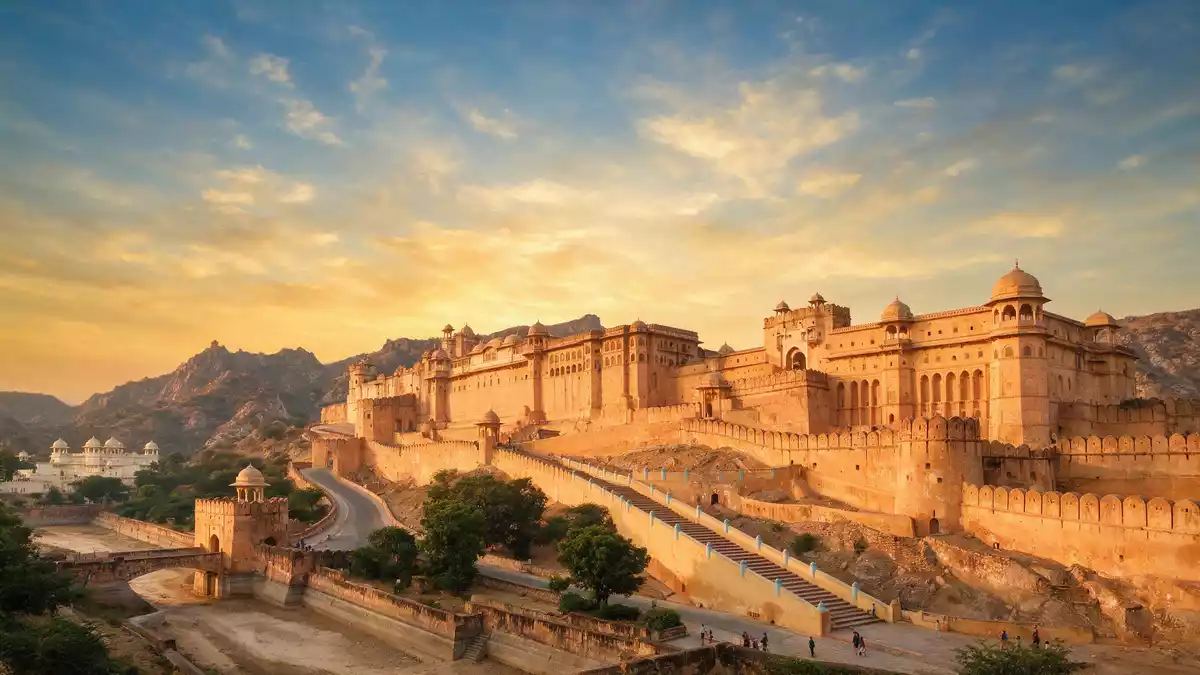
Amber Fort
The hill palace of the Kachhwaha rulers above Maota Lake, begun under Raja Man Singh and expanded through the 1600s, built around four courtyards. The mirror hall behind the Ganesh Pol is the room everyone comes for.
cultural
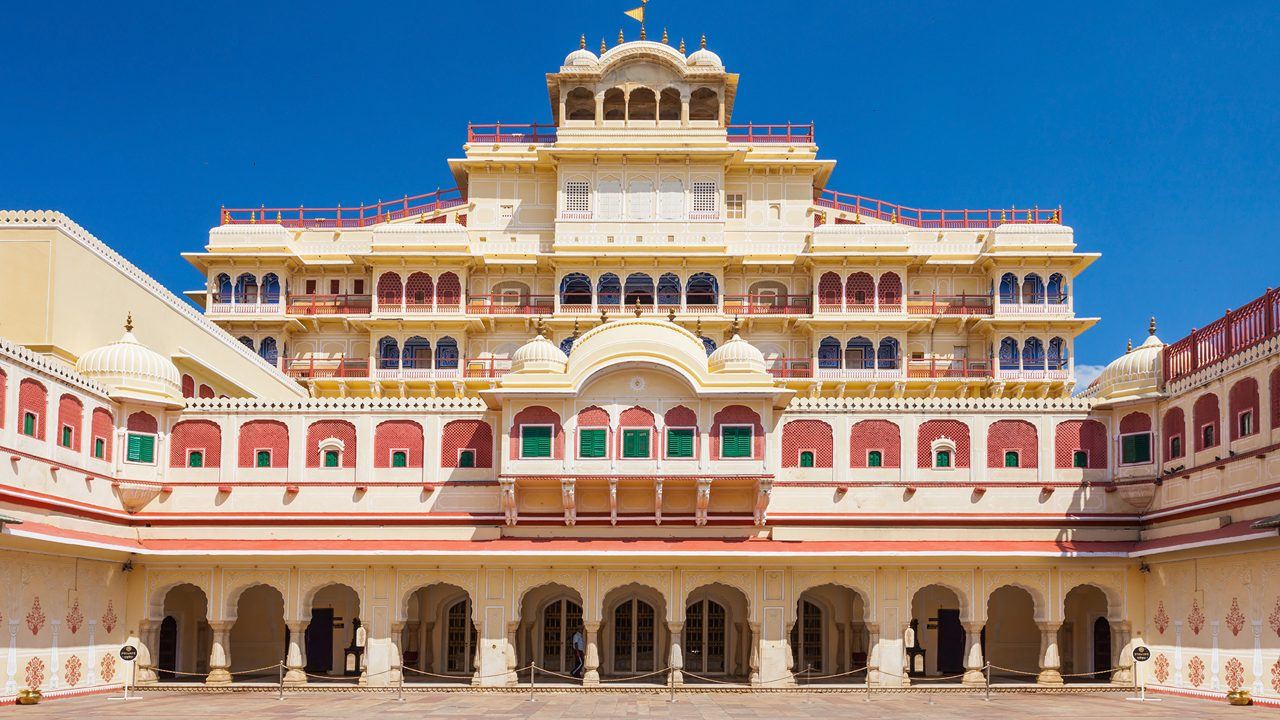
City Palace
The working heart of the old city, mid-18th century with additions into the 20th, still partly lived in by the former ruling family. Its museum galleries hold the armory, court paintings, textiles and the palanquin sheds.
cultural
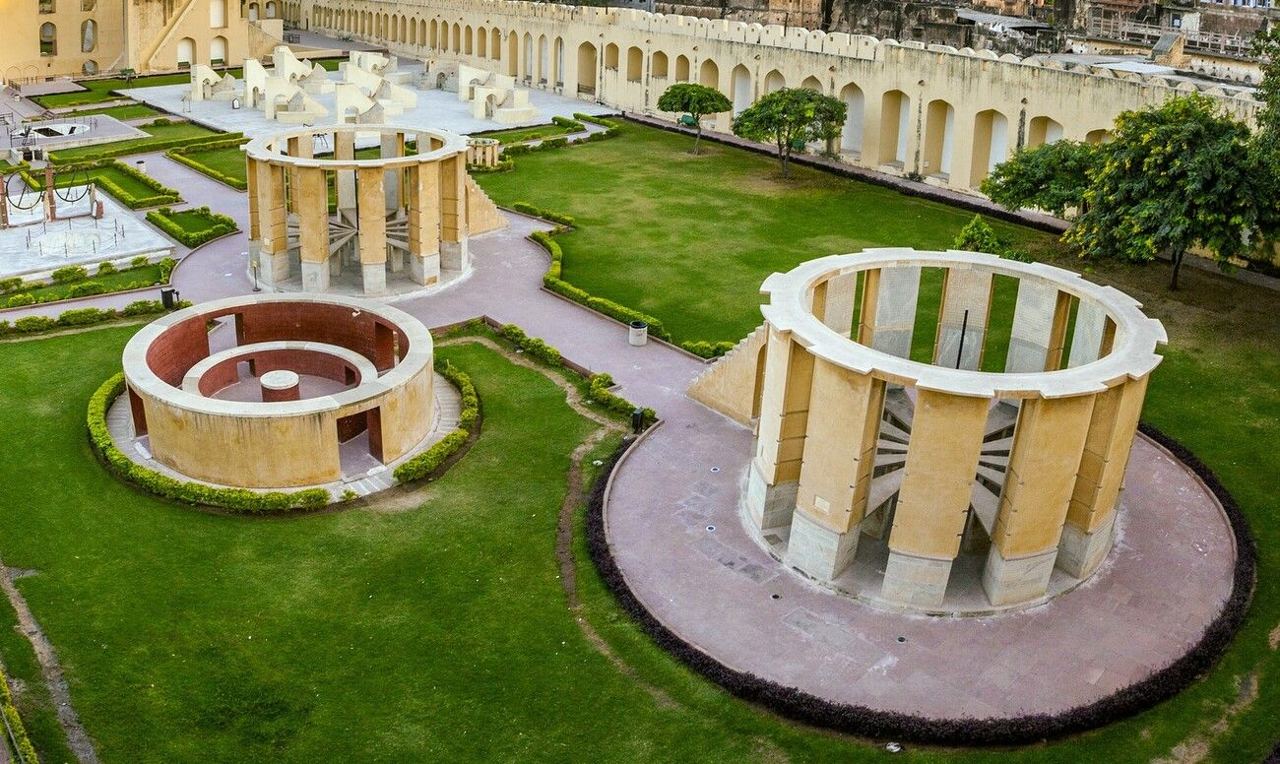
Jantar Mantar
Nineteen masonry astronomical instruments built between 1728 and 1734, listed by UNESCO in 2010. The largest is an 88-foot sundial whose shadow moves about a millimeter a second and reads local time to a couple of seconds.
scenic
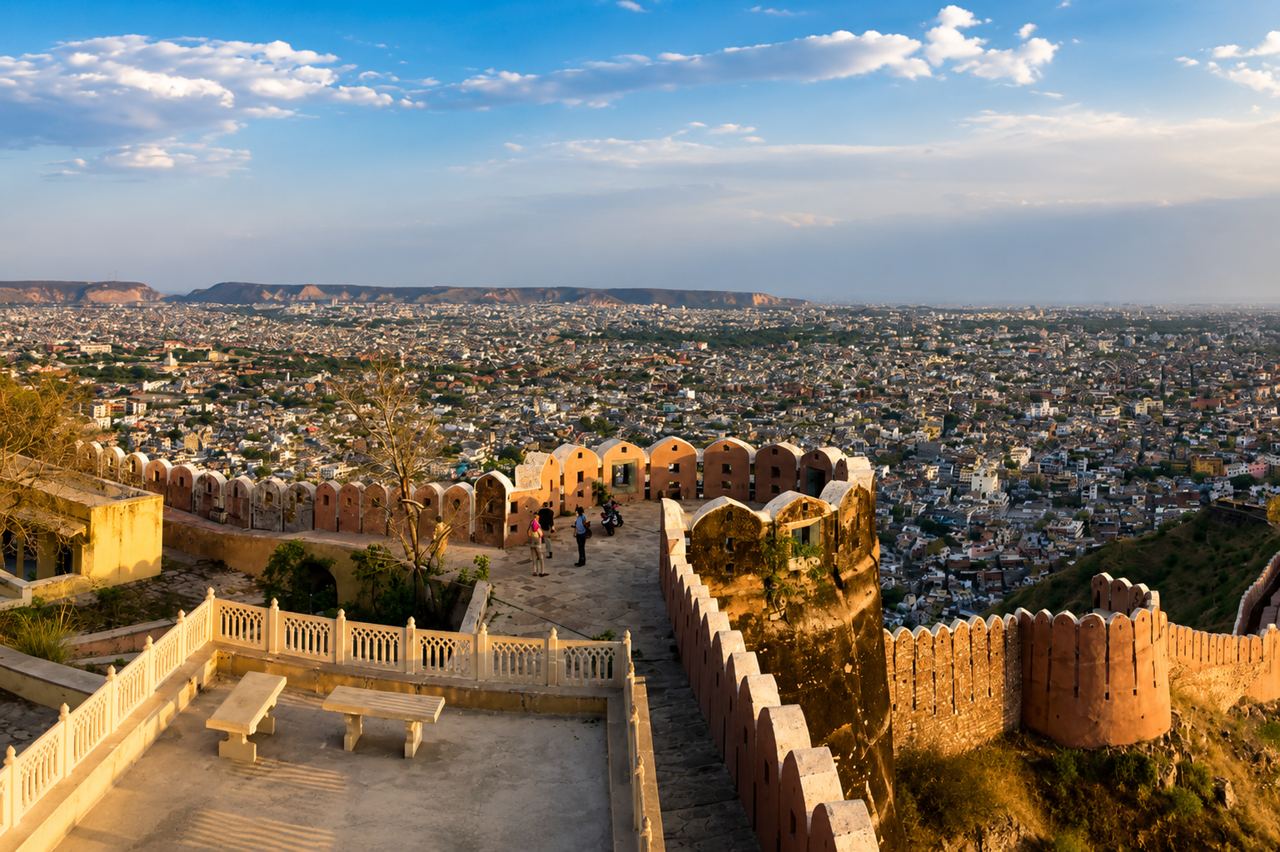
Nahargarh Fort
A wall-and-palace complex along the ridge north of the city, built as a retreat and lookout rather than a fighting fort. It stays open until ten at night, which makes it the one place you can watch the city light up from above.
historic
Jaigarh Fort
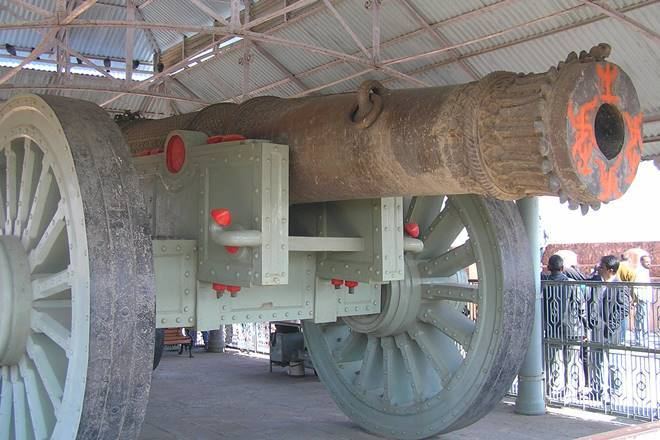
The military fort on the ridge directly above Amber, connected to it by a subterranean passage built as an escape route. Its ramparts, water tanks and cannon foundry are the working side of what Amber shows as a palace.
historic
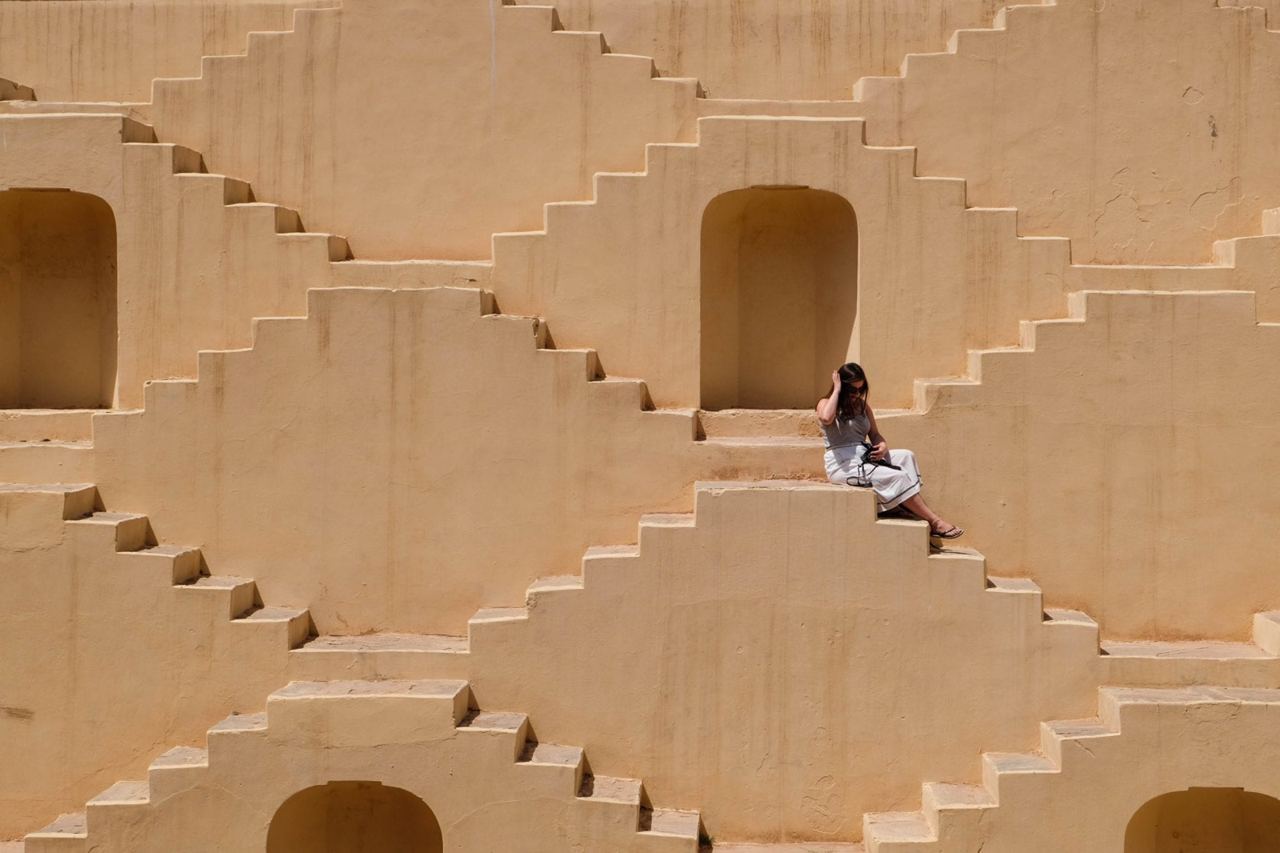
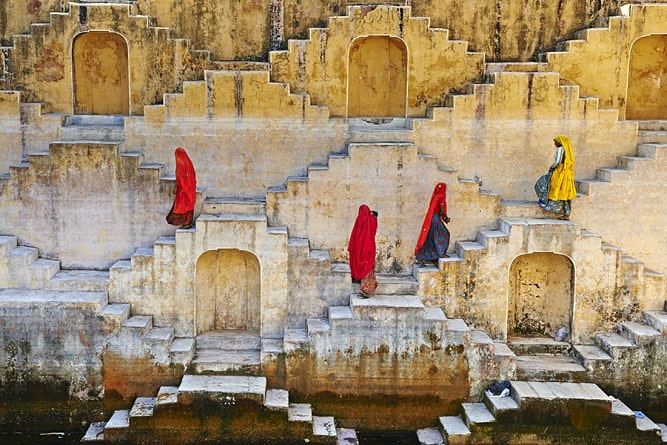
Panna Meena ka Kund
A square stepwell below Amber, its four walls run with criss-crossing flights of steps down to the water. Free to look at, and the steps are not for climbing on.
scenic
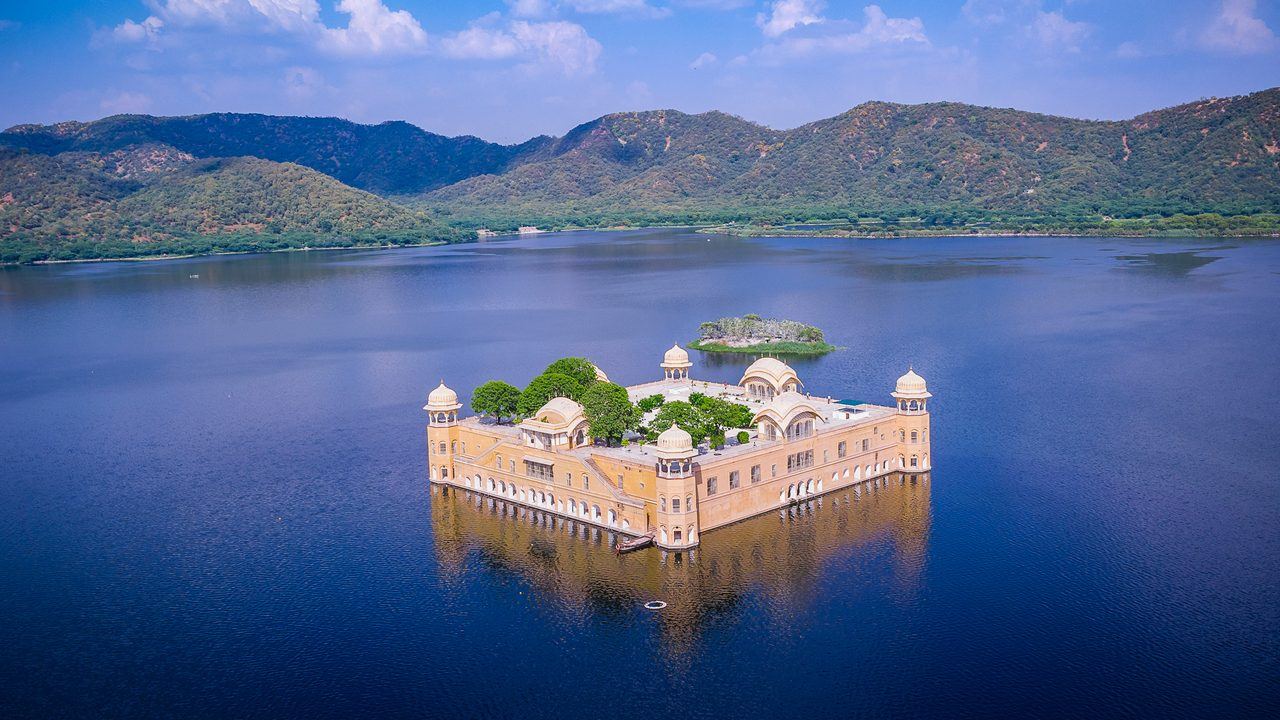
Jal Mahal
A palace standing in the water of Man Sagar Lake on the Amber road, with four of its five stories submerged when the lake is full. It is closed to the public — this one is a view from the embankment and nothing more.
cultural
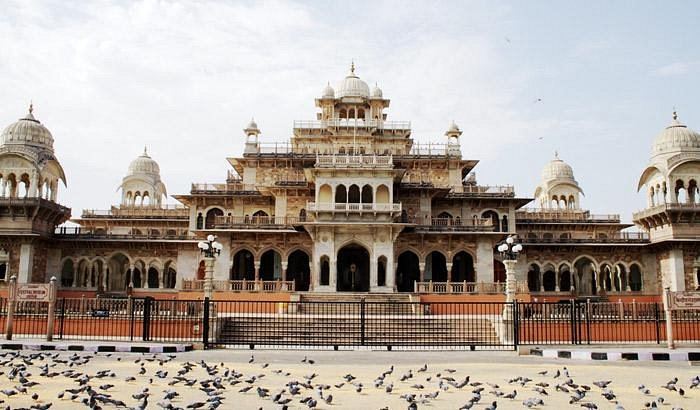
Albert Hall Museum
Rajasthan's oldest state museum, an Indo-Saracenic hall in the Ram Niwas garden holding carpets, arms, miniatures, metalwork and an Egyptian mummy. It stays open into the evening, when the building itself is floodlit.
historic
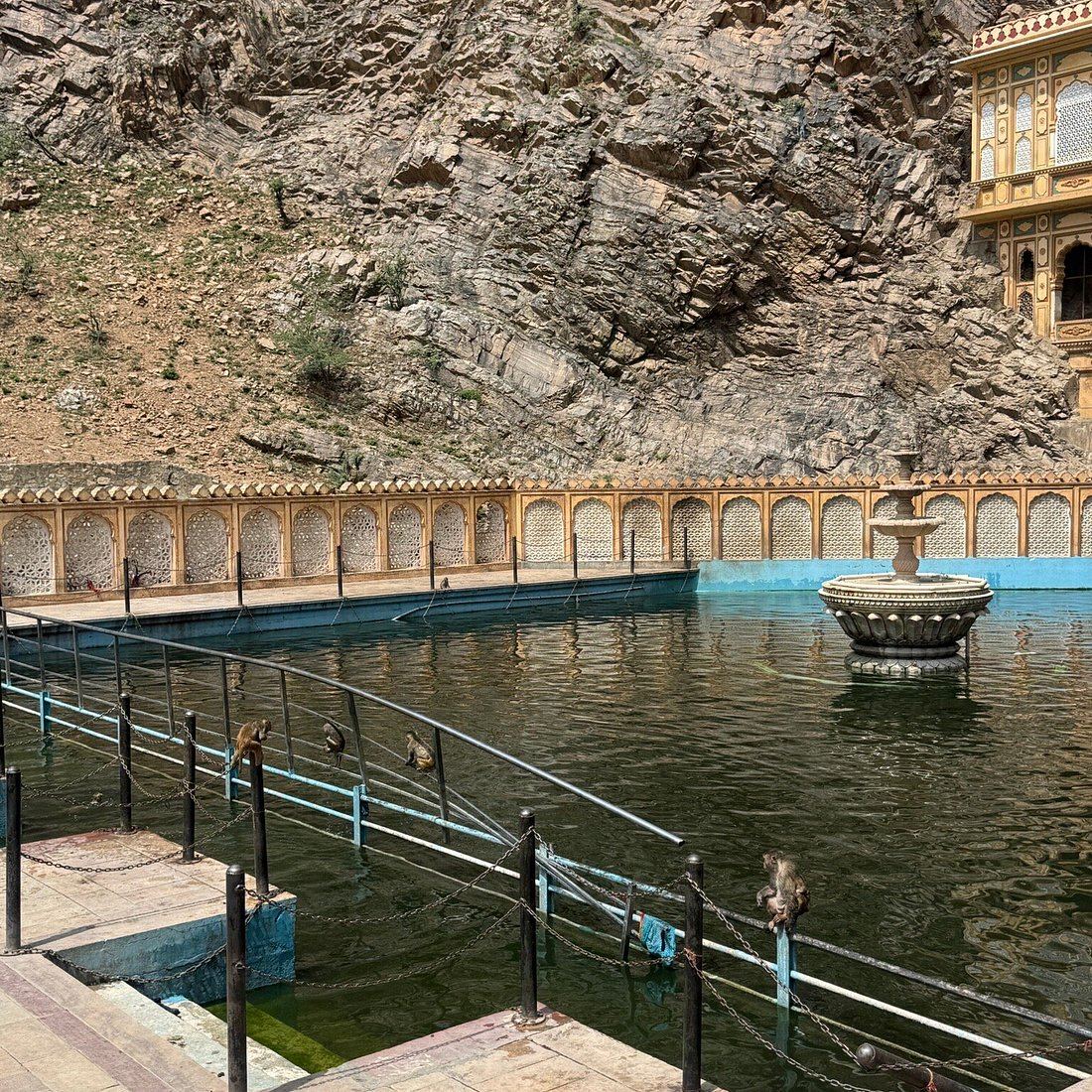
Galtaji
A temple complex wedged into a gorge in the hills east of the city, built around spring-fed tanks that pilgrims bathe in. Troops of monkeys live on the steps, which is where the nickname comes from.
shopping
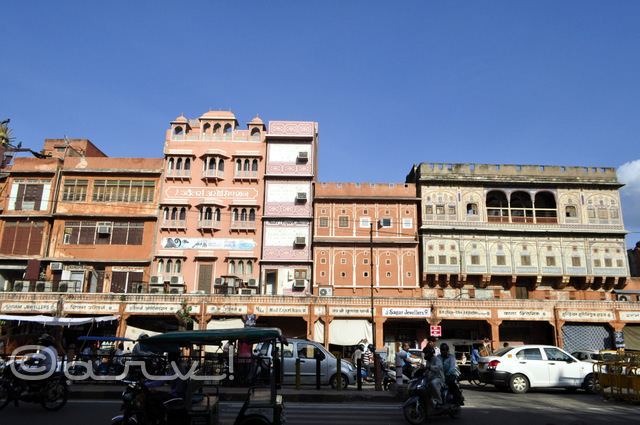
Johari Bazaar
The jewelers' street of the walled city, the trade Jaipur has been known for since it was founded — gemstone cutting, kundan and meenakari enamel work. The arcaded shopfronts run unbroken for most of its length.
shopping
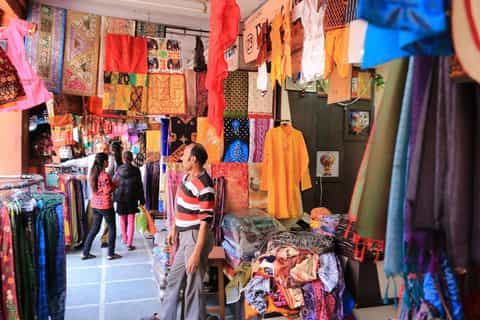
Bapu Bazaar
The everyday market street inside the south wall, selling textiles, block-printed cotton, camel-leather slippers and spices to locals more than to visitors. Prices start high for outsiders and are expected to be negotiated.
cultural
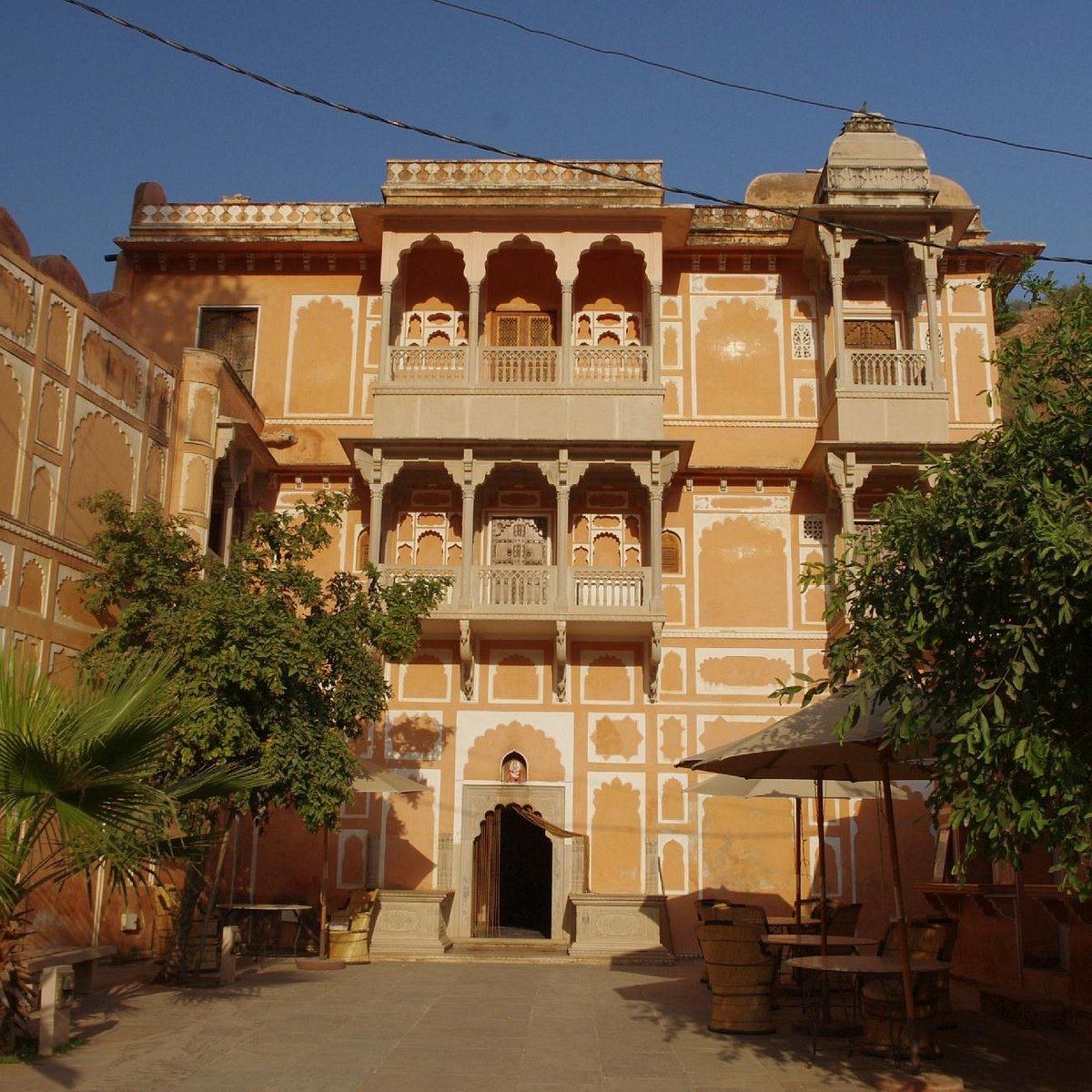
Anokhi Museum of Hand Printing
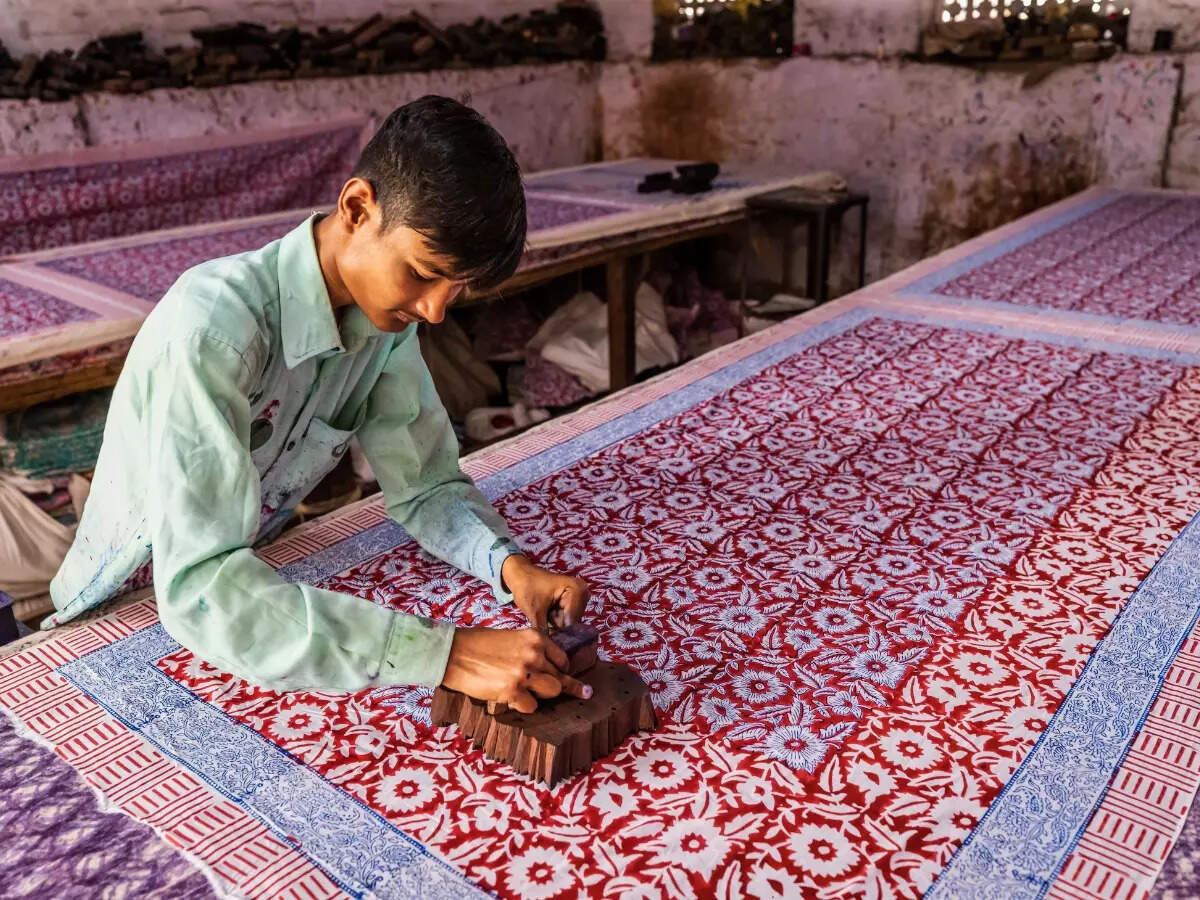
A restored haveli in Amber given over to hand block printing — the carved wooden blocks, the dyes, the printed cloth — with carvers and printers working in the building most of the day. Closed Mondays and from the end of May to mid-July.
cultural
Sanganer block-printing workshops
The printing and papermaking town on Jaipur's southern edge, where much of the block-printed cotton sold in the city is actually made. Workshops print, wash and dry cloth in the open, and most will let you watch.
scenic
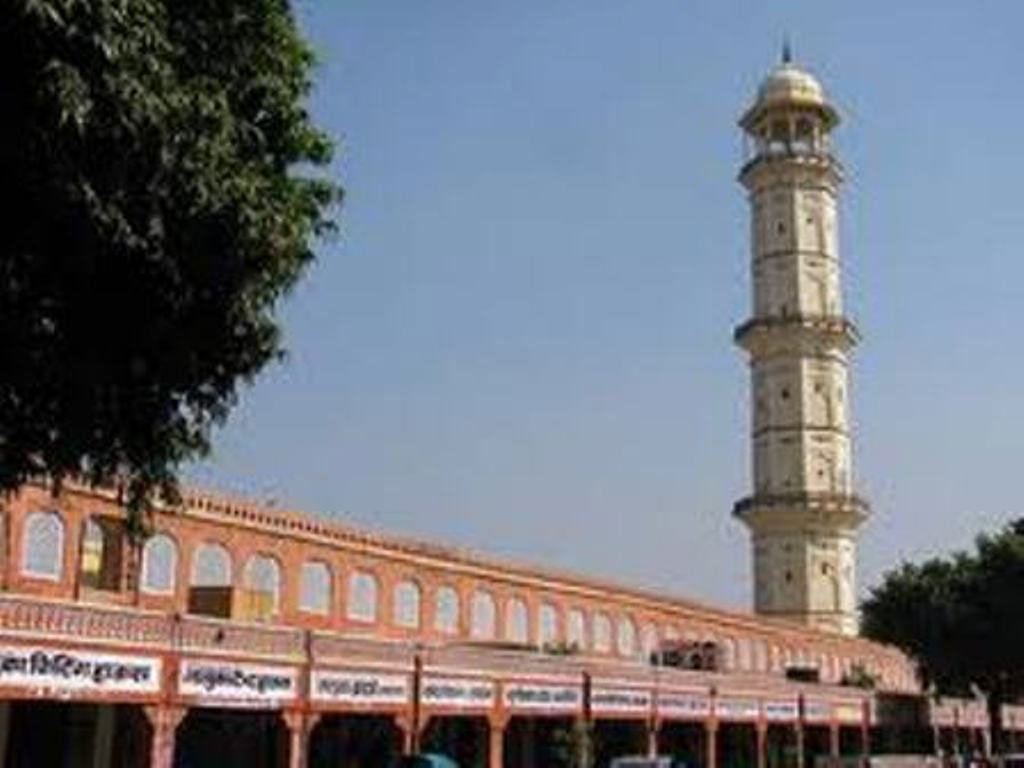
Isarlat (Sargasuli)
A slim victory tower rising out of the bazaar streets near Tripolia, with a stair winding up inside it. The reward is a rooftop-level view straight down the walled city grid, which no ground-level street will give you.
historic
Chand Baori, Abhaneri
A stepwell of roughly 3,500 steps dropping about 30 meters through 13 stories, built between the 8th and 9th centuries. It sits in a village in Dausa district, east of Jaipur on the Agra road, and needs a car.
The guide
Jaipur Runs on Two Clocks: Get to Amber at Seven, and Save the Grid for the Afternoon
· 10 min read · Researched and edited by PoppaTrip
A city built as a grid in 1727, which is why you can navigate it
Jaipur was founded on 18 November 1727 by Sawai Jai Singh II and laid out by Vidyadhar Bhattacharya, and unlike almost every other pre-modern Indian city it was planned before it was built. The walled city is a rectangle divided into nine blocks — two for the palace and state buildings, seven for everyone else — cut into six sectors by streets 34 meters wide, with seven fortified gates in the ramparts. Those wide straight streets are still there, still lined with continuous arcaded shopfronts, and they are the reason you can walk around the old city without a map and still know roughly where you are. Chandpole is the moon gate on the west, Surajpol the sun gate on the east.
The pink is younger than the plan. The walled city was painted for the visit of Albert Edward, Prince of Wales, in 1876, under Sawai Ram Singh II, and the color stuck. What you are looking at is a terracotta wash over stucco rather than pink stone, and it is repainted, which is worth knowing before you build a photograph around a particular shade. In 2019 the walled city went onto the UNESCO World Heritage list as a whole.
Getting around is the easy part and the annoying part at once. There is one metro line, the Pink Line, eleven stations over about twelve kilometers from Mansarovar to Badi Chaupar, trains every ten to fifteen minutes from 5:30 in the morning to 10:30 at night, and fares of ₹10 to ₹30 — pennies. It is genuinely useful, because Badi Chaupar puts you in the middle of the walled city and Chandpole puts you at its west gate. It does not go anywhere near Amber, the airport or the ridge forts. Everything else is an autorickshaw or a car, both of which are metered in theory and negotiated in practice; agree the fare before you get in, and expect to pay more than a local does.
From Delhi, the quickest trains take a little under four hours, and the fast ones leave from Delhi Cantt rather than New Delhi station, which catches people out. Check the current timetable before you book anything around it.
Amber at opening, and the two things above it that nobody has time for
Amber — Amer on the road signs — opens at seven in the morning and stays open until eight at night. Go at seven. The coaches start arriving mid-morning and by ten the Ganesh Pol is a queue rather than a gate; at seven the first courtyard is empty, the light is still low on the lake below, and you can stand in the mirror hall alone. This is the single highest-value scheduling decision in a Jaipur trip and it costs you nothing but an alarm.
What you are walking through was begun by Raja Man Singh and expanded by Jai Singh I in the early 1600s, and it is organized as four courtyards climbing the hill. The first is the parade ground. The second holds the Diwan-i-Aam, the public audience hall, on 27 colonnades. Then comes the Ganesh Pol, a three-level painted gateway into the private palaces, with the latticed Suhag Mandir above it where the women of the court watched what happened below. Behind that is the Jai Mandir, the Sheesh Mahal: convex mirror pieces set with colored foil across the walls and ceiling, made to glitter under candlelight. Amber went onto the UNESCO list in 2013 as part of the Hill Forts of Rajasthan.
Do not take the elephant ride up. World Animal Protection and PETA India have both documented welfare problems with the Amber elephants, the number of trips each animal makes has had to be capped by regulation, and the walk up the ramp takes about fifteen minutes. If you would rather not walk it, cars and jeeps run up to the gate.
Two things sit above and below the fort that most people miss. Jaigarh is the military fort on the ridge directly over Amber, connected to it by an underground passage built as an escape route: ramparts, water tanks and the cannon foundry, which is the working half of what Amber shows as a palace. And on the lane below the fort is Panna Meena ka Kund, a square stepwell with criss-crossing flights of steps down all four walls. It is free, it takes ten minutes, and the steps are not for climbing on — people do, and it is both damaging and a good way to fall.
While you are in Amber village, the Anokhi Museum of Hand Printing is five minutes away, and it is the best single thing in this city for understanding what the fabric in the bazaars actually is. More on that below — check its calendar first, because it is closed on Mondays and shuts entirely from the end of May to the middle of July.
Amber Fort — The hill palace of the Kachhwaha rulers above Maota Lake, begun under Raja Man Singh and expanded through the 1600s, built around four courtyards. The mirror hall behind the Ganesh Pol is the room everyone comes for.
Jaigarh Fort — The military fort on the ridge directly above Amber, connected to it by a subterranean passage built as an escape route. Its ramparts, water tanks and cannon foundry are the working side of what Amber shows as a palace.
Panna Meena ka Kund — A square stepwell below Amber, its four walls run with criss-crossing flights of steps down to the water. Free to look at, and the steps are not for climbing on.
The palace, the observatory and the facade are one walk — and one ticket decision
These three stand within a few minutes of each other in the middle of the walled city, and doing them as one morning is the obvious move. Start with the ticket question, because it is the thing most visitors get wrong.
The state government sells a composite ticket covering its own monuments in Jaipur, and at the 2026 rates it costs ₹550 for Indian visitors and ₹1,700 for foreign visitors, valid across two consecutive days. Bought separately, Amber Fort alone is ₹200 for Indians and ₹1,000 for foreigners, and Hawa Mahal, Jantar Mantar, Nahargarh Fort and the Albert Hall Museum are ₹100 and ₹600 each. So for a foreign visitor the composite pays for itself at Amber plus any two of the others, and a normal three-day trip does four or five of them. Buy it first, at the first monument you visit, and confirm the dates printed on it. Children under seven go free everywhere on that list. There are also free-entry days: Rajasthan Diwas, 18 April for World Heritage Day, 18 May for World Museum Day and 27 September for World Tourism Day.
The City Palace is the exception, because it is not a state monument — it is run by the former ruling family, who still live in part of it, and it is ticketed separately with its own rates for Indian and foreign visitors. It is open from 9:30 to 6:30 with last tickets at six, every day except Dhulandi, the second day of Holi. Two things about the ticketing are worth knowing: there is a composite pass that adds Jaigarh Fort and the royal cenotaphs to the museum ticket, which is the one to buy if you were going up to Jaigarh anyway, and there is a separate guided Royal Tour that takes you into Chandra Mahal, the residence itself, sold only at the counter and priced far above the museum ticket. Inside the museum, the armory and the palanquin sheds are more interesting than the textiles, and the painted Pritam Niwas Chowk gateways are where everyone else will be standing.
Jantar Mantar, next door, is the one people walk past and should not. It is nineteen masonry astronomical instruments built between 1728 and 1734 by the same king who planned the city, and UNESCO listed it in 2010. The Vrihat Samrat Yantra is an 88-foot sundial whose shadow travels roughly a millimeter a second and reads local time to about two seconds — you can watch it move. It is open nine to seven, and it is worth either a guide or ten minutes of reading beforehand, because without knowing what any of them do it is a courtyard of ramps.
Hawa Mahal, the five-story honeycomb everyone photographs, was built in 1799 for Maharaja Sawai Pratap Singh by the architect Lal Chand Ustad: 953 latticed windows across a facade about 50 feet high, built so the women of the court could watch the processions in the street without being seen, with the side effect that the windows pull a breeze through the building in summer. It opens at nine and closes at 6:30. The honest note is that it is a screen rather than a palace — one room deep in places — and the famous view of it is from the street outside, not from within it. The rooftop cafes across the road charge for that view and are busiest at sunrise.
Hawa Mahal — A five-story screen of 953 latticed windows built in 1799 so the women of the court could watch the street without being seen. It is a facade rather than a palace, one room deep in places, and the windows pull a draft through it in summer.
City Palace — The working heart of the old city, mid-18th century with additions into the 20th, still partly lived in by the former ruling family. Its museum galleries hold the armory, court paintings, textiles and the palanquin sheds.
Jantar Mantar — Nineteen masonry astronomical instruments built between 1728 and 1734, listed by UNESCO in 2010. The largest is an 88-foot sundial whose shadow moves about a millimeter a second and reads local time to a couple of seconds.
The ridge: one fort for the view, one tower for the grid
Nahargarh sits on the ridge north of the city and was built as a retreat and a lookout rather than a fort meant to be fought over, which is why it feels like a wall with a small palace attached. The reason to go is the timing: it stays open until ten at night, entry is ₹100 for Indians and ₹600 for foreigners or free on the composite ticket, and it is the one place you can stand above Jaipur after dark and watch the grid light up. Go late afternoon, stay for the light going, come down in the dark. It is a road climb by car or autorickshaw; there is a walking path up from the old city and it is not the way to arrive in the heat.
Down in the bazaar streets near Tripolia is Isarlat, also called Sargasuli, a thin victory tower with a stair spiraling up inside it. It is a small ticket and a short climb and it gives you the thing no street in the walled city can: a view straight down the 1727 grid, so the plan you have been walking through all morning finally makes sense as a shape. Check the opening hours locally — this one keeps shorter and less predictable hours than the big monuments.
On the Amber road you will pass Jal Mahal, a palace standing in the water of Man Sagar Lake with four of its five stories under the surface when the lake is full. It is closed to the public. There is no tour, no boat and no entry, whatever anyone on the embankment tells you; it is a photograph from the roadside and a nice one in early light, and that is the whole of it.
Nahargarh Fort — A wall-and-palace complex along the ridge north of the city, built as a retreat and lookout rather than a fighting fort. It stays open until ten at night, which makes it the one place you can watch the city light up from above.
Jal Mahal — A palace standing in the water of Man Sagar Lake on the Amber road, with four of its five stories submerged when the lake is full. It is closed to the public — this one is a view from the embankment and nothing more.
Isarlat (Sargasuli) — A slim victory tower rising out of the bazaar streets near Tripolia, with a stair winding up inside it. The reward is a rooftop-level view straight down the walled city grid, which no ground-level street will give you.
Where it's made: the block printers, and what you are buying in the bazaar
Jaipur is a making city before it is a monument city, and the two crafts it lives on are gemstone work and hand block printing on cotton. Doing one workshop visit properly changes how you shop for the rest of the week, because once you have watched a printer lay down a repeat by hand you can tell hand-blocked cloth from screen-printed cloth at a glance, and the two sell side by side at very different real values.
Start at the Anokhi Museum of Hand Printing, in a restored haveli in Amber village just below the fort. It is a small museum given over entirely to the craft — the carved teak blocks, the dyes, the resist printing, the cloth — and carvers and printers work in the building through the day, which is the part that makes it worth the detour. It opens Tuesday to Saturday from 10:30 to 5, Sunday from 11 to 4:30, and closes on Mondays. It also closes completely for gallery maintenance between 31 May and 15 July every year, plus a list of public holidays, so check its own site before you build a morning around it. The demonstrations pause over lunch, roughly 1:30 to 2 most days and 1 to 2:30 on Fridays.
Sanganer, on the southern edge of the city, is where a great deal of the printing and the handmade paper actually happens — whole yards of cloth washed and laid out to dry in the open. Workshops there are working businesses rather than attractions, and most will let you watch and will sell to you directly. Go with a driver who knows which ones are real, go in the morning, and do not expect a visitor center.
Then the bazaars. Johari Bazaar is the jewelers' street, and the trade is the oldest thing in the city: gemstone cutting, kundan setting, and meenakari enamel work on gold. You can buy very well there and you can be badly taken, and the difference is whether you know what you are looking at — for anything expensive, buy from a shop that gives a written certificate and take the time to read it. Bapu Bazaar, inside the south wall, is the everyday one: block-printed cotton, textiles, camel-leather slippers, spices, mostly locals. Prices open high for outsiders and are expected to be negotiated; that is not rudeness on either side, it is the format. Both streets are at their best in the early evening and close to impassable in the hour before a festival.
Johari Bazaar — The jewelers' street of the walled city, the trade Jaipur has been known for since it was founded — gemstone cutting, kundan and meenakari enamel work. The arcaded shopfronts run unbroken for most of its length.
Bapu Bazaar — The everyday market street inside the south wall, selling textiles, block-printed cotton, camel-leather slippers and spices to locals more than to visitors. Prices start high for outsiders and are expected to be negotiated.
Anokhi Museum of Hand Printing — A restored haveli in Amber given over to hand block printing — the carved wooden blocks, the dyes, the printed cloth — with carvers and printers working in the building most of the day. Closed Mondays and from the end of May to mid-July.
Sanganer block-printing workshops — The printing and papermaking town on Jaipur's southern edge, where much of the block-printed cotton sold in the city is actually made. Workshops print, wash and dry cloth in the open, and most will let you watch.
The museum that stays open late, and the gorge at seven in the morning
The Albert Hall Museum is Rajasthan's oldest state museum, an Indo-Saracenic pile sitting in the Ram Niwas garden south of the walled city, and it holds carpets, arms, miniature paintings, metalwork, a room of clay figures showing regional dress, and an Egyptian mummy that has been there long enough to be part of the furniture. Entry is ₹100 for Indians and ₹600 for foreigners, or free on the composite ticket, and it is open from nine in the morning to eight at night. That evening slot is the useful thing: it gives you somewhere worth being between the end of the fort day and dinner, and the building is floodlit after dark.
Galtaji is the other half of that trade-off — it is a morning, and only a morning. The temple complex is built into a narrow gorge in the hills east of the city, a run of pavilions and painted halls around spring-fed tanks that pilgrims bathe in, with steps climbing the ravine to a sun temple on the ridge above. Large troops of monkeys live on those steps, which is where the tourist nickname comes from, and they are wild animals in a working pilgrimage site rather than an attraction: do not carry food openly, do not feed them, and do not put a phone out at arm's length in the middle of a troop.
Go early. It is a functioning temple, the bathing happens at first light, the monkeys are most active at either end of the day, and by late morning the gorge holds heat. It is a short drive from the city and there is a walking route in over the ridge from Surajpol if the weather is mild and you want the approach rather than the parking lot.
Albert Hall Museum — Rajasthan's oldest state museum, an Indo-Saracenic hall in the Ram Niwas garden holding carpets, arms, miniatures, metalwork and an Egyptian mummy. It stays open into the evening, when the building itself is floodlit.
Galtaji — A temple complex wedged into a gorge in the hills east of the city, built around spring-fed tanks that pilgrims bathe in. Troops of monkeys live on the steps, which is where the nickname comes from.
Day trips: be honest about which ones need a car
Jaipur is not a hub with a ring of easy single-ride day trips the way some cities are. Almost everything worth leaving town for needs a hired car and driver for the day, and pretending otherwise is how people end up spending six hours in traffic for one photograph. Two are worth it if you have the day; the rest are better as stops on the way somewhere else.
Chand Baori at Abhaneri is the one to keep. It is a stepwell of roughly 3,500 steps dropping about 30 meters through thirteen stories into the ground, built between the 8th and 9th centuries, and standing at the rim of it is genuinely unlike anything else in the state. It sits in a village in Dausa district, east of Jaipur on the road toward Agra, and it works best as a break in a drive rather than as an out-and-back — if you are going on to Agra or Ranthambore, put it in the middle of that day and lose nothing.
The other honest answer is that the best half-day out of the walled city is the Amber cluster itself — fort, Jaigarh, stepwell, printing museum — which is fifteen minutes from the center and which most three-day itineraries compress into a single crowded morning. If you are choosing between a long drive somewhere and doing Amber properly across a full day, do Amber properly.
Chand Baori, Abhaneri — A stepwell of roughly 3,500 steps dropping about 30 meters through 13 stories, built between the 8th and 9th centuries. It sits in a village in Dausa district, east of Jaipur on the Agra road, and needs a car.
Heat and monsoon: the months this city rules out
Jaipur gets hot in a way that is not a matter of tolerance but of planning. May has a mean daily maximum of 41.1 degrees Celsius, about 106 Fahrenheit, and the record here is 49 degrees, a shade over 120. April, May and June are a stone city in full sun with fort courtyards that hold heat and ridge walks with no shade at all. If you must come then, the day is: out at first light, indoors from eleven until four, out again in the evening — and Nahargarh until ten at night and Albert Hall until eight are exactly the right shape for it.
The monsoon is short and concentrated. The annual total is about 600 millimeters, and July and August take roughly 190 and 200 millimeters of that between them, which is to say two-thirds of the year's rain falls in two months. It does not usually rain all day; it comes in heavy bursts that flood the low streets for an hour and then clear. The upside is real — the hills go green, the lakes fill, and the light after a storm is the best this city gets — and the cost is that the drive up to the ridge forts is unpleasant in a downpour and the open printing yards at Sanganer stop.
So: October through March. November to February is the window everyone wants, cool and dry, with January mean lows around 8 degrees Celsius, about 47 Fahrenheit — take a jacket for the evenings and the early start at Amber, because visitors consistently underpack for a Rajasthan winter morning. That is also festival and wedding season, which means the city is fuller, the bazaars are better, and hotel rates are at their highest. The Jaipur Literature Festival lands in January and fills the city's rooms; if your dates are near it, check the festival's own site and book beds early either way.
Three practical things to close on. Monument hours here are set by the state and do change — the 2026 rates in this guide are the published ones, and the sensible habit is to check the current card at the ticket window rather than argue with it. Tap water is not for drinking; buy it sealed or filter it. And the walled city is a place to be on foot, which means flat shoes, a covered head in the middle of the day from April onward, and more water than you think you need.
The short answers
How many days do you need in Jaipur?
Three is the honest number. One for the Amber cluster done properly — fort at seven, Jaigarh, the stepwell, the printing museum — one for the walled city with the City Palace, Jantar Mantar and Hawa Mahal in the morning and the bazaars in the evening, and one for Nahargarh, Albert Hall and Galtaji. A fourth day buys you a drive out to Chand Baori.
Is the Jaipur composite ticket worth it?
For most visitors, yes. At the 2026 rates it is ₹550 for Indian visitors and ₹1,700 for foreign visitors across two consecutive days, and it covers Amber Fort, Hawa Mahal, Jantar Mantar, Nahargarh Fort, the Albert Hall Museum and several smaller sites. Amber alone is ₹1,000 for a foreign visitor and the others are ₹600 each, so it pays for itself at Amber plus two more. The City Palace is privately run and is not included.
What time should you get to Amber Fort?
Seven in the morning, when it opens. The coaches arrive mid-morning and the Ganesh Pol becomes a queue by ten. It stays open until eight at night, so a late-afternoon visit is the second-best option.
Should you take the elephant ride at Amber Fort?
No. World Animal Protection and PETA India have documented welfare problems with the Amber elephants and the number of daily trips has had to be capped by regulation. The walk up the ramp takes about fifteen minutes, and cars and jeeps run to the gate for anyone who would rather not walk.
Can you get around Jaipur without a car?
Partly. The metro's single Pink Line runs eleven stations from Mansarovar to Badi Chaupar for ₹10 to ₹30, every ten to fifteen minutes from 5:30am to 10:30pm, and it puts you in the middle of the walled city — where everything is then a walk. It does not reach Amber, the ridge forts or the airport, so those are autorickshaw or car, negotiated before you get in.
When is the best time to visit Jaipur?
October to March, and November to February if you can choose. May averages a daily high of 41°C (106°F) and has recorded 49°C, and July and August take about two-thirds of the year's 600mm of rain. January mornings are genuinely cool — mean lows around 8°C, about 47°F — so pack a jacket for the early start at Amber.
Is the Hawa Mahal worth going inside?
It is worth about half an hour. It is a facade rather than a palace — 953 windows across five stories, one room deep in places, built in 1799 so the court's women could watch the street unseen. The view everyone knows is from the street outside, and the rooftop cafes opposite charge for it. Inside costs ₹100 for Indians and ₹600 for foreigners, or nothing extra on the composite ticket.
Where do you see block printing being made near Jaipur?
Two places. The Anokhi Museum of Hand Printing in Amber village has carvers and printers working through the day — Tuesday to Saturday 10:30 to 5, Sunday 11 to 4:30, closed Mondays and closed entirely from 31 May to 15 July. Sanganer, on the southern edge of the city, is where much of the printing and handmade paper is actually produced, in working yards rather than a visitor center.
Who does Jaipur especially suit?
People who like a city they can read. The walled city is a deliberate 1727 grid of nine blocks and 34-meter streets, so three days is enough to genuinely know where you are, and the big sights are close enough together that the trip is about timing rather than transport. It suits early risers above all — Amber at seven, Galtaji at first light, the bazaars in the evening — and anyone who would rather watch something being made than look at it behind glass.
Researched, edited, and last updated 2026-09-17. Opening hours, ticketing and prices
change — check them before you rely on them.
FAQ
Questions about Jaipur, India
How many days do you need in Jaipur?
Three is the honest number. One for the Amber cluster done properly — fort at seven, Jaigarh, the stepwell, the printing museum — one for the walled city with the City Palace, Jantar Mantar and Hawa Mahal in the morning and the bazaars in the evening, and one for Nahargarh, Albert Hall and Galtaji. A fourth day buys you a drive out to Chand Baori.
Is the Jaipur composite ticket worth it?
For most visitors, yes. At the 2026 rates it is ₹550 for Indian visitors and ₹1,700 for foreign visitors across two consecutive days, and it covers Amber Fort, Hawa Mahal, Jantar Mantar, Nahargarh Fort, the Albert Hall Museum and several smaller sites. Amber alone is ₹1,000 for a foreign visitor and the others are ₹600 each, so it pays for itself at Amber plus two more. The City Palace is privately run and is not included.
What time should you get to Amber Fort?
Seven in the morning, when it opens. The coaches arrive mid-morning and the Ganesh Pol becomes a queue by ten. It stays open until eight at night, so a late-afternoon visit is the second-best option.
Should you take the elephant ride at Amber Fort?
No. World Animal Protection and PETA India have documented welfare problems with the Amber elephants and the number of daily trips has had to be capped by regulation. The walk up the ramp takes about fifteen minutes, and cars and jeeps run to the gate for anyone who would rather not walk.
Can you get around Jaipur without a car?
Partly. The metro's single Pink Line runs eleven stations from Mansarovar to Badi Chaupar for ₹10 to ₹30, every ten to fifteen minutes from 5:30am to 10:30pm, and it puts you in the middle of the walled city — where everything is then a walk. It does not reach Amber, the ridge forts or the airport, so those are autorickshaw or car, negotiated before you get in.
When is the best time to visit Jaipur?
October to March, and November to February if you can choose. May averages a daily high of 41°C (106°F) and has recorded 49°C, and July and August take about two-thirds of the year's 600mm of rain. January mornings are genuinely cool — mean lows around 8°C, about 47°F — so pack a jacket for the early start at Amber.
Is the Hawa Mahal worth going inside?
It is worth about half an hour. It is a facade rather than a palace — 953 windows across five stories, one room deep in places, built in 1799 so the court's women could watch the street unseen. The view everyone knows is from the street outside, and the rooftop cafes opposite charge for it. Inside costs ₹100 for Indians and ₹600 for foreigners, or nothing extra on the composite ticket.
Where do you see block printing being made near Jaipur?
Two places. The Anokhi Museum of Hand Printing in Amber village has carvers and printers working through the day — Tuesday to Saturday 10:30 to 5, Sunday 11 to 4:30, closed Mondays and closed entirely from 31 May to 15 July. Sanganer, on the southern edge of the city, is where much of the printing and handmade paper is actually produced, in working yards rather than a visitor center.
Who does Jaipur especially suit?
People who like a city they can read. The walled city is a deliberate 1727 grid of nine blocks and 34-meter streets, so three days is enough to genuinely know where you are, and the big sights are close enough together that the trip is about timing rather than transport. It suits early risers above all — Amber at seven, Galtaji at first light, the bazaars in the evening — and anyone who would rather watch something being made than look at it behind glass.
How do I plan a full trip to Jaipur, India?
Tell PoppaTrip your travel style in the wizard and we'll build a day-by-day itinerary with hotels, routing, and booking links. Answering the wizard and previewing your destination is free; building and unlocking your complete trip is a one-time $9.99.
Do the photos show the real venues?
Yes — every photo is a real photo of that specific place, never a stock image.
Ready to plan your Jaipur, India trip?
Jaipur is a timing problem more than a distance one — Amber at opening, the grid in the afternoon, the ridge after dark — and the right order turns three days into a calm trip.